
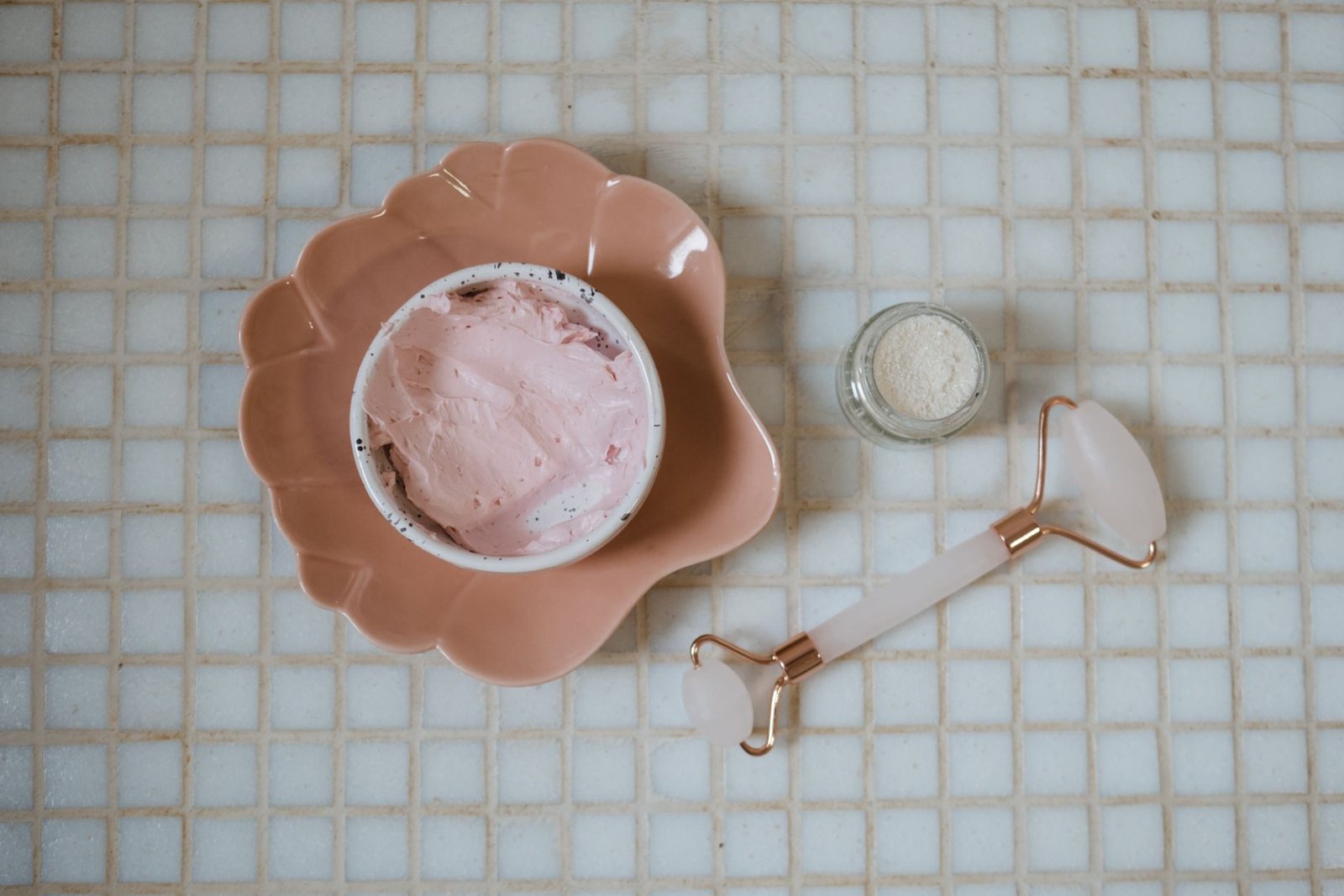
Lip scrubs are the easiest thing on this site to make and the easiest to overdo. They take two minutes, they cost almost nothing, and used more than once a week they will leave your lips worse than when you started.
Here is the recipe, and an honest note about the pink.
 Save
What the pink actually is
Let us deal with this first, because it is the reason a lot of people search for this recipe.
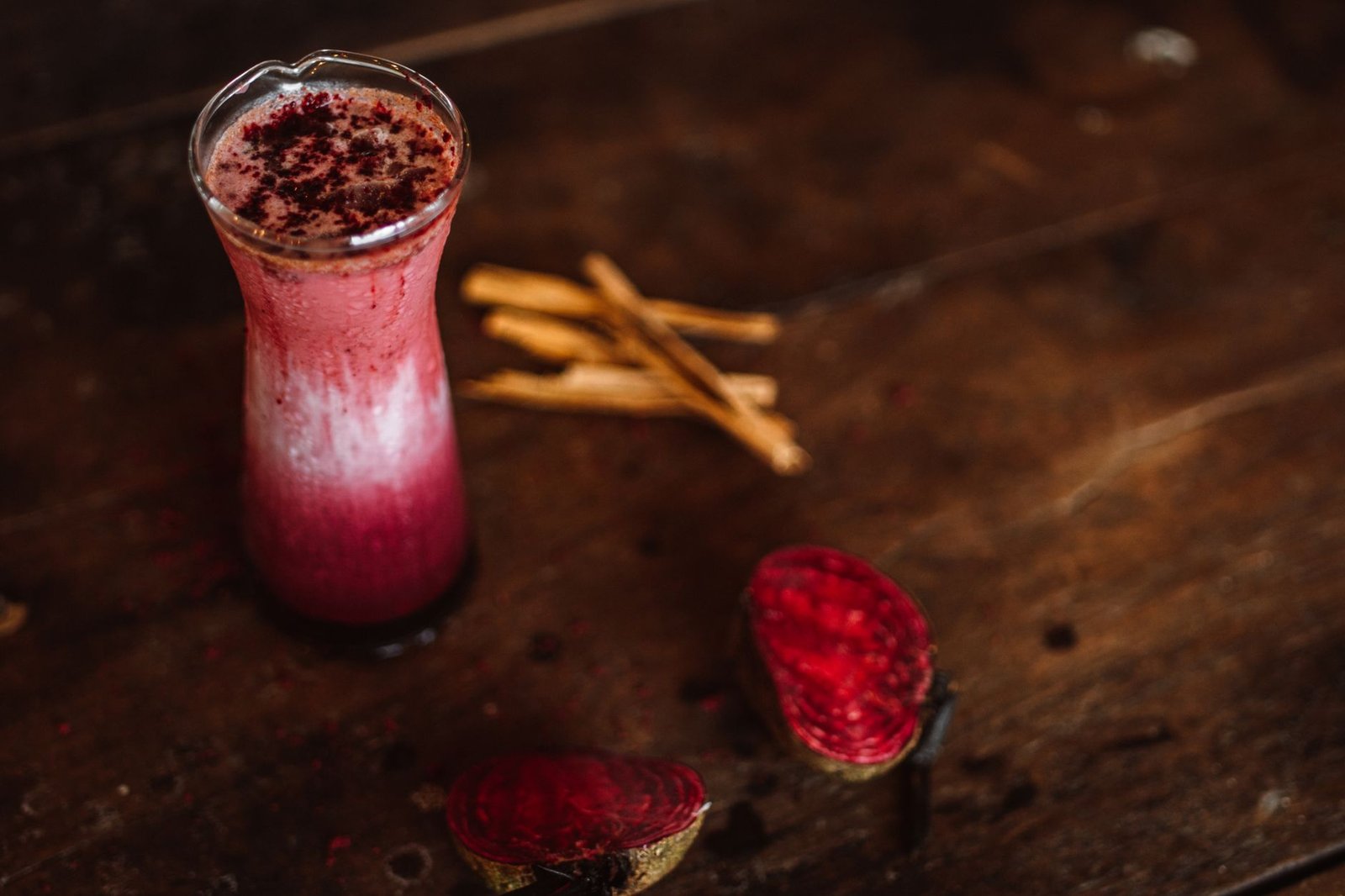
Beetroot powder tints your lips. It sits on the surface, gives a light pink stain that lasts a few hours, and washes off. That is a real and quite pretty effect.
What it does not do is change the natural colour of your lips. There is no ingredient in a scrub that lightens or permanently pinkens lip pigment, and recipes claiming otherwise are describing either a temporary stain or the flush you get from rubbing your lips.
That flush is worth naming. Lips look pinker straight after scrubbing because you have irritated them and increased blood flow. It fades within the hour, and chasing it is how people end up scrubbing daily and wrecking their lips.
The recipe
 Save
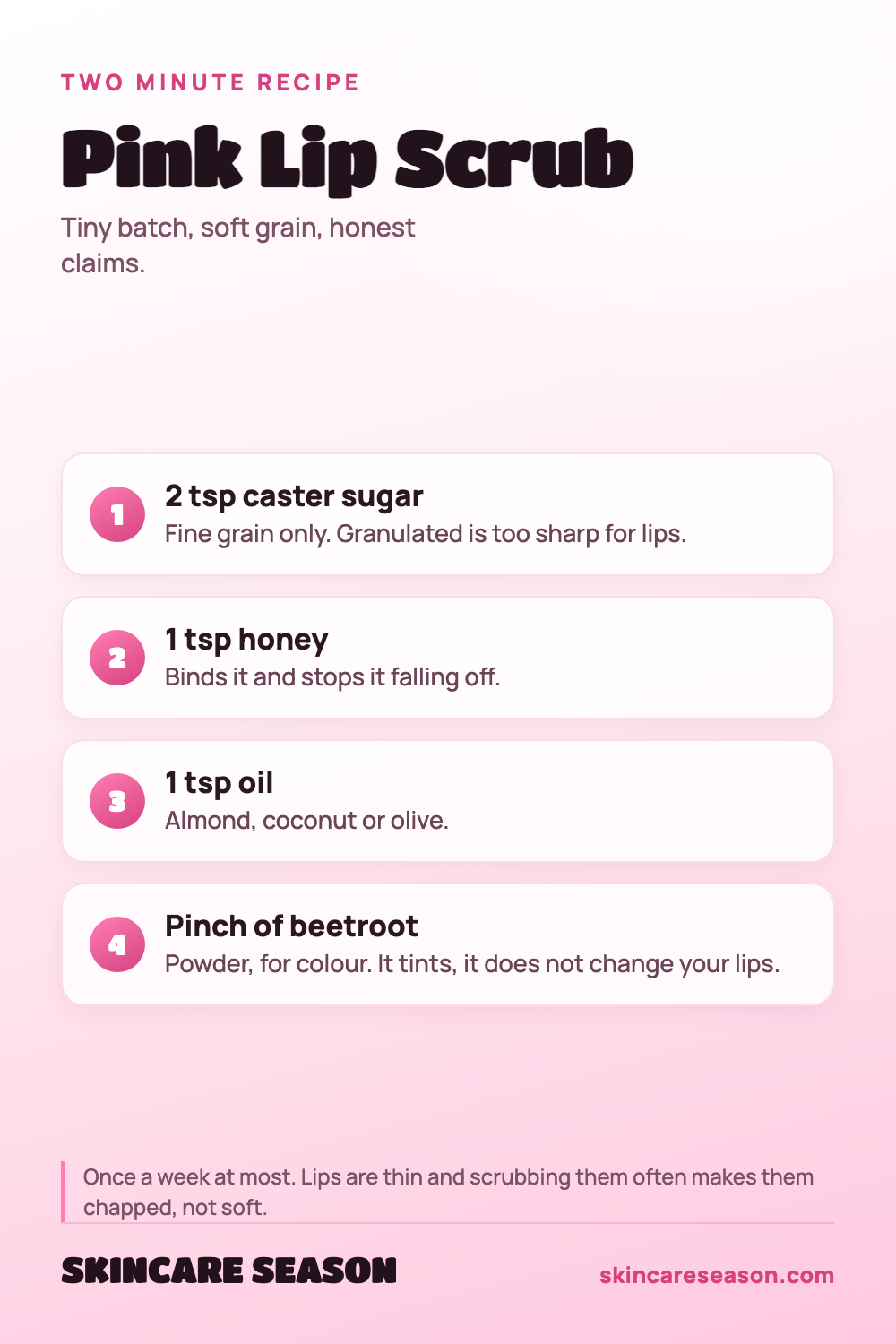
Caster sugar, not granulated. This is the single most important line. Granulated grains are large and hard enough to tear skin that is only a few cells thick.
 Save
Why lips need a different approach
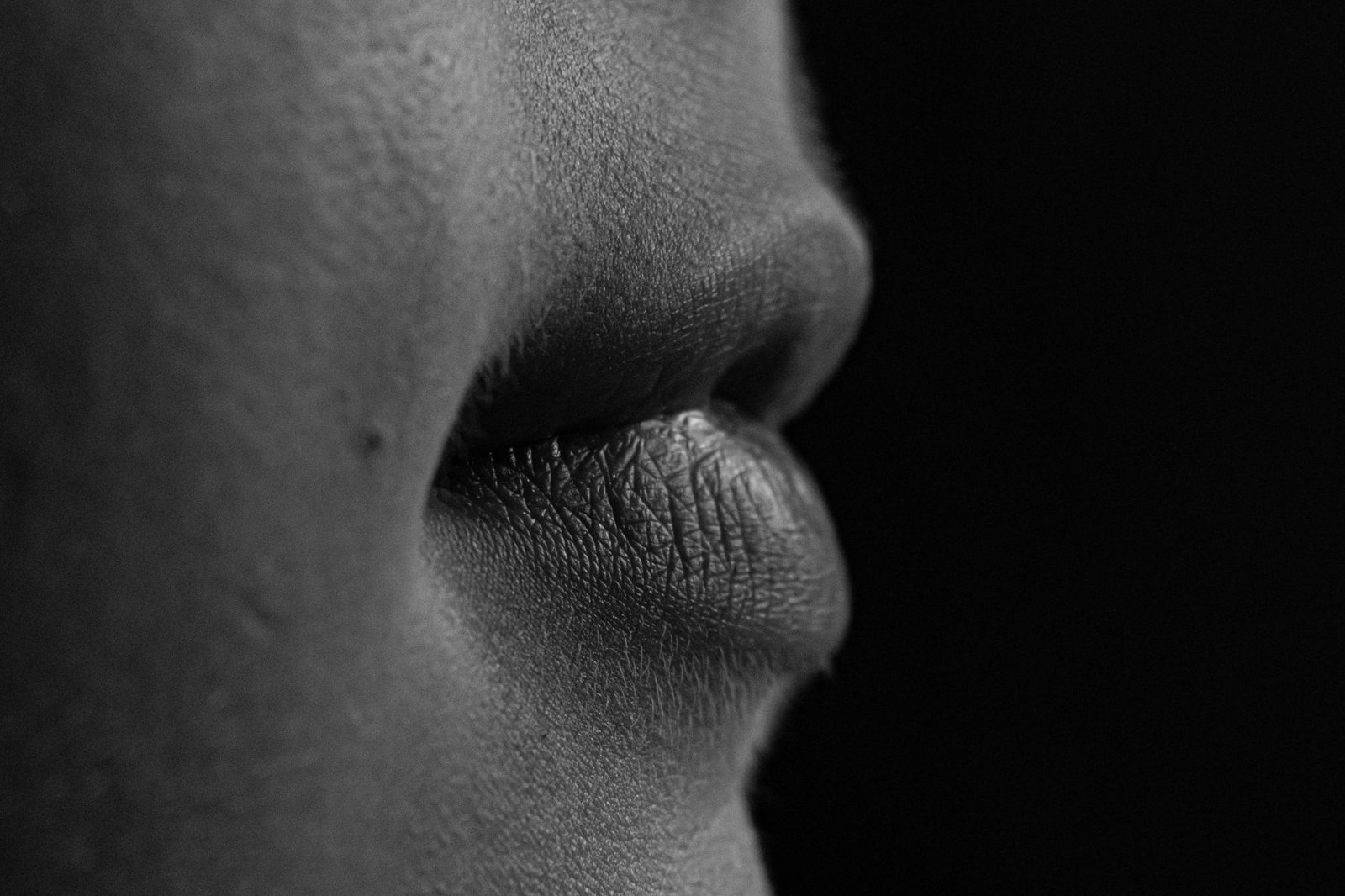
Lip skin has no oil glands and no sweat glands, and it is far thinner than the skin around it.
So it cannot produce its own protective layer, cannot hold water well, and has very little margin before you are through the protective layer entirely.
That is why the rules for lips are stricter than for anywhere else: finer grain, less pressure, less often, and always followed by something occlusive.
Making it
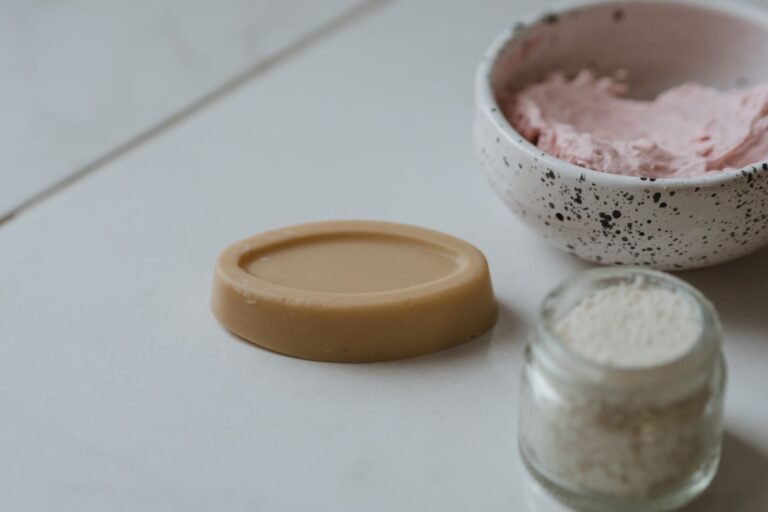
Two teaspoons of caster sugar in a small bowl. A teaspoon of honey and a teaspoon of oil, stirred through.
Then the smallest pinch of beetroot powder, if you want the colour. Start with less than you think, because it stains everything including the bowl.
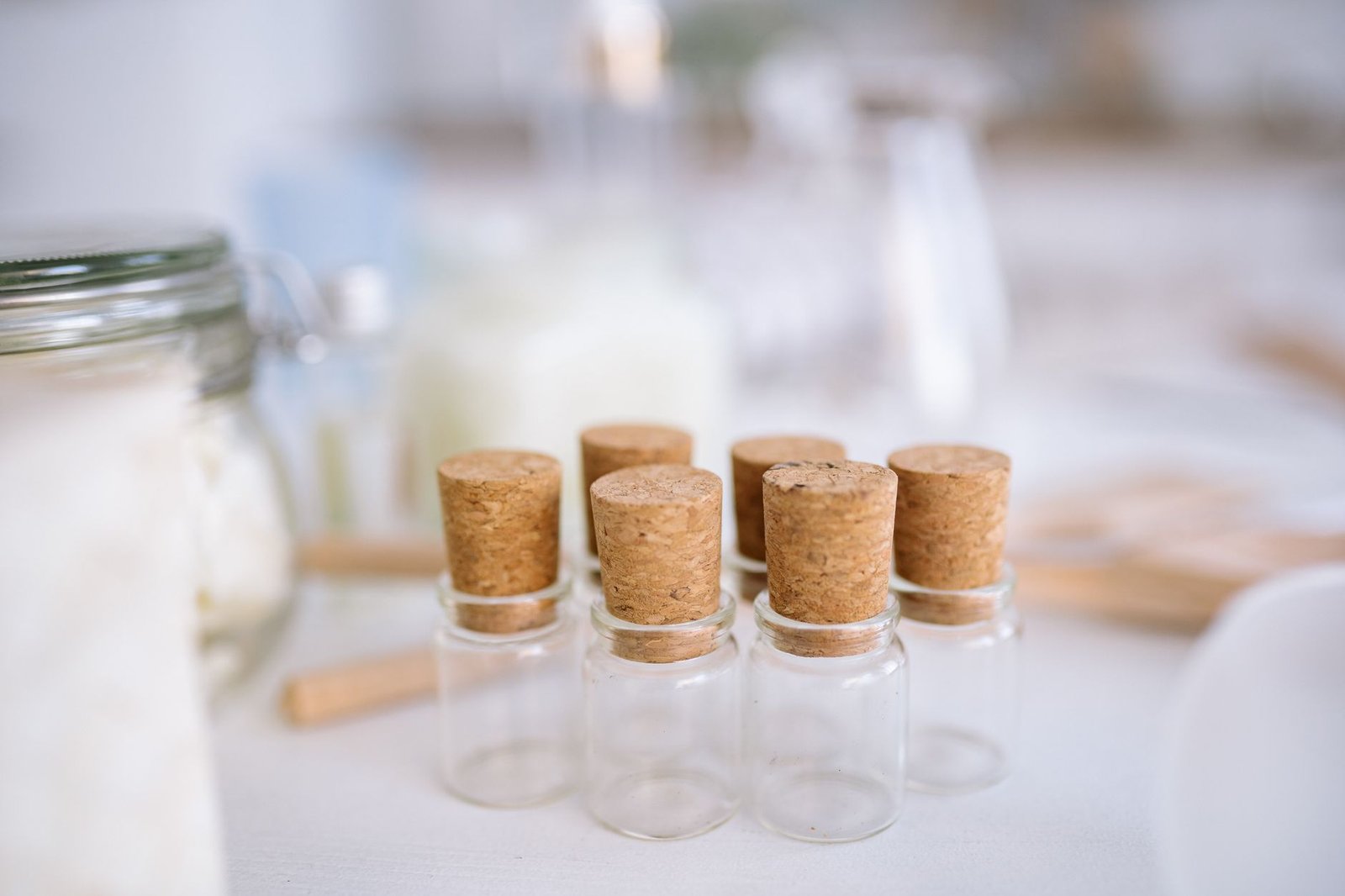
Spoon it into the smallest jar you own. A used lip balm pot, or a tiny sample jar. You genuinely need almost none of this and a large batch will go off before you finish it.
Watch this before you start
Using it without damage
- Once a week. Not daily, not every other day. Once.
- Ten to fifteen seconds, in the gentlest circles you can manage.
- On damp lips, after a drink or in the shower.
- Rinse or wipe off gently with a soft cloth.
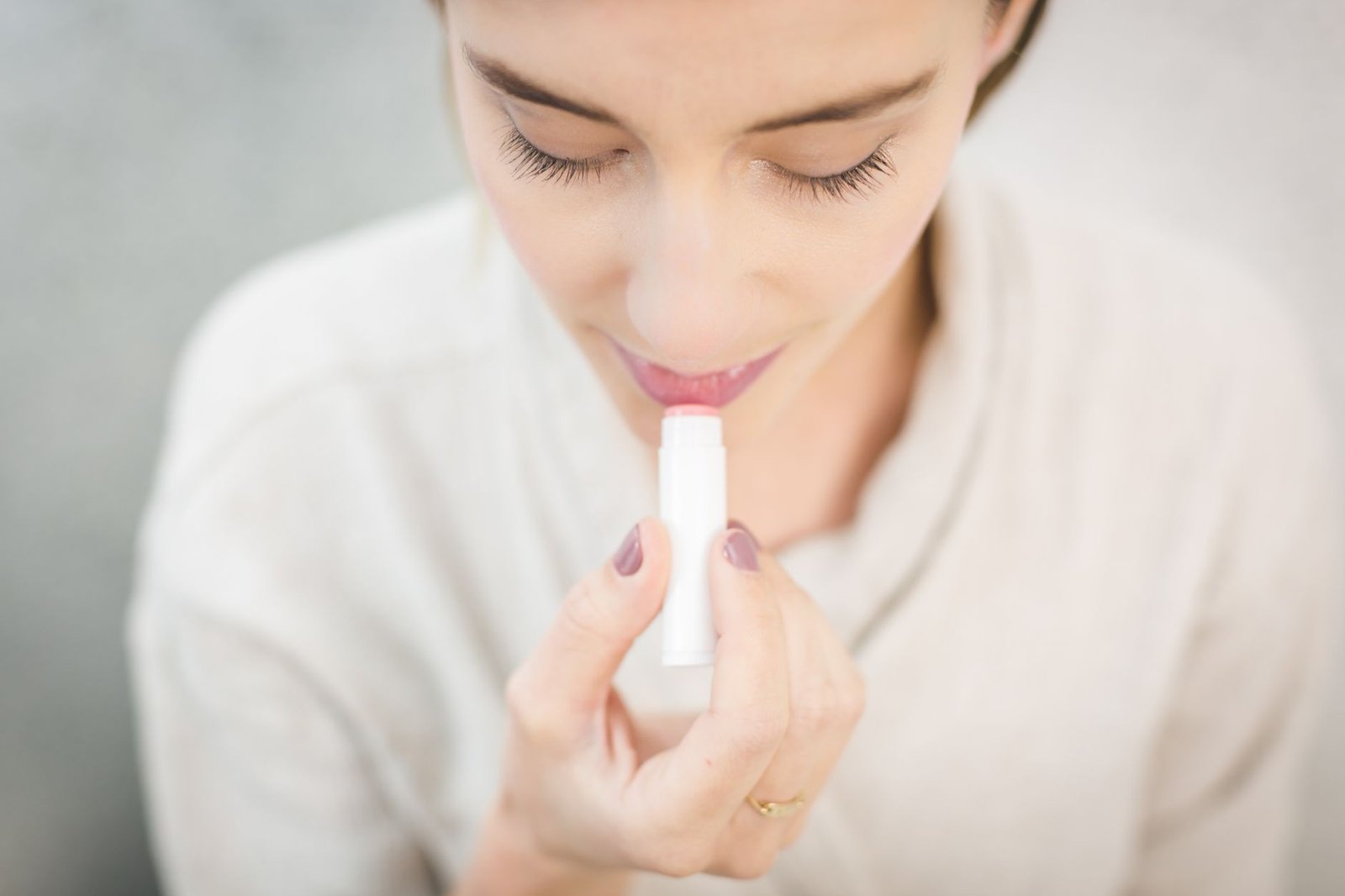
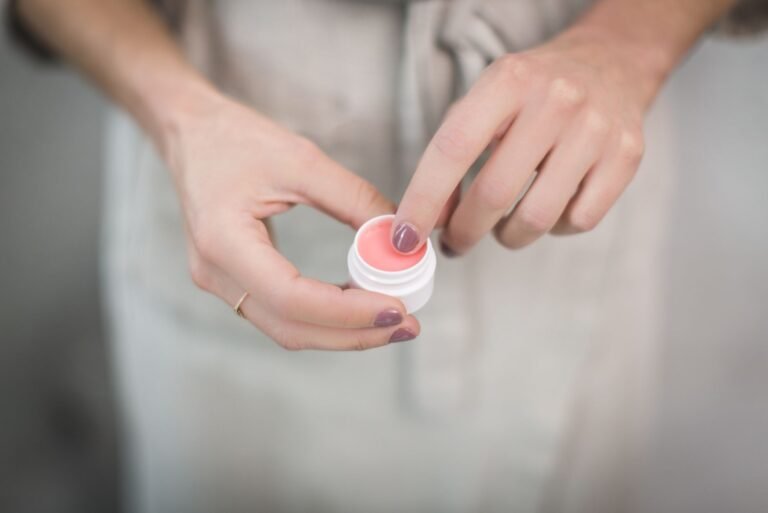
- Balm immediately, and this is not optional.
The balm is the half of this that produces the result. Scrubbing removes the flakes, the balm stops your lips being right back where they started within two hours.
 Save
When not to use it at all
If your lips are cracked, split at the corners, bleeding, or genuinely sore, a scrub will make all of that worse.
Flaky lips can be scrubbed. Damaged lips need to be left alone and covered in something thick until they heal, which usually takes a few days of a heavy balm and not licking them.
That last part is worth repeating. Licking your lips is the most common cause of persistently chapped lips, and no scrub or balm outruns doing it all day.
Storage
Honey is naturally antimicrobial and there is no water in the recipe, so a small jar keeps for about a month at room temperature.
Use a clean finger or a cotton bud rather than dipping repeatedly with wet fingers, since this jar goes near your mouth and hygiene matters more than usual.
Make small batches. A month is a long time for a jar you use four times.
 Save
Variations
Vanilla. A drop of extract. The most pleasant version and the safest.
Cocoa. Half a teaspoon of cocoa powder for a chocolate scrub and a light brown tint.
Skip the mint. Peppermint oil is a popular addition and it is a mild irritant on lip skin. The tingle people like is the irritation.
Also skip cinnamon, which is sometimes added specifically to cause a plumping flush. That flush is an inflammatory response and it is not something to encourage on skin this thin.
Why lips flake in the first place
Worth understanding, because it decides whether you need this recipe at all.
Lips have no oil glands, so they cannot make their own seal. Every bit of protection they have is something you applied. Left bare in dry air, they lose water continuously and the surface dries out and lifts.
Add licking, which feels like relief and evaporates within seconds taking more moisture with it, and you have the cycle most chapped lips are stuck in.
So flaking is nearly always a moisture problem rather than an exfoliation problem. A scrub removes the evidence. A balm removes the cause. If you are only going to do one, do the balm.
Common questions
How often can I use a lip scrub?
Once a week. More than that and you are causing the flakiness you are trying to remove.
Will it make my lips permanently pinker?
No. Beetroot tints temporarily and the post-scrub flush fades within an hour.
Can I use granulated sugar?
No. Too coarse for lip skin. Caster sugar or nothing.
Is it safe if I lick my lips?
The ingredients are all edible, which is one reason to keep the recipe this simple. Just do not make a habit of eating it.
My lips are worse since I started. Why?
Almost certainly too often, or too hard, or no balm afterwards. Stop for a week and use a thick balm only.
Do I need a lip scrub at all?
Honestly, not really. A good balm used consistently prevents most flakiness. The scrub is for when it has already happened.
The short version
Two teaspoons caster sugar, one of honey, one of oil, a pinch of beetroot powder for colour. Tiny jar, once a week, fifteen seconds, balm immediately after.
The pink is a temporary stain and a temporary flush, and the balm matters more than the scrub does. 🙂

Leave a Reply