
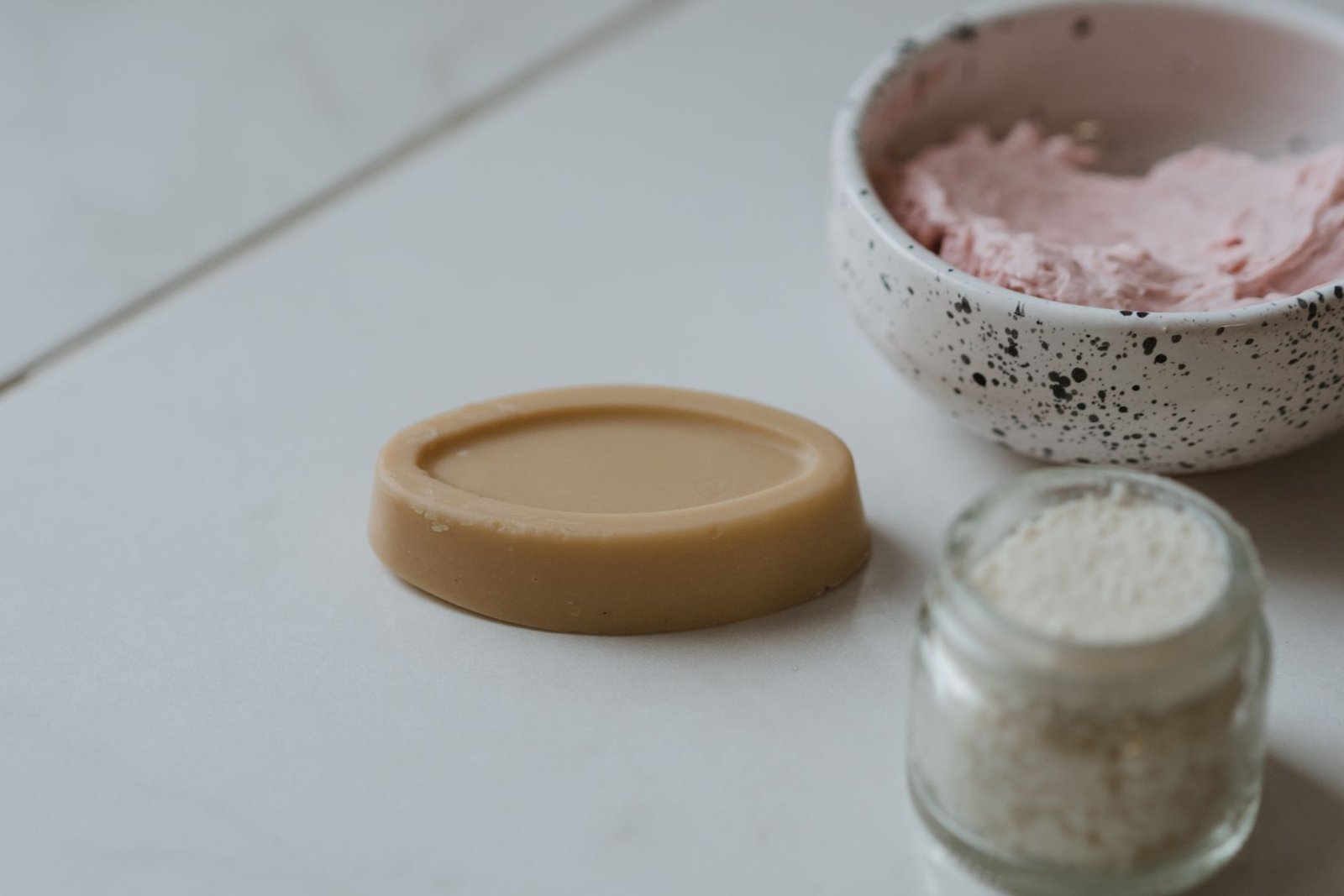
A lip scrub is the least complicated product in anyone’s bathroom and the one most reliably misused. The instructions on the tub usually say to use it daily, which is commercially sensible and bad advice.
Lips are not arms. The technique matters far more than the product does.
 Save
Why lips are a special case
Three anatomical facts, and together they explain every rule below.
Lip skin is dramatically thinner than facial skin, which is already thinner than body skin. There is very little margin between the surface layer and the tissue underneath.
Lips have no oil glands, so they cannot produce a protective film. Everything protecting them is something you put there.
And they have no sweat glands, so they cannot regulate their own moisture at all.
A lip is essentially unprotected skin that you also expose to weather, food, drink and constant movement. Scrubbing it needs care.
The five rules
 Save
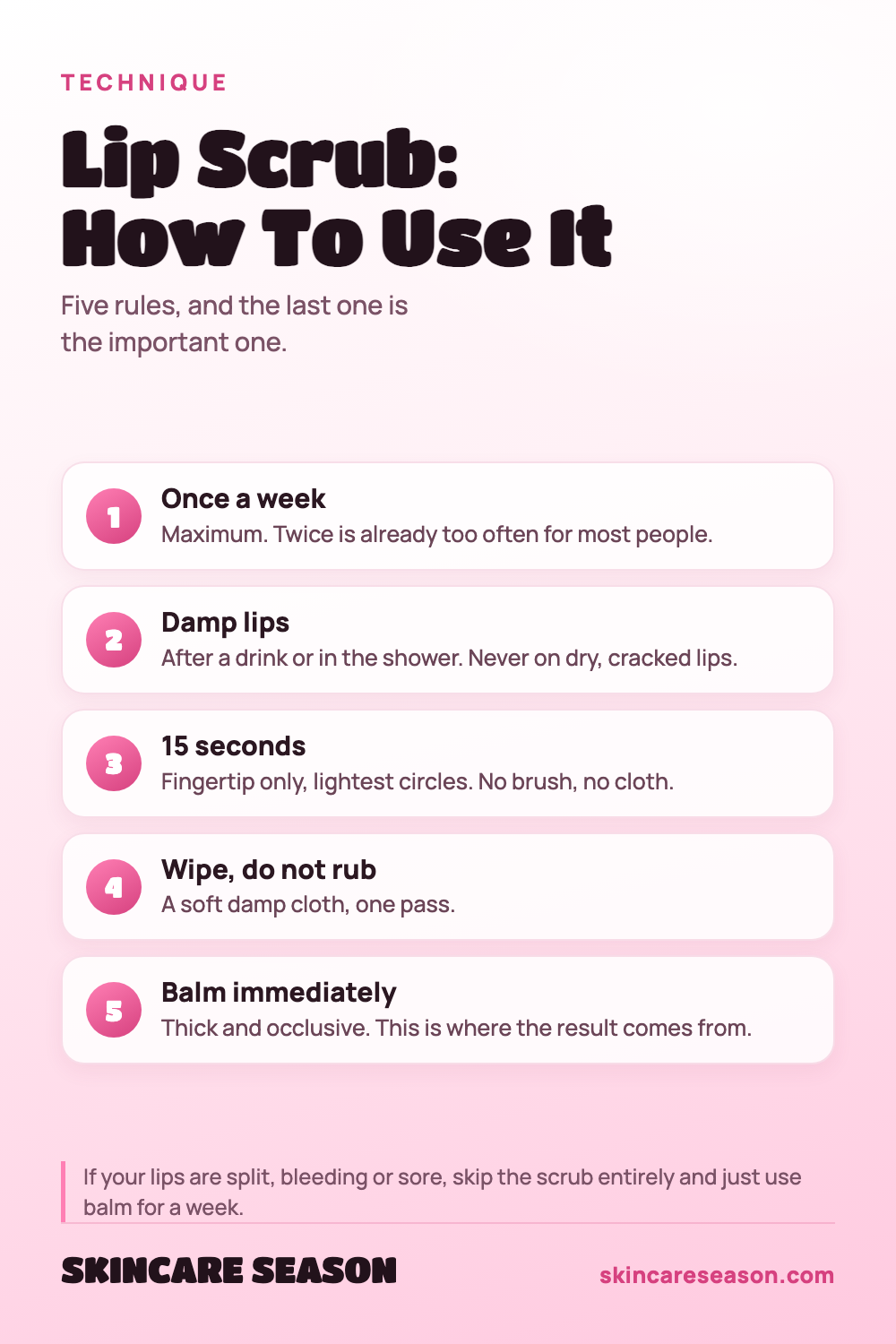
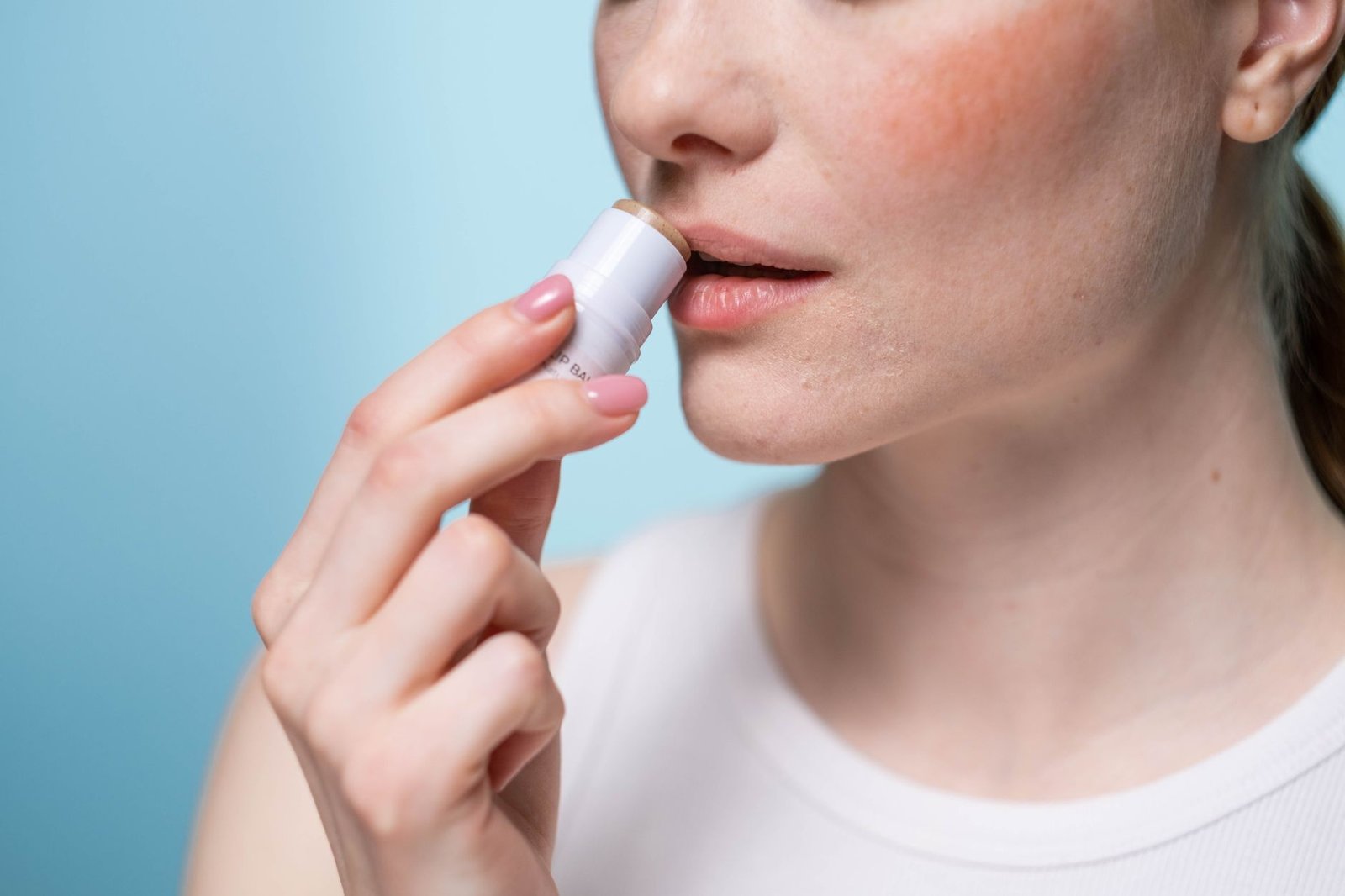
The last one is where the result actually comes from. A scrub without a balm afterwards leaves your lips freshly stripped of their flaky layer with nothing on them. Two hours later they are drier than when you started.
 Save
How often, honestly
Once a week. If your lips are in good condition, once a fortnight is plenty.
Here is the pattern most people fall into. Lips are flaky, so they scrub, which irritates them, which produces more flakiness the next day, so they scrub again. That loop can run for months and it feels like the scrub is necessary when the scrub is the cause.
Breaking it is simple and slightly uncomfortable. Stop scrubbing entirely for two weeks, use a thick balm four or five times a day, and let them recover. Most people find they need the scrub far less afterwards.
The technique
Damp lips, always. After a shower, after a drink of water, or with a wet fingertip first. Scrubbing dry, cracked lips is how people make them bleed.
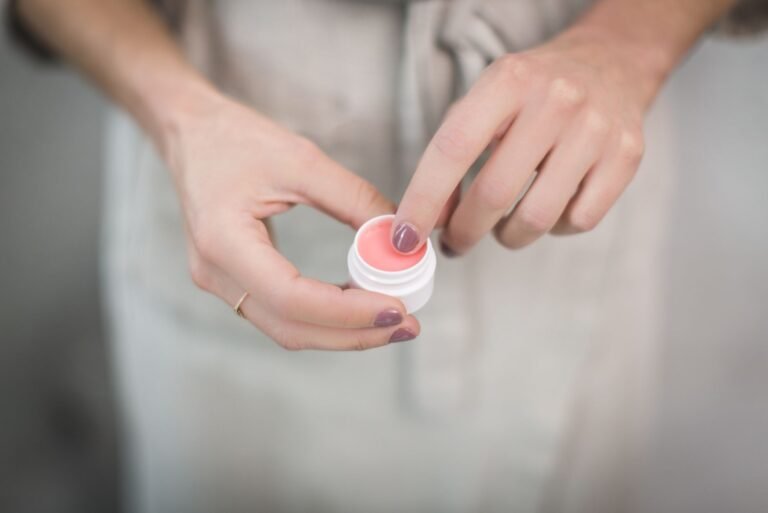
A small amount on a clean fingertip. Not a toothbrush, not a cloth, not a brush. A fingertip gives you the pressure feedback that everything else removes.
Fifteen seconds of very light circles. You are lifting flakes that are already loose, not sanding anything off. If it feels like it is working hard, it is too hard.
Then wipe with a soft damp cloth in one gentle pass, or rinse. Do not scrub it off with the cloth, which is a second round of exfoliation people do without noticing.
 Save
The balm is the actual product
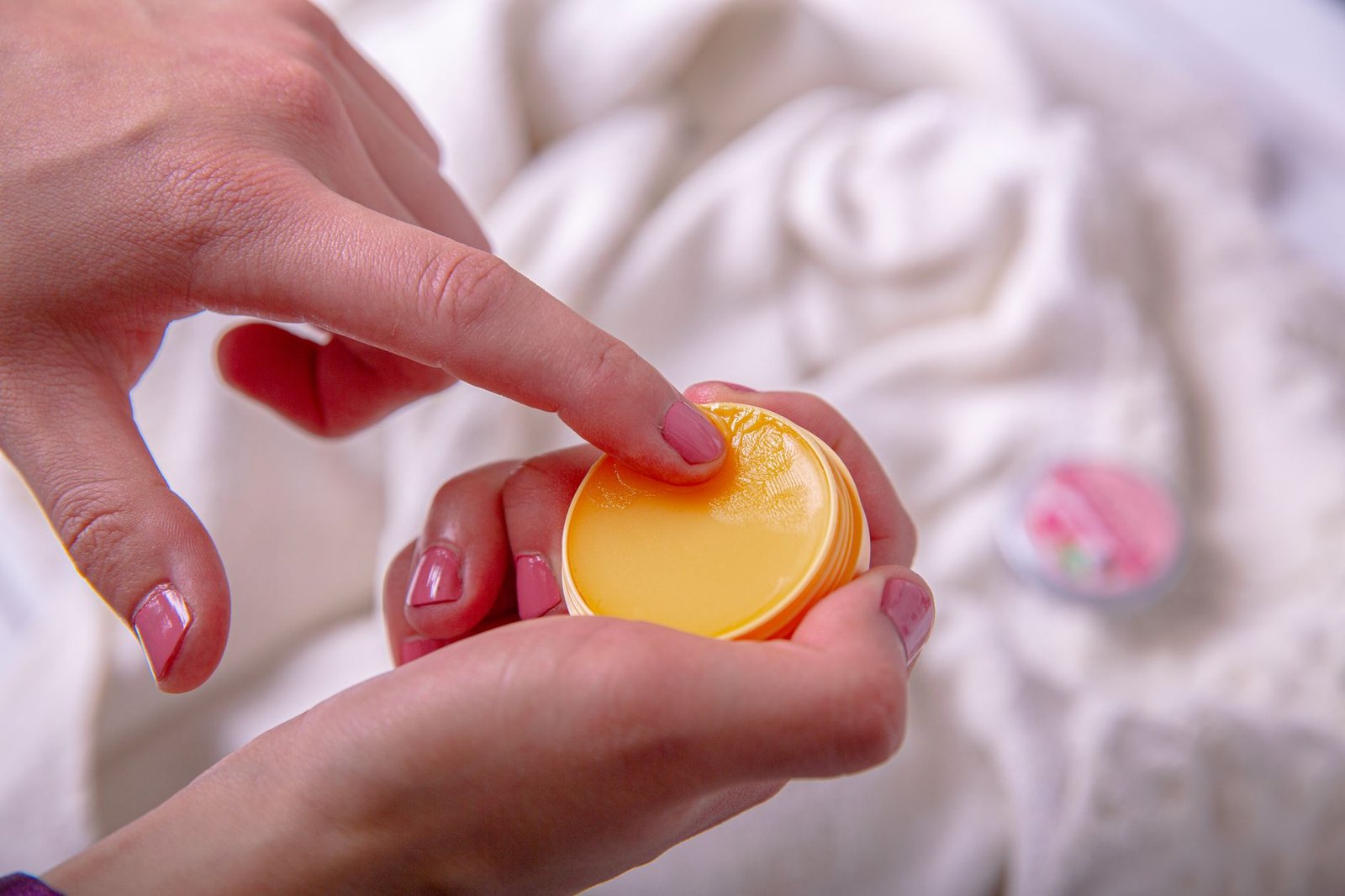
Straight away, while lips are still slightly damp. And thick, rather than a glossy stick.
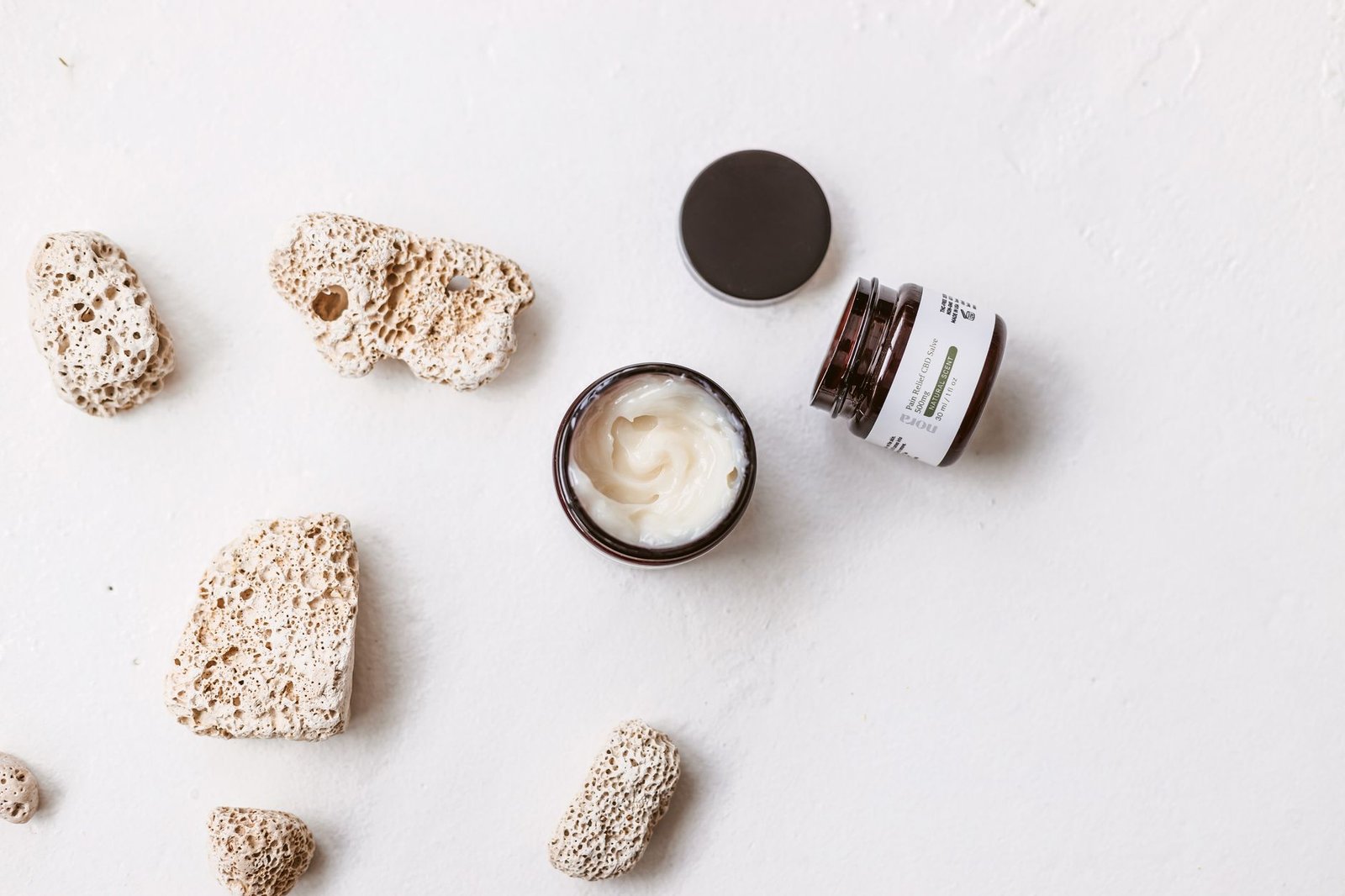
What you want is an occlusive: petrolatum, lanolin, beeswax or shea. Something that physically stops water leaving. A thin, pleasant-feeling gloss does not do that job.
Reapply through the day. Four or five times is not excessive for lips in bad condition, and it is far more useful than any weekly ritual.
When not to scrub at all
- Cracked or split lips, particularly at the corners.
- Bleeding, obviously.
- Sore or stinging lips, even without visible damage.
- Cold sores, where scrubbing can spread the virus. Leave them entirely alone.
- Sunburnt lips.
In all of those, balm only, for at least a week. FYI the corners-of-the-mouth cracking that a lot of people scrub at can have causes no scrub addresses, and if it persists it is worth mentioning to a doctor.
Watch this before you start
Ingredients to avoid in a lip scrub
Granulated sugar. Too coarse. Caster sugar is the maximum grain size for lips.
Salt. Sharp, and it stings badly on any broken skin.
Peppermint and cinnamon oils. Both are added to produce a tingle, and the tingle is mild irritation. On skin this thin that is not a feature.
Coffee grounds. Excellent on legs, far too coarse for lips.
 Save
Do you need one at all
Honestly, most people do not. A good occlusive balm used consistently prevents the flakiness that a scrub removes.
The scrub is a corrective tool for lips that are already flaky, not a maintenance step. Treating it as maintenance is what turns it into the problem.
If you enjoy it, once a week does no harm on healthy lips. Just do not mistake it for the thing keeping your lips soft. That is the balm.
A week of lip care that works
If your lips are in poor condition, this is the whole plan.
Every day. A thick occlusive balm on waking, after every meal or drink, and last thing at night. An SPF balm for daytime if you are outside at all.
Every day. Stop licking them. This is the hardest part and it matters more than any product.
Once, at the end of week two. A gentle scrub, if there are still flakes to lift. Often there are not.
Two weeks of that fixes most chapped lips. Adding a scrub to the start of it usually sets you back several days.
Choosing a shop-bought one
If you would rather buy than make, the same rules decide whether it is any good.
Look at the grain. Fine sugar is what you want, and a lot of commercial lip scrubs use granulated because it looks better in the pot. Rub a little between your fingers before it goes near your mouth.
Check for menthol, camphor and cinnamon high in the ingredient list. Those produce the tingle that gets marketed as a plumping effect, and on lip skin that tingle is irritation.
And check whether it comes with a balm or expects you to already own one. A scrub sold on its own is half a product.
Common questions
How often should I use a lip scrub?
Once a week at most, once a fortnight if your lips are fine.
Can I use a toothbrush instead?
No. Bristles are far too abrasive and you cannot judge the pressure.
Should I scrub before applying lipstick?
Not immediately. Scrub the night before and use balm, so lips are smooth rather than freshly stripped.
My lips got worse after scrubbing. Why?
Too often, too hard, or no balm afterwards. Stop for two weeks and use balm only.
Is it safe to swallow?
Homemade sugar, honey and oil scrubs are all edible ingredients, which is one good reason to keep the recipe simple.
Can I use it on cold sores?
No. Leave them completely alone.
The short version
Once a week, damp lips, fingertip only, fifteen seconds of almost no pressure, wipe gently, balm immediately.
And if your lips are cracked or sore, skip the scrub entirely and use a thick balm for a week. The balm was always the important half. 🙂


Leave a Reply