
Natural is the most overused word in skincare and one of the least informative. Poison ivy is natural. Petroleum jelly is refined in a factory and is one of the safest, best tolerated things you can put on your skin.
So this is not an argument for or against natural. It is a sorting exercise: which pantry ingredients genuinely work in a scrub, and which popular ones should stay in the cupboard.
 Save
Use or skip
 Save
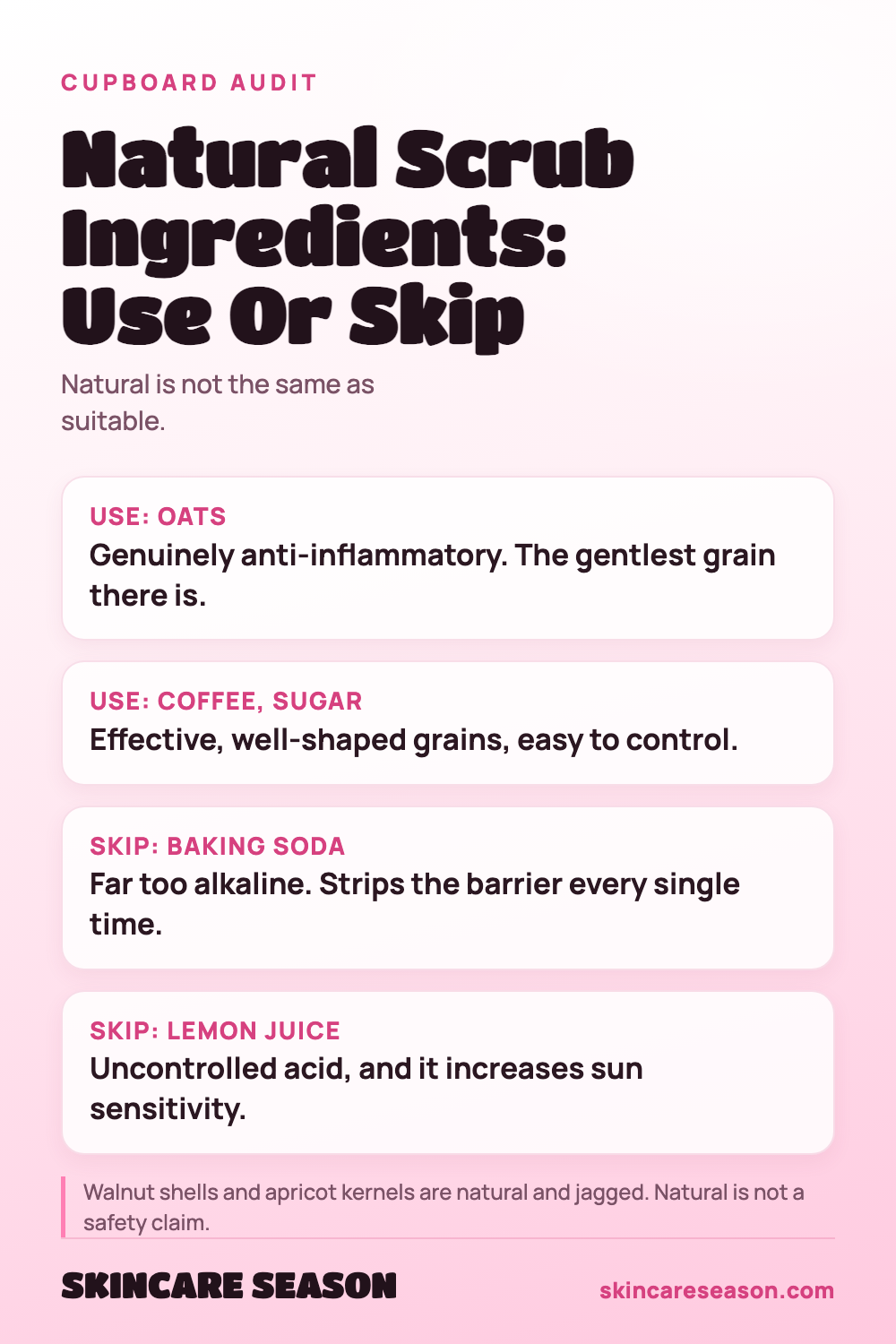
The two on the skip list appear in an enormous number of homemade recipes, and both are actively bad ideas rather than merely useless.
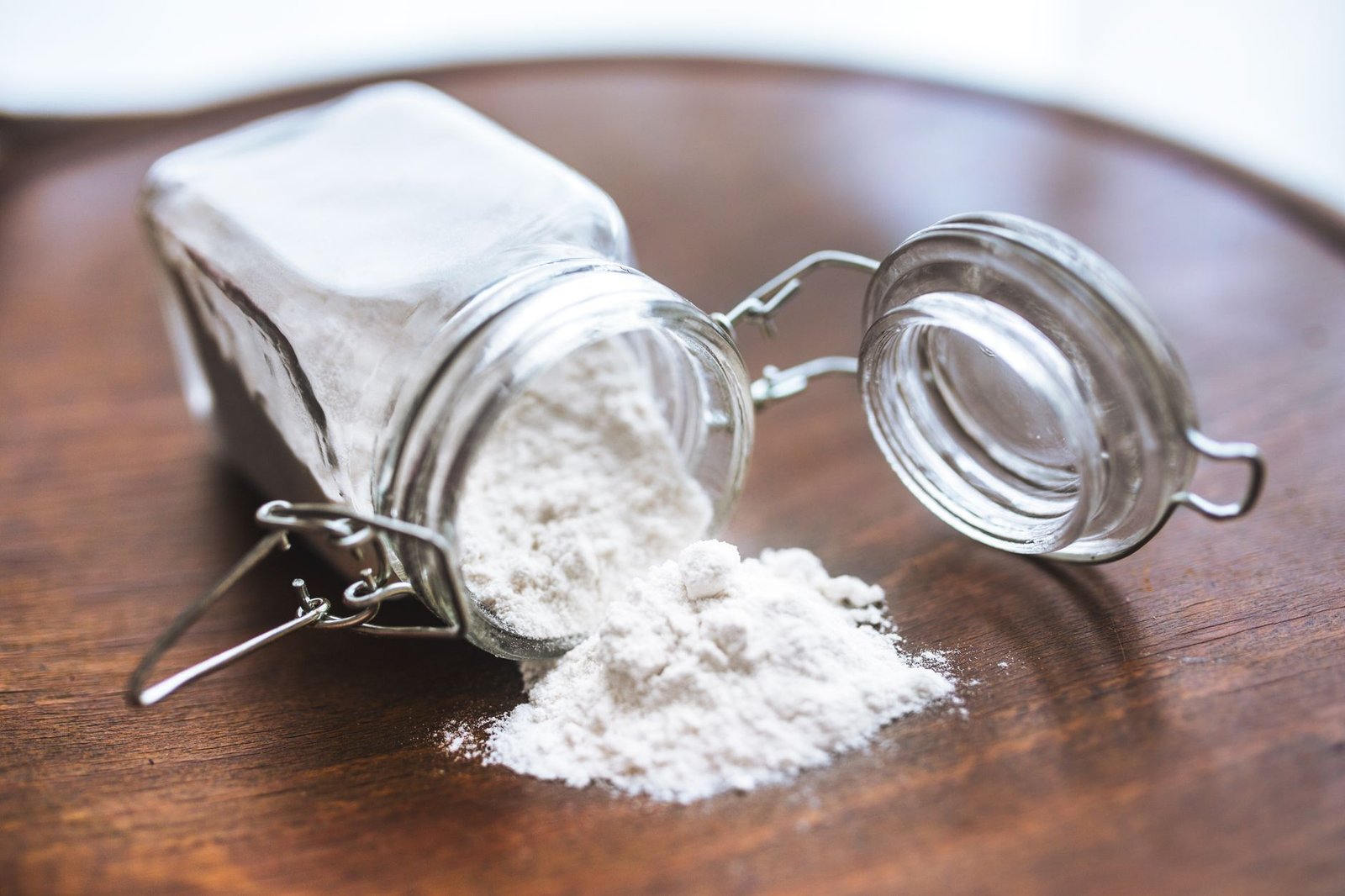
Why baking soda is the worst offender
It turns up in DIY scrubs, DIY face masks, DIY deodorants and DIY everything, and it should be in none of them.
Your skin surface is mildly acidic, sitting at a pH of around 4.7 to 5.5. That acidity is not incidental. It is part of how the barrier works and part of how it keeps unwanted bacteria in check.
Baking soda has a pH of around 9. Putting it on your skin swings the surface sharply alkaline, and the barrier takes hours to recover. Do it repeatedly and you get exactly the tight, stinging, reactive skin that people then try to fix with more DIY recipes.
It is not a gentle natural exfoliant. It is a fine abrasive with a chemistry problem. :/
 Save
And why lemon juice is the second worst
The logic is appealing. Lemon juice contains citric acid, citric acid is an alpha hydroxy acid, AHAs exfoliate. Therefore lemon juice is a natural glycolic acid.
The problem is concentration and pH. A proper AHA product is formulated at a known percentage and a controlled pH of around 3.5. Lemon juice sits at a pH of about 2, varies from lemon to lemon, and you have no idea what you are applying.
It also contains compounds that cause a genuine phototoxic reaction. Lemon juice on skin plus sunlight can produce a burn-like reaction that leaves pigmentation lasting months.
Citrus zest in a rinse-off scrub is a very different and much smaller exposure, and that is fine. Juice, left on skin, is not.
What genuinely works: oats
The best thing in your cupboard, and the one with actual evidence.
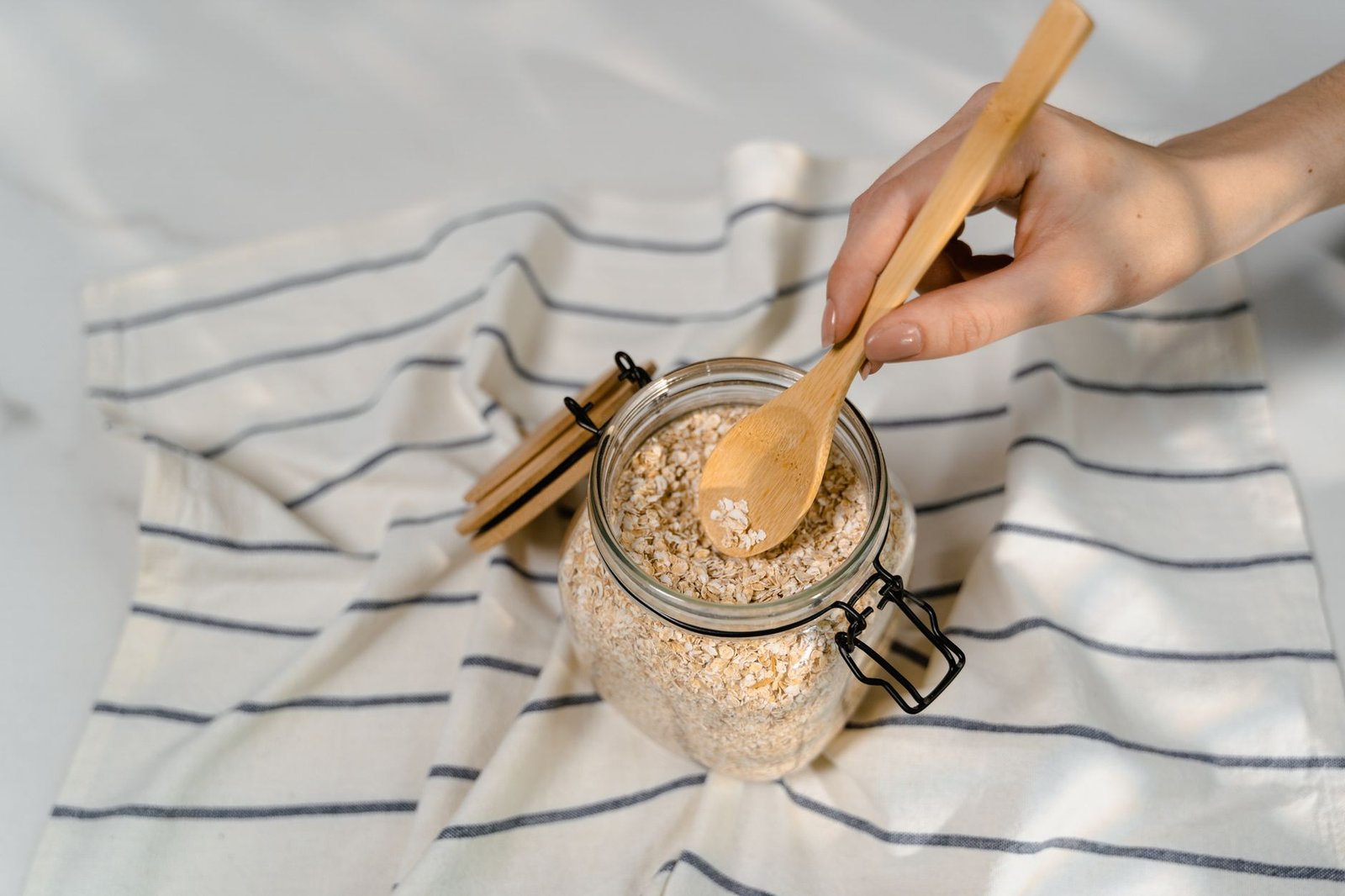
Oats contain avenanthramides, which have measurable anti-inflammatory activity. This is why colloidal oatmeal appears in proper products for itchy, irritated skin, and why it is one of very few kitchen ingredients that has crossed into real dermatology.
Ground fine, oats are also the softest grain available. They are the only pantry ingredient soft enough to go anywhere near a face.
Grind them to a powder, mix with honey and a little water immediately before use, and do not store the wet version.
 Save
What genuinely works: coffee and sugar
Used coffee grounds. Coarse, well-shaped, effective on thighs and rough patches, and you were throwing them out anyway. Dry them first.
Sugar. White, brown or caster depending on how gentle you need it. Dissolves as you use it, which is a built-in safety feature no other grain has.
Both are cheap, both are predictable, and both have the right kind of grain: rounded rather than jagged.
The one nobody mentions: green tea
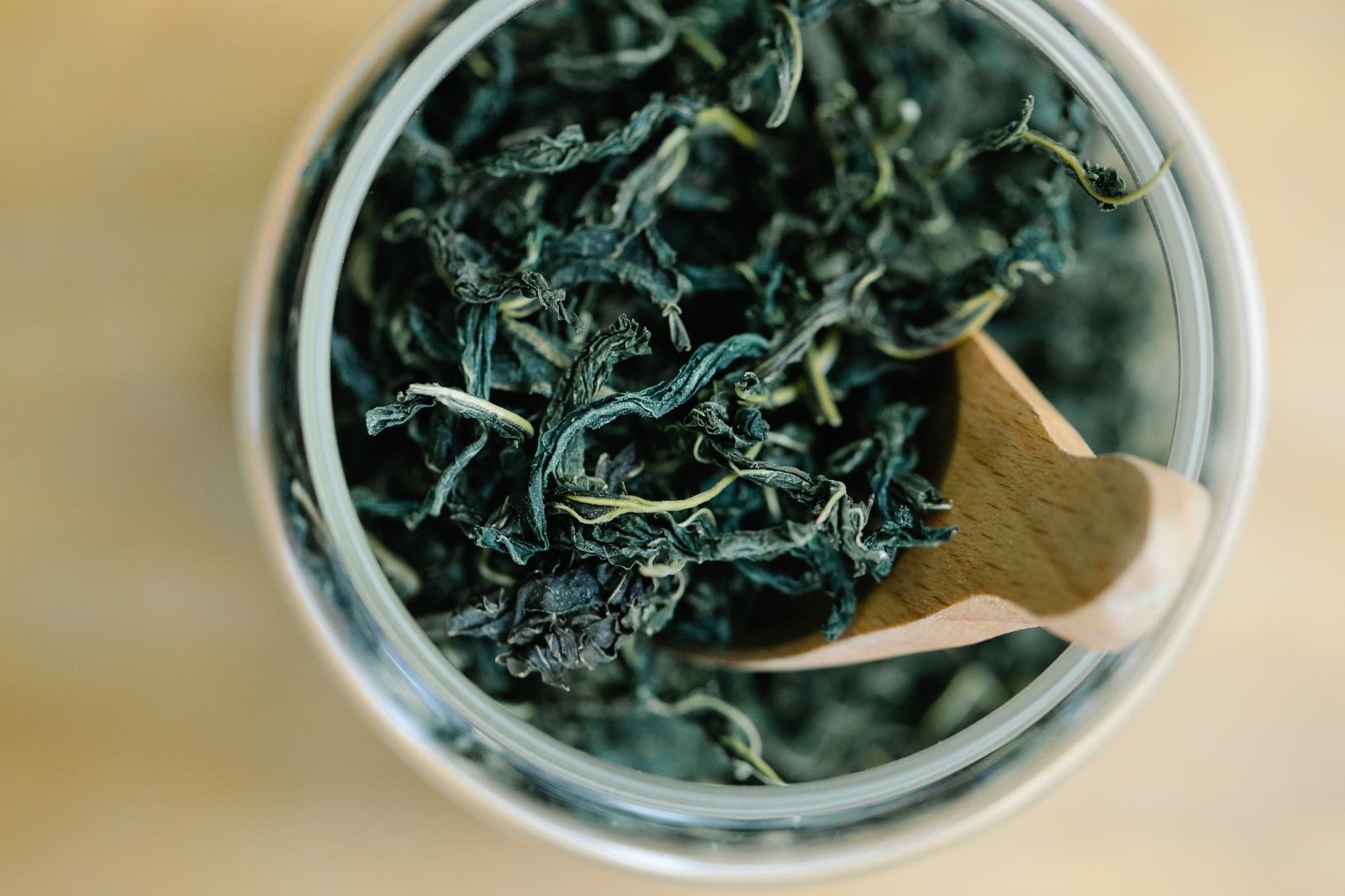
Used green tea leaves make a genuinely good fine scrub, and almost nobody does it.
The leaves are soft after brewing, they break down further as you scrub, and green tea contains polyphenols with real antioxidant activity. It smells clean rather than sweet, which suits people who do not want to smell like a bakery.
Squeeze them out, mix two parts leaves with one part oil, use within a few days and keep it in the fridge, since brewed leaves hold water.
Watch this before you start
The natural ingredients that are actively unsafe
Crushed walnut shells and apricot kernels. Entirely natural, and jagged under magnification. These are the ingredients behind the well-known lawsuit against a major face scrub.
Pumice on anywhere but heels. Natural volcanic rock, and far too aggressive for normal skin.
Undiluted essential oils. Natural, and some of the most potent contact allergens in common use. A few drops per jar is fine, a generous pour is not.
Cinnamon oil. Frequently recommended for its warming tingle. The tingle is irritation.
 Save
The water rule, one more time
Every genuinely natural ingredient with water in it will spoil in a jar. Fresh fruit, fresh milk, yoghurt, aloe straight from a leaf, cucumber, brewed tea.
Oil and dry grain together are effectively self-preserving. Add water and you have made a growth medium with no preservative in it, sitting in a warm bathroom.
Commercial natural products get around this with preservatives, which is the thing people making homemade versions are usually trying to avoid. The honest resolution is to make water-containing versions fresh, one use at a time.
Where commercial products actually beat homemade
Worth being even-handed, since most of this article is about making your own.
Shop-bought scrubs are preserved, which means they can safely contain water-based ingredients that a homemade jar cannot. That opens up textures and additions that are genuinely not available to you at home.
They are also consistent. A commercial formula has the same grain size and the same ratio in every jar, where a homemade one varies with the sugar you happened to buy.
What you are paying for is that consistency, the preservation, and the packaging. Not a fundamentally better exfoliant, which is the part the pricing implies and does not deliver.
Common questions
Is baking soda safe as a scrub?
No. Its pH is around 9 against your skin’s 5. It disrupts the barrier every time.
Can I use lemon juice to brighten skin?
No. Uncontrolled acidity plus a real phototoxic risk. Citrus zest in a rinse-off scrub is fine.
Does natural mean gentler?
No. Walnut shells are natural and jagged. Petrolatum is refined and extremely well tolerated.
What is the safest pantry ingredient?
Finely ground oats, by a wide margin.
Can I use yoghurt in a scrub?
Only mixed fresh and used immediately. Never in a jar you keep.
Are essential oils necessary?
No. They are scent. A scrub works identically without them and is less likely to irritate.
The short version
Oats, sugar, coffee and used green tea leaves are the four pantry ingredients genuinely worth using. Baking soda and lemon juice are the two to leave out, despite appearing in nearly every recipe online.
And natural is a description of where something came from, not a claim about whether it suits your skin. 🙂

Leave a Reply