


Most people make one scrub recipe and use it all year, which is a bit like wearing the same coat in July and January. Your skin is dealing with completely different things in each season, and the same jar is either too rich or not rich enough for most of the year.
The base stays the same. What shifts is the ratio, the grain and the oil.
 Save
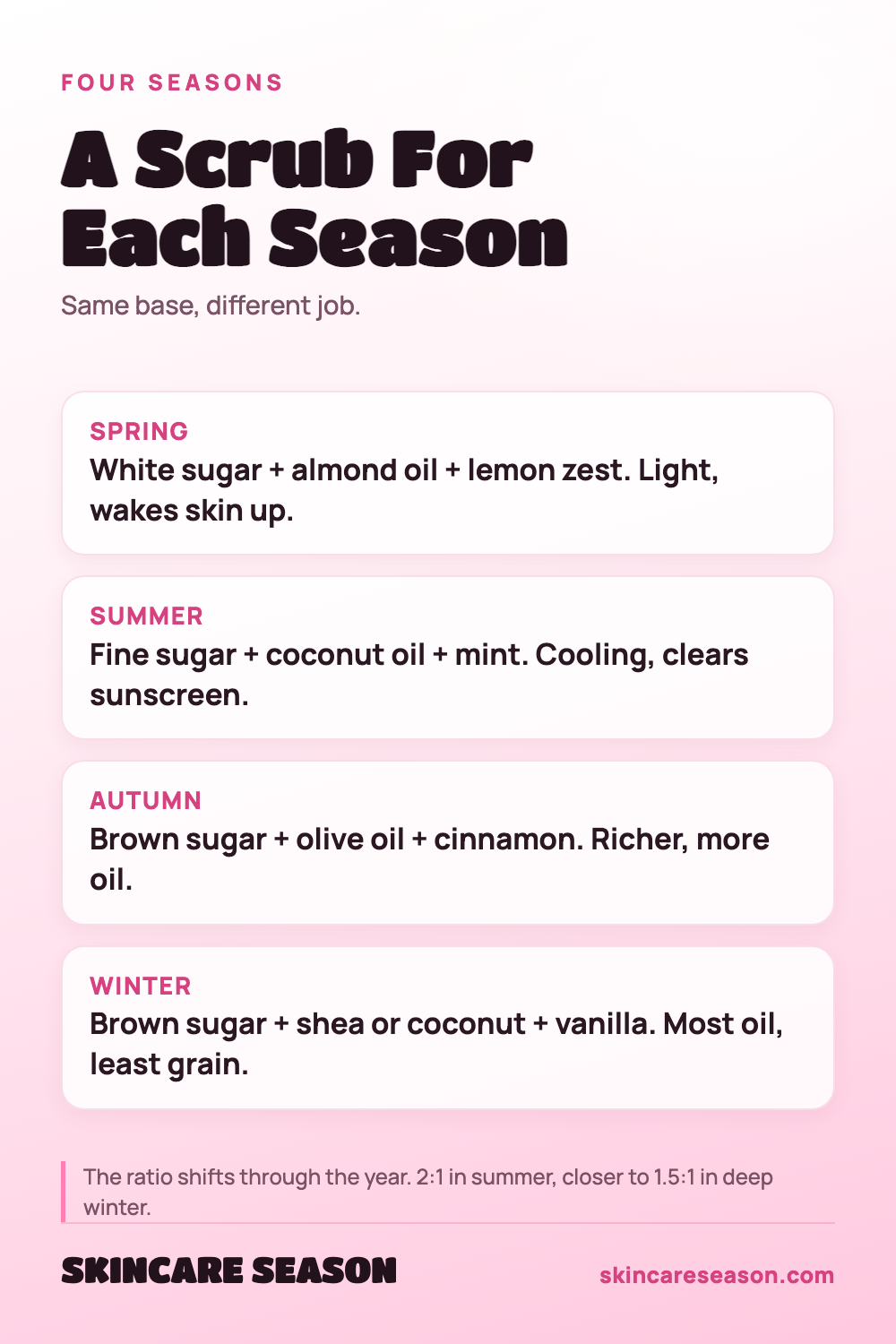
The four seasons
 Save
Notice that the ratio moves. Two parts sugar to one part oil is the summer number. By deep winter you want closer to one and a half to one, because the oil is doing more of the work than the grain is.
Spring: waking skin up
After a winter of central heating and hot showers, skin is usually dull and slightly built-up rather than genuinely damaged.
White sugar and sweet almond oil, with the zest of a lemon folded through. Light, not too rich, and enough grain to clear the winter dullness.
Zest, not juice. Juice is water, and water in a scrub jar means bacteria. Zest carries the oils and the scent without the moisture.
One caution: citrus oils can increase sun sensitivity. Zest in a rinse-off scrub is a very small exposure and generally fine, but do not leave it sitting on your skin and do not use it before a sunny day out.
 Save
Summer: clearing what the day put on you
Summer skin has a specific problem, and it is not dryness. It is layers of sunscreen, salt water, chlorine and sand, applied and reapplied over weeks.
Fine sugar with coconut oil and a few drops of peppermint. The finer grain because summer skin is usually less rough, the coconut because it rinses cleanly, and the peppermint because it feels genuinely good on hot skin.
Keep the ratio at two to one here. Summer skin does not want a heavy oil film sitting on it, and a greasy scrub in August is unpleasant.
Use it a couple of days after any sun exposure rather than the same evening. Scrubbing skin that has caught the sun is a bad idea even when it has not visibly burnt.
Autumn: transitioning
This is the season people forget, and it is the one where getting ahead matters most.
Autumn is when the heating goes on, the air dries out, and skin starts losing water faster than it has all year. If you wait until skin is visibly dry to change your routine, you are already a month behind.
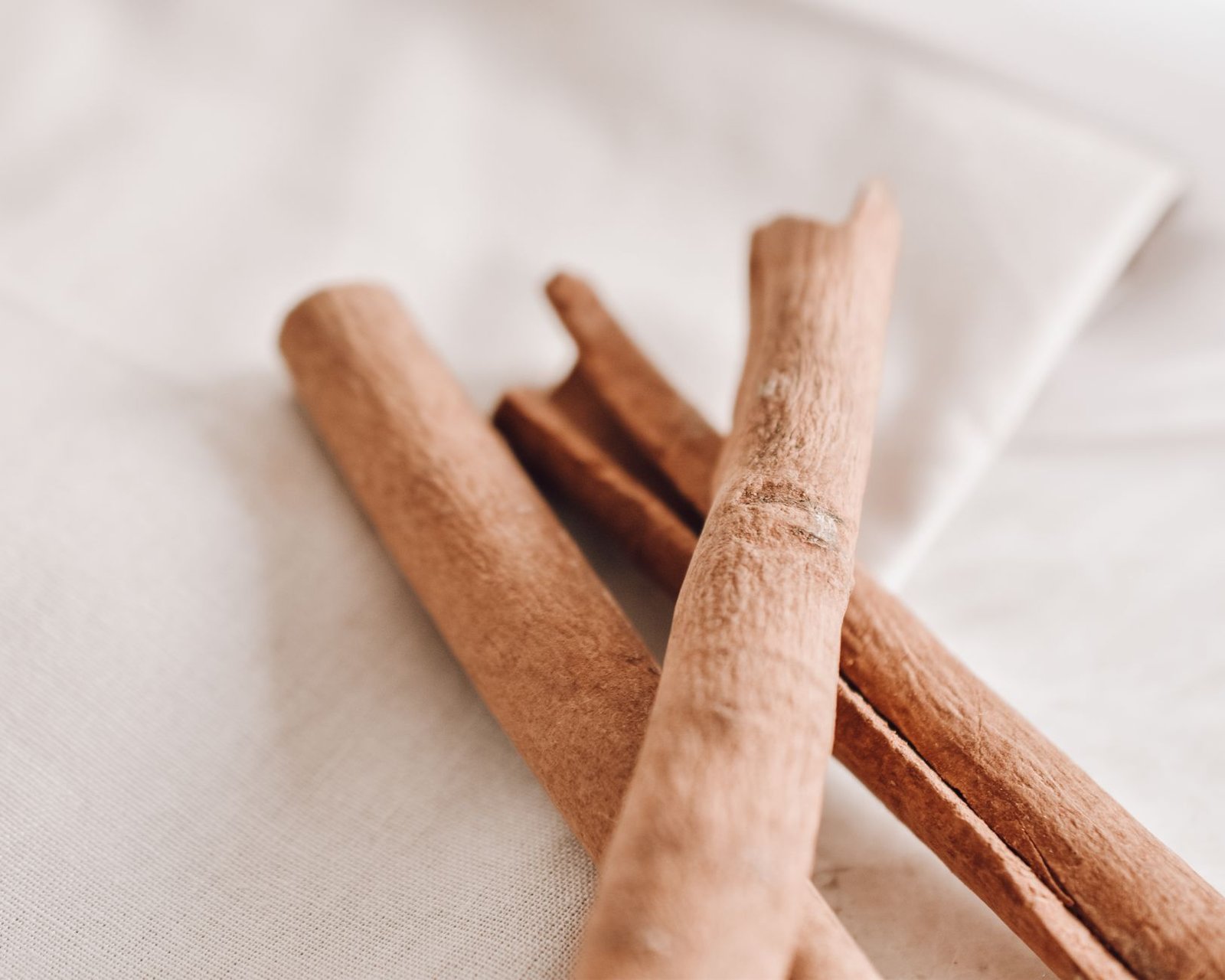
Brown sugar with olive oil and cinnamon. Softer grain, richer oil, and the ratio starts shifting toward more oil. Cinnamon is warming in scent rather than in effect, and a small amount goes a very long way.
Be careful with cinnamon specifically. Cinnamon essential oil is a known irritant at anything above a tiny concentration. Ground cinnamon from the cupboard, half a teaspoon per jar, is the safer route.
 Save
Winter: mostly about the oil
In deep winter the exfoliation is almost secondary. What your skin actually needs is oil, and the grain is there to clear the flakiness that dryness produces.
Brown sugar with shea butter or coconut oil, and vanilla. Shift the ratio to about one and a half parts sugar to one part oil, so it is noticeably richer and softer than the summer version.
Melt the shea gently before mixing, and expect the finished scrub to be firm at room temperature. That is normal and it softens in your hands.
Use it less often than you would in summer. Once a week is plenty when the barrier is already under pressure from heating and hot water. IMO winter is when most people over-exfoliate without realising, chasing flakiness that is actually dehydration. :/
Watch this before you start
The one rule that does not change
Moisturise within three minutes of getting out, on damp skin, in every season.
This matters more in winter than summer, and it matters in summer too. A scrub clears the dull layer. The moisturiser applied immediately afterwards is what makes the fresh layer look and feel good, and without it you have done half a job.
Making any of them
Same method every time. Grain in a bowl, three quarters of the oil folded through gently, check the texture, add the rest a little at a time until it looks like wet sand.
Scent and extras last. Into an airtight jar, kept outside the shower, used with a dry spoon.
Two to three months each, and honestly you will use them faster than that if you are making a seasonal batch.
 Save
Storing a year of scrubs
If you are making seasonal batches, a little planning saves you throwing half of it away.
Make small jars rather than big ones. A two to three month shelf life sounds generous until you realise a large jar made in September is past its best by the time the weather actually turns.
Label with the date and the season. It sounds fussy and it takes ten seconds, and it means you are not sniffing an unmarked jar in February trying to work out whether it has turned.
Keep them in a cupboard rather than the bathroom. Temperature swings and steam are what shorten the life of every one of these, far more than the ingredients do.
Common questions
Can I just use one recipe all year?
You can. The summer version in January will feel thin, and the winter version in July will feel greasy. Shifting the oil ratio is the minimum worth doing.
Why zest instead of juice?
Juice is water. Water in an oil-and-sugar jar lets bacteria grow. Zest gives you the scent without the moisture.
Is cinnamon safe on skin?
Ground cinnamon in small amounts in a rinse-off scrub, yes. Cinnamon essential oil is a genuine irritant and is better avoided.
How often in winter?
Once a week. Skin is already under pressure from heating and hot showers.
Can I use shea butter instead of oil?
Yes, melted, and the result is richer and firmer. Best for the winter version.
Should I scrub after sunbathing?
Not for a couple of days. Skin that has caught the sun should be left alone even if it has not visibly burnt.
The short version
Spring, light and citrus. Summer, fine grain and coconut. Autumn, richer and warmer. Winter, mostly oil with just enough sugar to count.
Same two-to-one base, shifting toward more oil as the year gets colder, and moisturiser within three minutes whatever the month. 🙂

Leave a Reply