

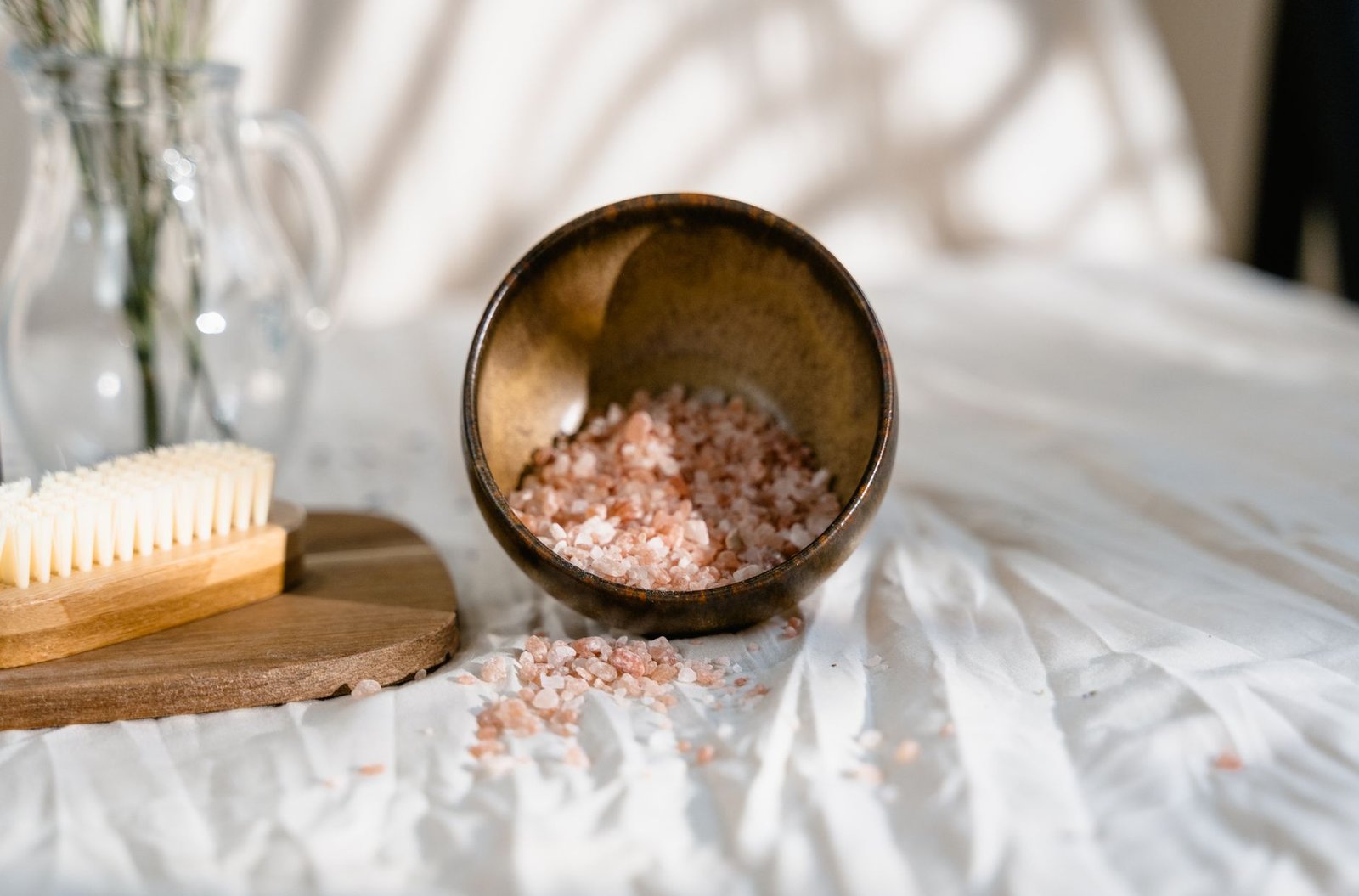
Epsom salt is the bag in the back of the cupboard that most people bought for a bath once and then forgot about. It also makes a genuinely good scrub, and it behaves differently from sea salt in a way that is worth understanding.
It is also the subject of some of the most confidently repeated claims in home wellness, most of which do not hold up.
 Save
It is not actually salt
Table salt and sea salt are sodium chloride. Epsom salt is magnesium sulfate, a completely different compound that happens to form similar-looking crystals.
That matters practically for two reasons.
The first is that it dissolves noticeably faster in warm water than sea salt does. So an Epsom scrub softens as you use it, more like sugar than like salt, which makes it the gentler of the two salt options.
The second is that it does not sting the way sea salt does. It is still not a good idea on freshly shaved skin, but it is considerably more forgiving.
The recipe
 Save
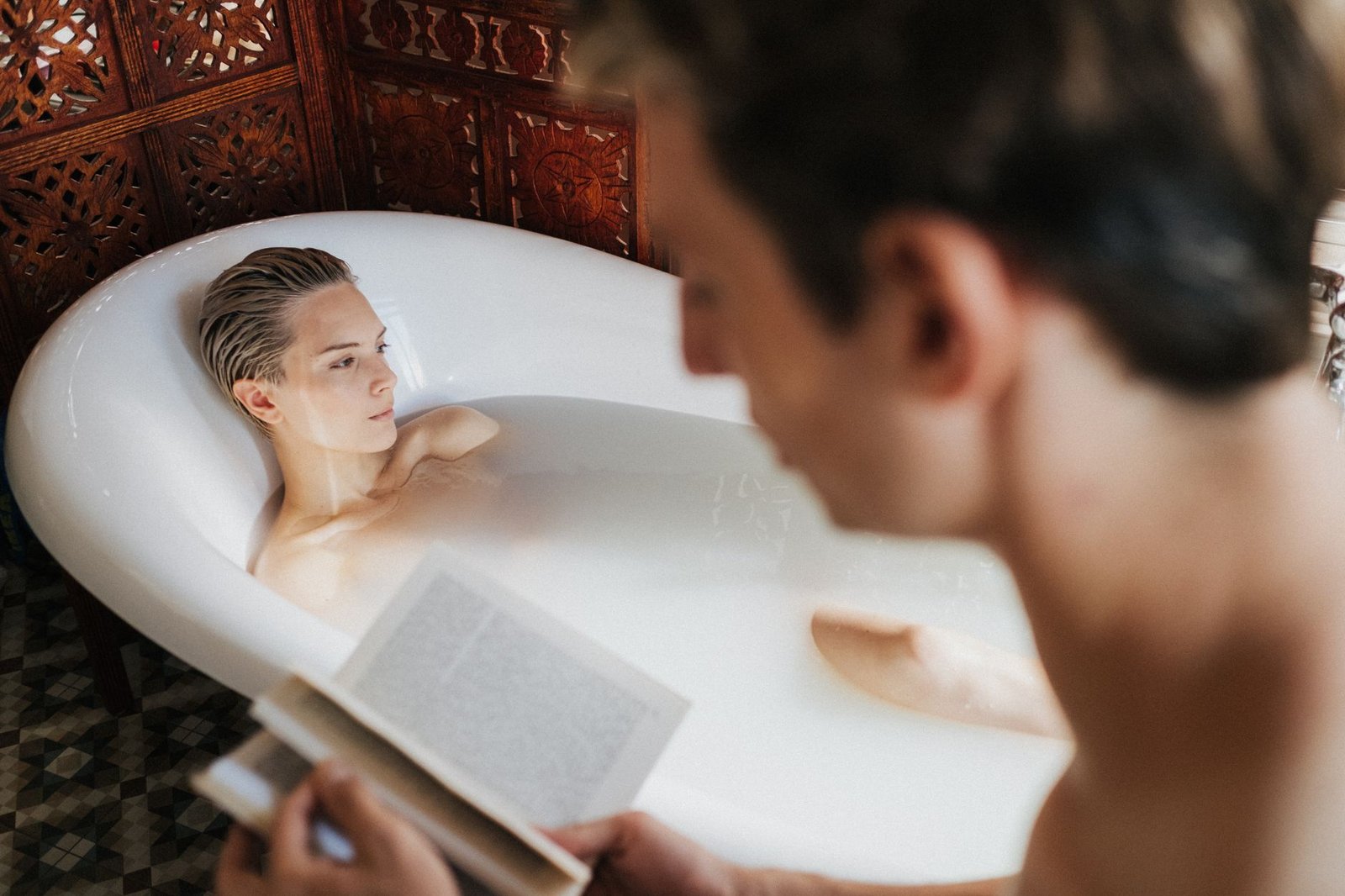
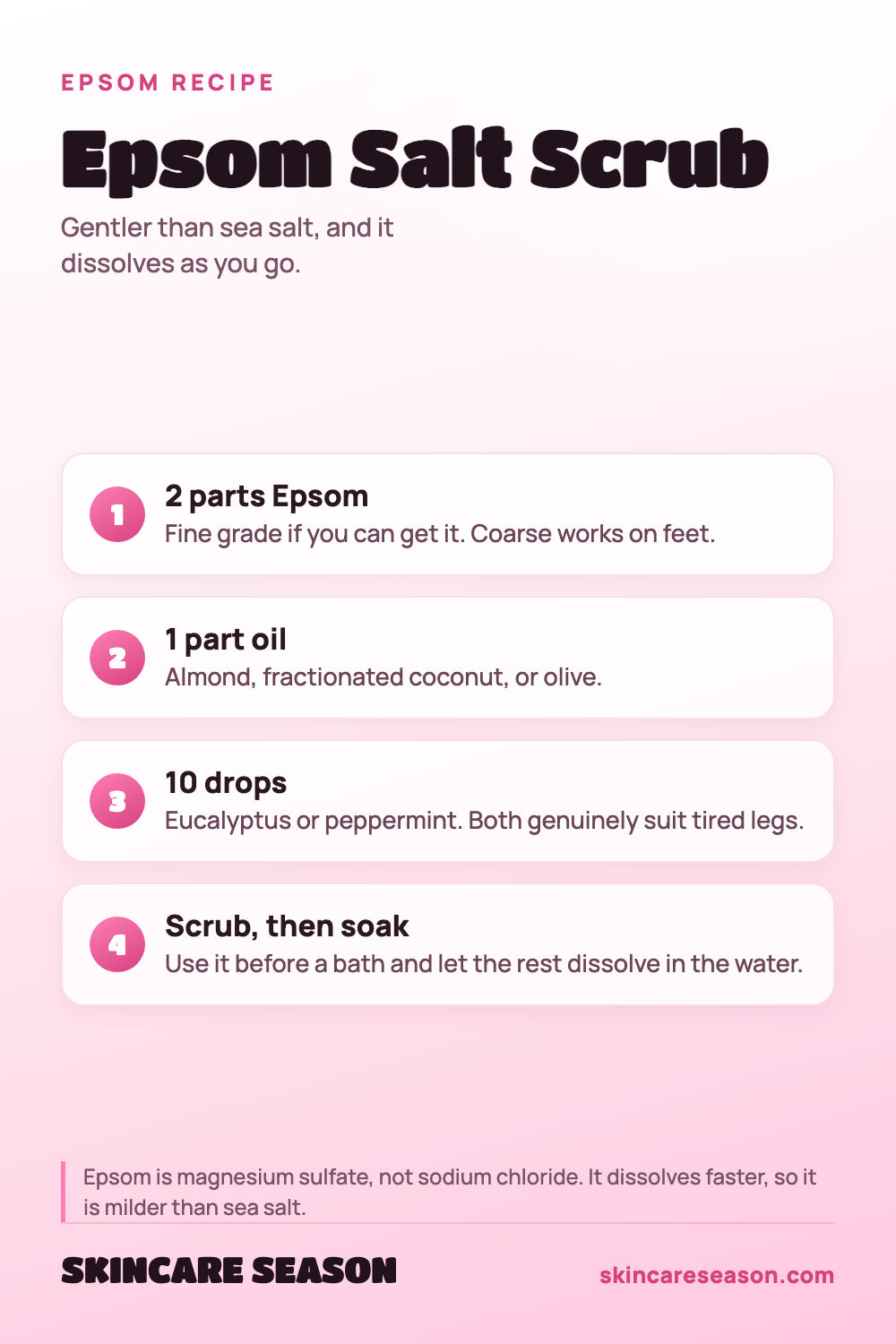
The last row is the trick worth knowing. Use the scrub standing in the bath before you fill it, then run the water. Whatever you rinsed off dissolves into the bath and you get the soak as a free extra.
 Save
The magnesium claim
The most repeated claim about Epsom salt is that soaking in it delivers magnesium through your skin, easing sore muscles and helping you sleep.
Here is the honest position. The evidence for meaningful magnesium absorption through intact skin is weak. Studies that have looked for it have generally not found convincing amounts crossing the barrier, which is unsurprising given the barrier’s entire job is stopping things crossing it.
What is genuinely true is that a warm bath relaxes muscles, and that half an hour lying in warm water before bed helps a lot of people sleep. Those effects are real and they are not the magnesium.
IMO that is still a perfectly good reason to have a bath. It is just worth knowing what you are paying for. :/
Where it works best
- Feet and calves, particularly after a long day standing.
- Legs generally, where sea salt would be too harsh but sugar feels too soft.
- Before a bath, which is what it is really built for.
- Hands after gardening, where the grain gets ground-in dirt out.
It is less good on very rough heels, where sea salt or a pumice stone does more, precisely because Epsom dissolves before it has finished the job.
 Save
Making it
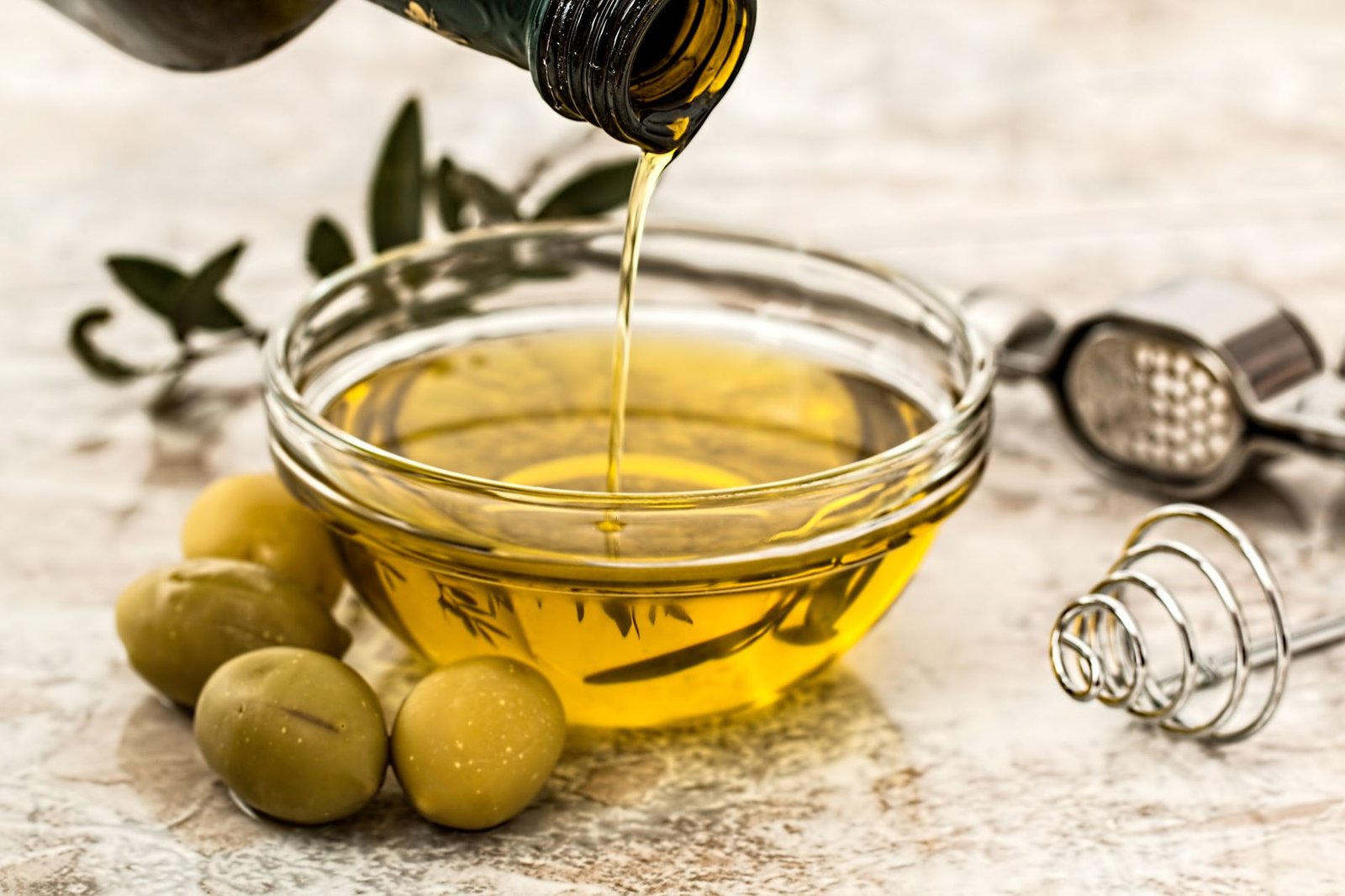
Two parts Epsom salt to one part oil, folded through gently until it looks like wet sand. Same method as every other scrub on this site.
One adjustment: because Epsom dissolves faster, it also absorbs oil slightly differently, and the mixture can look wetter than it is. Err on the side of less oil and add more if it looks dry.
Fine grade Epsom is easier to work with than the coarse agricultural stuff, though both work. If all you can find is coarse, it is better suited to feet.
Eucalyptus or peppermint are the natural scents here. Both genuinely feel good on tired legs, and both are worth the two pounds an essential oil bottle costs.
The storage problem
Epsom salt is hygroscopic, meaning it pulls moisture out of the air. In a humid bathroom an open jar will absorb water and set into a solid brick within weeks.
So airtight is not a suggestion here, it is the difference between a scrub and a paperweight. Keep it in a cupboard outside the bathroom and use a dry spoon.
If it does harden, breaking it up with a fork and folding in a little more oil usually rescues it.
Watch this before you start
Using it
In the shower or standing in the bath, on damp skin, after washing. Light pressure, small circles, twenty to thirty seconds per area.
If you are going to soak, do the scrub first and then fill the bath. If you are showering, rinse in warm water rather than hot.
Then moisturise within three minutes, on damp skin, which is where most of the result comes from with any scrub.
Once or twice a week. Epsom being gentler than sea salt does not make it weightless.
 Save
Who should skip it
Anyone with genuinely dry or reactive skin will do better with a brown sugar scrub. Epsom is milder than sea salt but it is still a mineral grain with edges.
And the usual rules apply. Not on freshly shaved skin, not on anything broken or sunburnt, not on your face.
Epsom against a plain sugar scrub
Worth a direct comparison, since most people already own sugar.
Sugar is gentler on thin skin, safe on shaved legs, and dissolves fastest of the three common grains. It is the better all-rounder.
Epsom sits between sugar and sea salt. Coarser than sugar, softer than sea salt, and it has the bath trick that neither of the others offers.
So the honest answer is that Epsom is a specialist. If you want one scrub for everything, make a sugar one. If you have tired legs and a bath, this is the better evening.
Common questions
Is Epsom salt gentler than sea salt?
Yes. It dissolves faster in warm water, so it softens as you use it.
Does the magnesium absorb through skin?
The evidence is weak. The relaxation from a warm bath is real, but it is the bath rather than the magnesium.
Can I use it after shaving?
Better than sea salt, still not a good idea. Wait a day or use sugar.
Why has my jar gone solid?
Epsom salt draws moisture from the air. Airtight jar, cupboard rather than bathroom, dry spoon.
Coarse or fine Epsom salt?
Fine for a body scrub, coarse for feet only.
Can I use it on my face?
No. It is still a mineral grain and facial skin is far too thin.
The short version
Two parts Epsom salt, one part oil, ten drops of eucalyptus. Scrub standing in the bath, then run the water and soak.
Gentler than sea salt, better than sugar on tired legs, and store it somewhere genuinely airtight or it will set solid. 🙂

Leave a Reply