

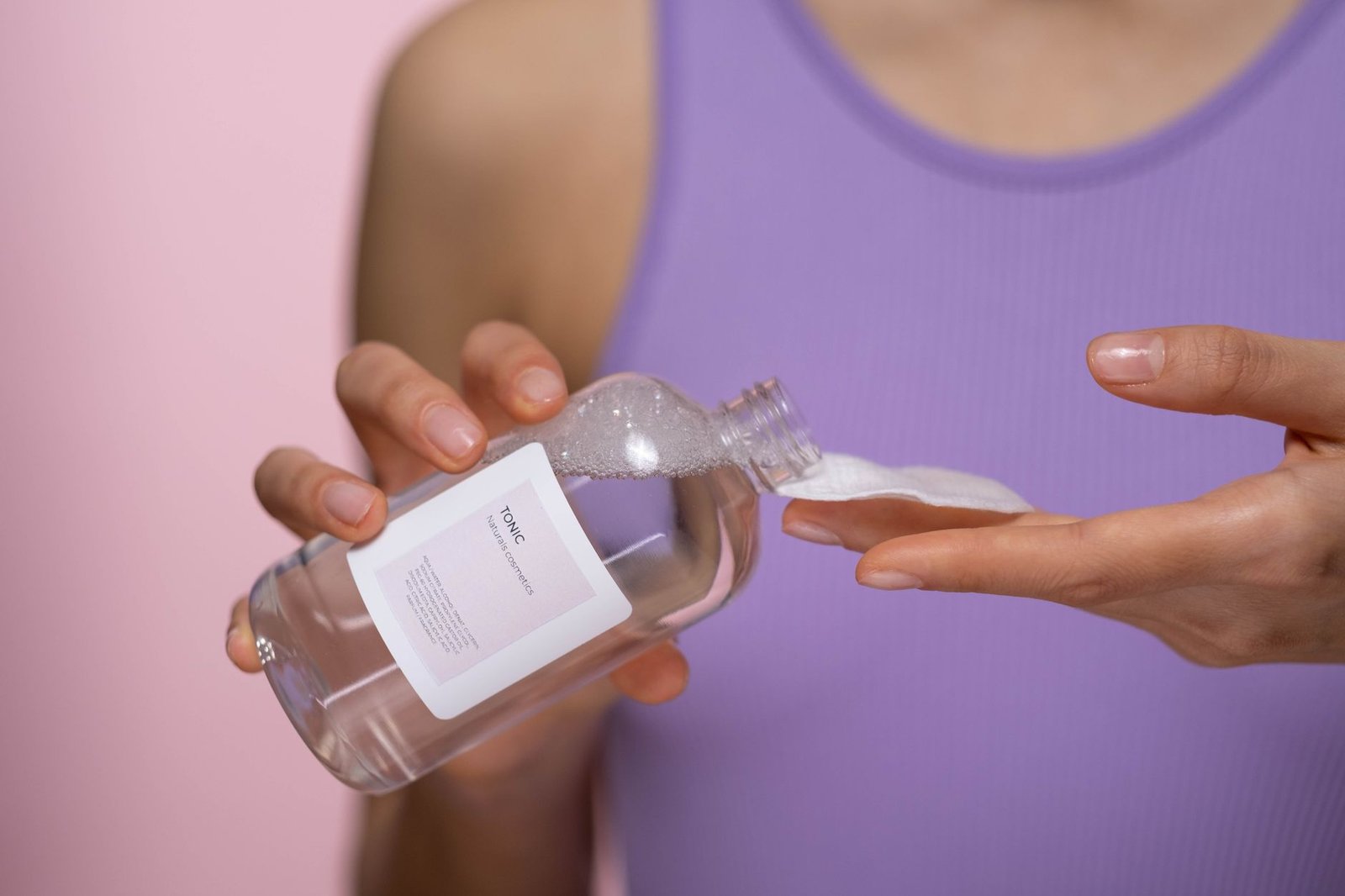
Glycolic toners are the most satisfying product in skincare and the easiest one to ruin your skin with. They come in a big bottle, you apply them with a pad, and the results in week one are genuinely good.
Which is exactly the trap. It feels like more would be better, so people go daily, then twice daily, and six weeks later have shiny, tight skin that stings when water touches it.
Here is how to get the results without the crash.
 Save
What glycolic acid does
Glycolic acid is an alpha hydroxy acid, and it is the smallest one, which is why it is the most effective and the most irritating of the family.
It dissolves the bonds holding dead cells onto the surface of your skin. Those cells lift off, the fresher surface underneath reflects light better, and that is the glow people notice within a week.
Over longer periods it also nudges collagen production and helps fade surface pigmentation. The glow is immediate. The rest takes months.
Why it is so easy to overdo
Three reasons, all of them design rather than user error.
The bottle is large and cheap, so there is no natural limit. The format is a soaked pad, so the dose is whatever you decide it is. And the results appear fast enough to reinforce doing it again tomorrow.
Compare that to a retinol, which comes in a small bottle with instructions that scare people appropriately. Glycolic toners come with a picture of someone glowing. :/
Watch this before you start
The frequency that actually works
 Save
Three or four nights a week is the ceiling for almost everyone. Not a starting point, a ceiling. If you are using it every night and adding anything else exfoliating, you are over the line.
 Save
What strength to buy
- 5% to 7% is where a toner should sit. Enough to work, gentle enough to use several times a week.
- 8% to 10% is for skin that has been using acids for a while, and is closer to twice weekly than nightly.
- Above 10% in a leave-on toner is more than most people need and is where the trouble starts.
- Anything above 20% is a peel, not a toner, and belongs in a professional’s hands.
Also look at the pH. Glycolic works best between 3 and 4. Higher and it does very little, lower and it stings for no extra benefit.
How to apply it
At night, after cleansing, on completely dry skin. Damp skin increases penetration and that is not a knob you want turned up.
Soak a pad lightly, sweep once over the face, and avoid the eye area and the corners of the nose where skin is thinner. Do not go back over the same spot for a second pass.
Wait a couple of minutes, then moisturiser. There is no need to rinse it off unless it stings, in which case rinse it off and use a lower strength next time.
 Save
What not to combine it with
This is where most damage happens, because each product on its own seems reasonable.
- Retinol on the same night. Alternate nights instead. Both are doing turnover work and stacking them is not additive, it is destructive.
- Another exfoliating acid, including a salicylic cleanser. That counts, even though it rinses off.
- Physical scrubs. Ever, honestly, but especially not with this.
- Vitamin C in the same routine when you start. Morning and night separates them fine.
FYI a lot of cleansers, wipes and even some moisturisers contain low levels of acid without shouting about it. If your skin is unhappy and you cannot work out why, read the back of everything you own.
How to tell you have gone too far
Over-exfoliated skin does not look dry and flaky. It looks slightly shiny, feels tight, and is unusually smooth in a way that seems like a win.
The tell is sensitivity. Water stings. Your usual moisturiser stings. Skin looks red after a shower. Small bumps appear that were not there before.
If that describes you, stop all acids for two weeks. Cleanser, moisturiser, sunscreen, nothing else. It recovers, and then you restart at twice a week.
 Save
Sunscreen, again
Freshly exfoliated skin is more vulnerable to UV, and glycolic in particular increases sun sensitivity for about a week after use.
Daily sunscreen is not a nice-to-have here. Without it you are removing the top layer, exposing what is underneath, and then letting the sun undo everything you were trying to fix.
Who should skip it entirely
Glycolic is not for everyone, and the honest answer is that some people are better served by a different acid or none at all.
If your skin is reactive, dry, or you already use a retinoid several nights a week, glycolic is usually one active too many. Lactic acid or a polyhydroxy acid does a similar job with far less provocation.
If your main issue is congestion, blackheads or oily skin, salicylic acid is the better tool because it is oil-soluble and gets down into the pore. Glycolic works on the surface, which is a different problem.
And if you are already using an exfoliating cleanser you like, adding a glycolic toner on top is how people end up over-exfoliated without ever feeling like they did anything excessive.
Building it into a routine
The simplest version that works, once you are past the ramp-up:
Monday, Thursday. Cleanse, glycolic toner, moisturiser.
Tuesday, Friday. Cleanse, retinol, moisturiser.
Everything else. Cleanse, moisturiser. Genuinely nothing else.
Every morning. Cleanse, moisturiser, sunscreen.
The rest days are not wasted days. They are when the skin actually rebuilds, and skipping them is the single most common reason a routine that looks perfect on paper produces irritated skin.
Common questions
Morning or night?
Night. Sun sensitivity makes morning use a bad trade even with sunscreen.
Do I rinse it off?
No, unless it stings. It is a leave-on product.
Can I use it on my neck and chest?
Yes, and that skin ages visibly, so it is worth doing. Half the frequency you use on your face.
Is glycolic better than lactic acid?
Stronger, not better. Lactic is a larger molecule, works more gently and hydrates as it goes. For sensitive or dry skin, lactic is often the smarter pick.
How long before I see anything?
Texture and glow within one to two weeks. Pigmentation and fine lines take eight to twelve.
Can I use it if I have active breakouts?
Gently. Salicylic acid tends to suit congestion better because it gets into the pore. Do not use both.
The short version
Buy 5% to 7%. Twice a week at night on dry skin, building to three or four nights maximum. Never on the same night as retinol. Sunscreen every morning.
The urge to use it daily is the entire problem with this product, and resisting it is most of the skill. 🙂

Leave a Reply