
Azelaic acid is the ingredient people find last and then wish they had found first. It is not glamorous, the texture is odd, and almost nobody markets it well.
What it is, though, is one of the few genuinely effective things you can put on reactive skin without setting it on fire. If retinol and glycolic have both gone badly for you, this is usually the next thing to try.
Here is what twelve weeks of it actually looks like.
What azelaic acid does
It is a dicarboxylic acid that occurs naturally in grains like barley and wheat, though what goes in your cream is made in a lab.
It does three useful things. It calms inflammation, which is why redness settles first. It slows the enzyme involved in producing pigment, which is the dark mark part. And it is mildly keratolytic, meaning it helps clear the gunk sitting in pores.
It is not an exfoliating acid despite the name, which is why it does not sting like one and why it plays nicely with almost everything.
Why reactive skin gets on with it
Most effective ingredients work by irritating your skin slightly and letting it repair upward. Azelaic acid largely does not. It calms rather than provokes.
That means the people who cannot tolerate retinol, who go blotchy on glycolic, and who have given up on vitamin C can usually use this twice a day without incident. IMO that tolerability is the whole reason it deserves more attention than it gets.
Watch this before you start
The twelve week timeline
Assuming a 10% over-the-counter formula used twice daily on the whole area, not spot treated.
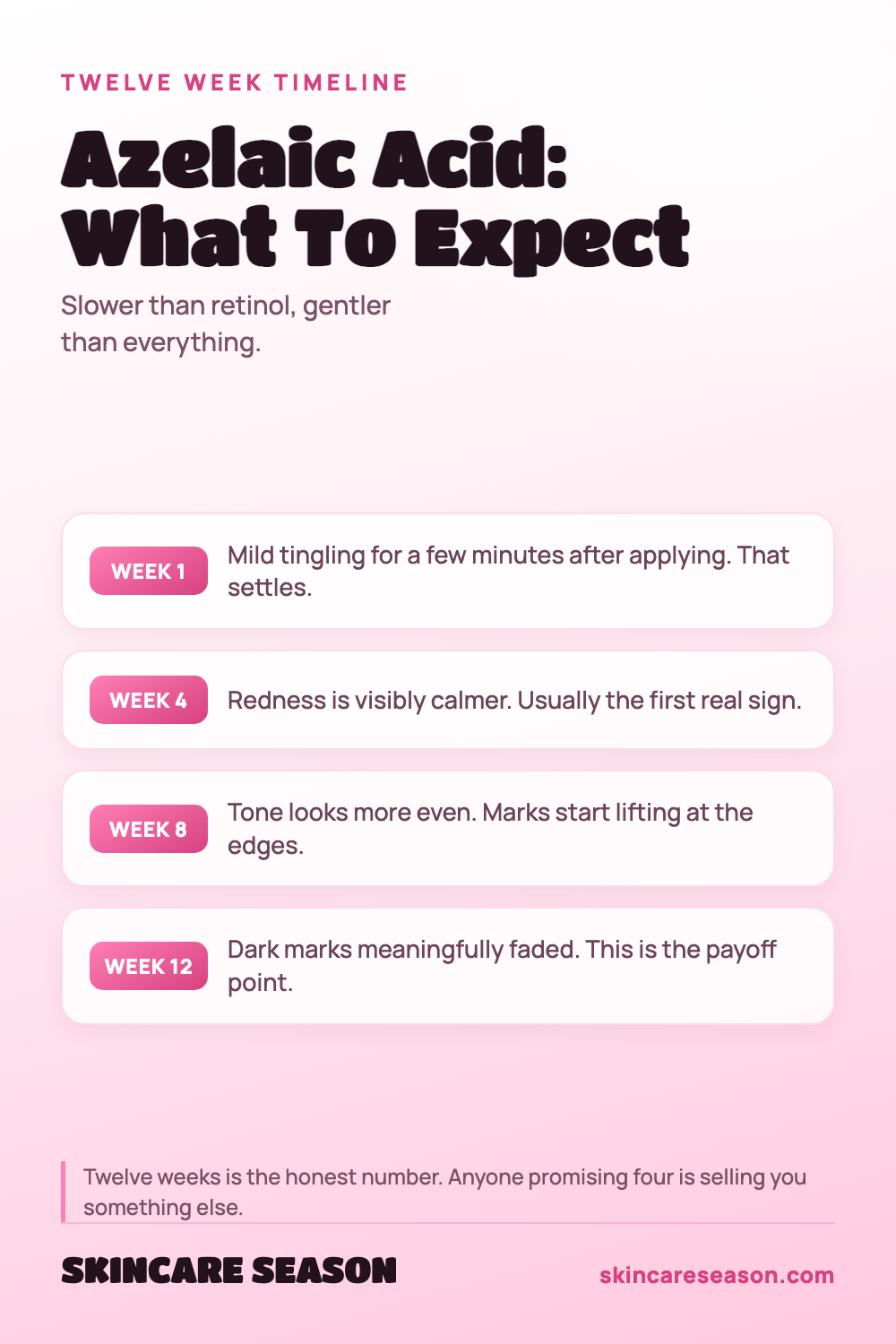
Twelve weeks is a long time to keep doing something with no applause. This is why the day-one photo matters more here than with almost any other ingredient.
The texture nobody warns you about
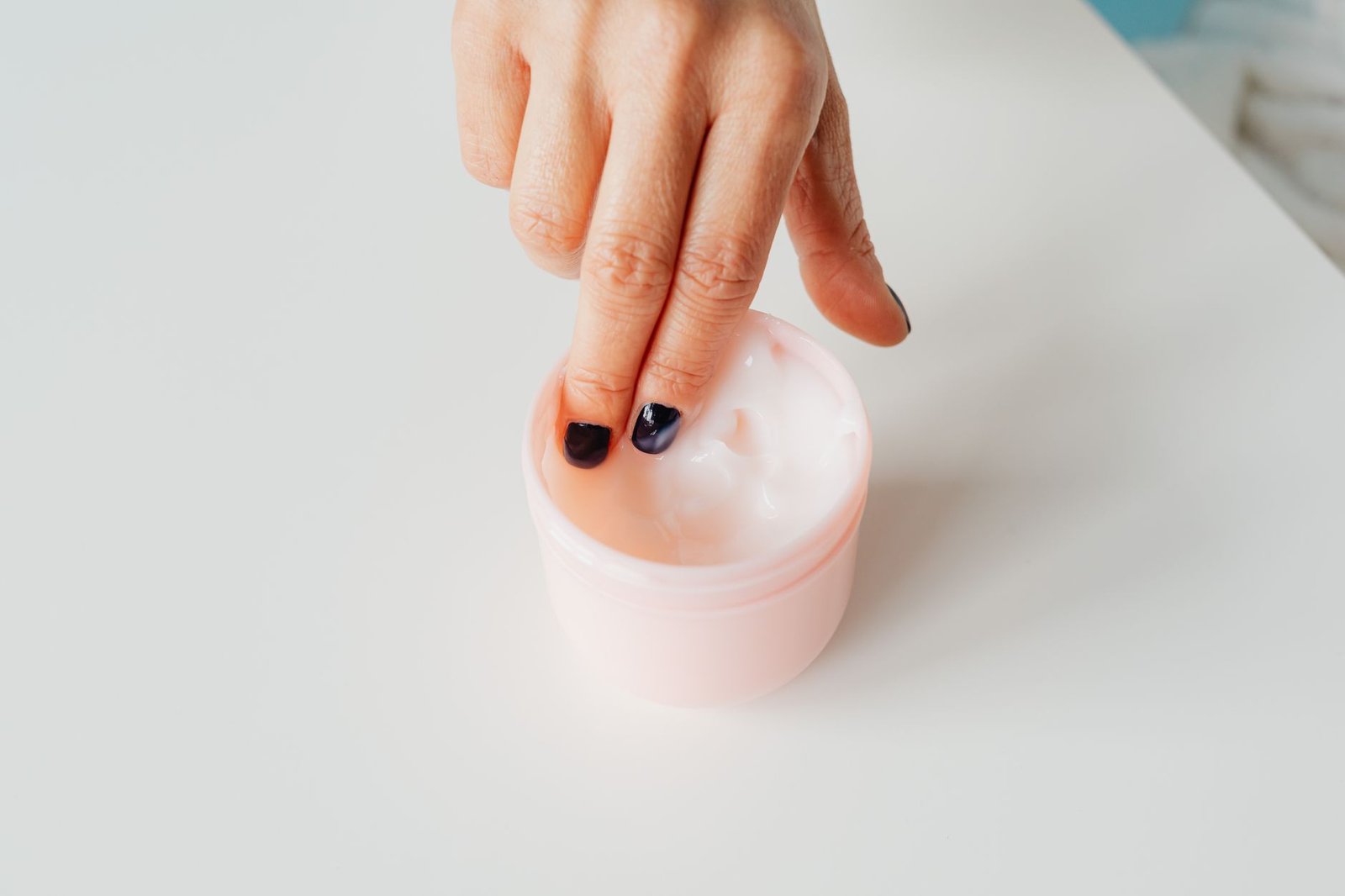
Azelaic acid formulas are frequently thick, slightly gritty, and they can pill under sunscreen or makeup. This is normal and it is the main reason people abandon it.
Three things that help:
- Use less than you think. A pea-sized amount for the whole face. Most pilling is over-application.
- Let it settle for a full two minutes before anything goes on top.
- Apply to slightly damp skin, which helps it spread thin.
If it still pills, use it at night only and skip the layering problem entirely.
What strength to buy
10% is the over-the-counter standard and it is what almost every cosmetic formula contains. That is the one to buy.
Higher concentrations exist but they are prescription products, and prescriptions are a conversation with a doctor rather than a blog. Nothing on this page is a substitute for that.
How to pair it
Easily, is the short answer. It is one of the least fussy actives there is.
- With niacinamide: a genuinely good pairing, both calming, both working on tone.
- With retinol: fine, but use azelaic in the morning and retinol at night rather than stacking them.
- With vitamin C: fine, though two tone-focused actives in one routine is often more than needed.
- With exfoliating acids: possible, but not on the same day when you start.
Sunscreen every morning, as always. Fading pigment while collecting more of it is not a strategy.
What it will not do
It will not work in four weeks. It will not remove deep, long-standing pigmentation entirely. And it is not a treatment for any medical skin condition, whatever you read elsewhere. If that is what you are dealing with, that is a doctor’s conversation.

Where it goes in your routine
Azelaic acid is thicker than a serum and thinner than a moisturiser, so it sits between the two.
Cleanse, let your skin dry properly, then azelaic acid, then wait, then moisturiser. In the morning, sunscreen goes on last once everything has settled.
The waiting is the part people skip and then complain about pilling. Two minutes is not a suggestion, it is the difference between this working in your routine and being abandoned in a drawer.
- Morning: cleanse, azelaic acid, wait, moisturiser, sunscreen.
- Night: cleanse, azelaic acid, wait, moisturiser.
How to tell it is working
The first honest sign is not the dark marks. It is that your skin looks less angry in general, and it usually turns up around week four.
Look at the overall colour of your cheeks in daylight rather than at any individual mark. Marks fade from the outside in, so the edges blur before the centre lightens, which reads as nothing happening right up until it obviously has.
This is exactly why the day-one photo matters. Twelve weeks is long enough that your memory of your own face has quietly updated itself.
Common questions
Morning or night?
Both, ideally. Twice daily is where the results come from. If the texture is a problem under makeup, night only still works, just slower.
Is the tingling normal?
A mild tingle for a couple of minutes in the first week or two is common. Burning, stinging that lasts, or visible irritation is not, and means stop.
Can I use it while pregnant?
It is often considered one of the more suitable options, but that is a question for your doctor and not for a website. Ask them.
Why does it pill under my sunscreen?
Too much product, or not enough drying time. Less product, two minutes wait.
How does it compare to retinol?
Slower, gentler, better on redness and tone. Retinol is better on texture and lines. They are not competing for the same job.
Can I just use it on the marks rather than everywhere?
You can, but it works better across the whole area. Pigment does not respect the edges of a spot, and treating patches tends to leave you with subtly different-toned zones.
Does it expire quickly?
It is more stable than vitamin C and does not need special storage. Keep the cap on, keep it out of direct sun, and use it within the period marked on the tube.
The short version
Buy 10%. Pea-sized, twice a day, over the whole area rather than dabbed on marks. Wait two minutes before layering. Photograph day one.
Then leave it alone for twelve weeks. It is the least exciting routine on this site and one of the most reliable. 🙂