
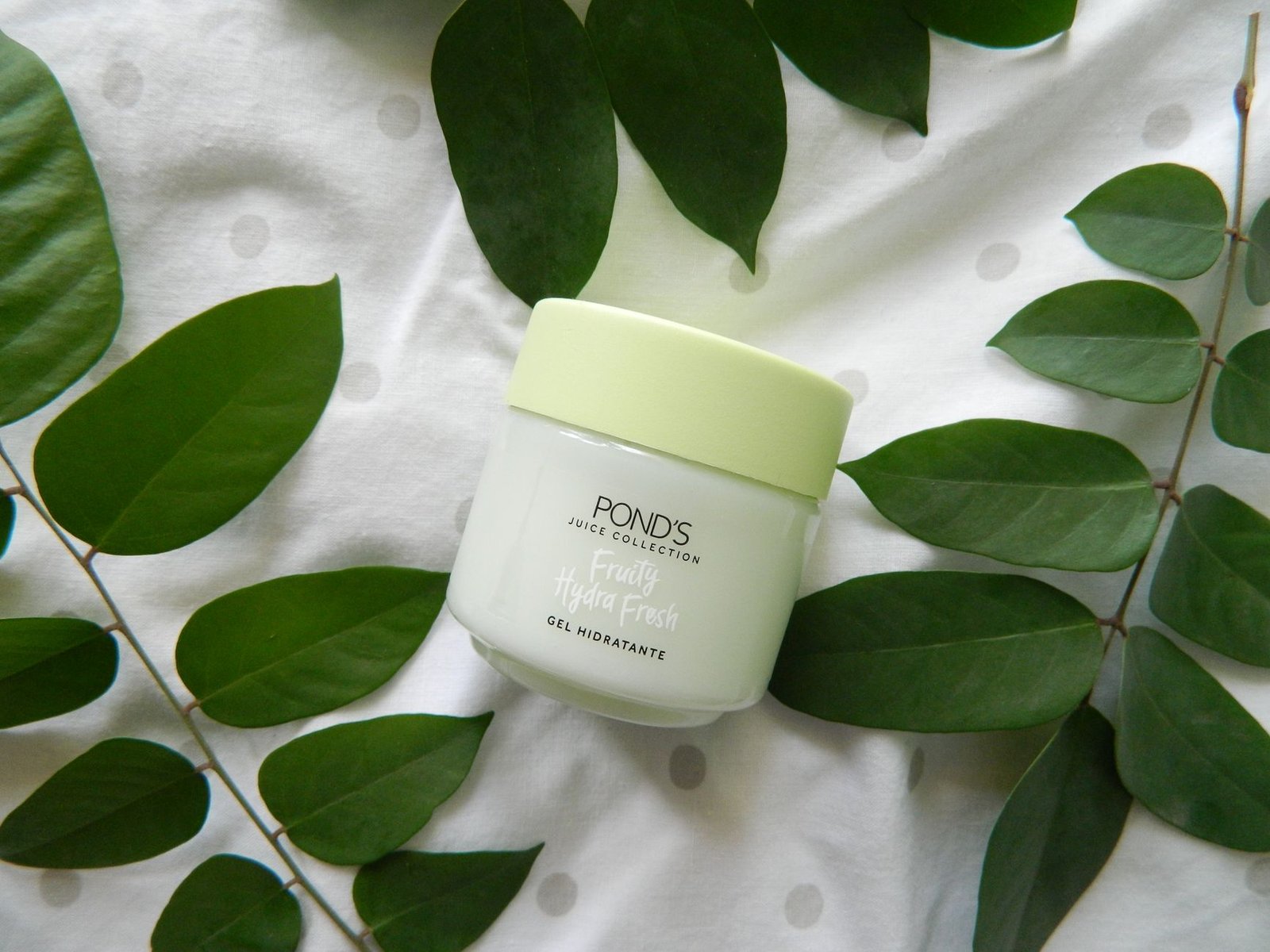
The most common mistake in acne-prone skincare is skipping moisturiser, on the reasoning that oily skin does not need more oil. It is intuitive and it is backwards.
Skin that is stripped and dehydrated produces more oil, not less. So the routine designed to dry out breakouts frequently produces skin that is simultaneously flaky and greasy, and more congested than when it started.
 Save
Why stripping backfires
Your skin regulates its own oil production partly in response to how dry the surface feels. Strip it with a foaming cleanser, an astringent toner and a drying spot treatment, and the signal it receives is that it needs to produce more.
That extra oil arrives a few hours later, which is why the routine feels like it is working at 8am and has clearly failed by 2pm.
There is also the actives problem. Anything genuinely effective against breakouts, whether salicylic acid, benzoyl peroxide or a retinoid, is drying. Using them without a moisturiser means most people cannot tolerate them long enough to work.
What to look for
 Save
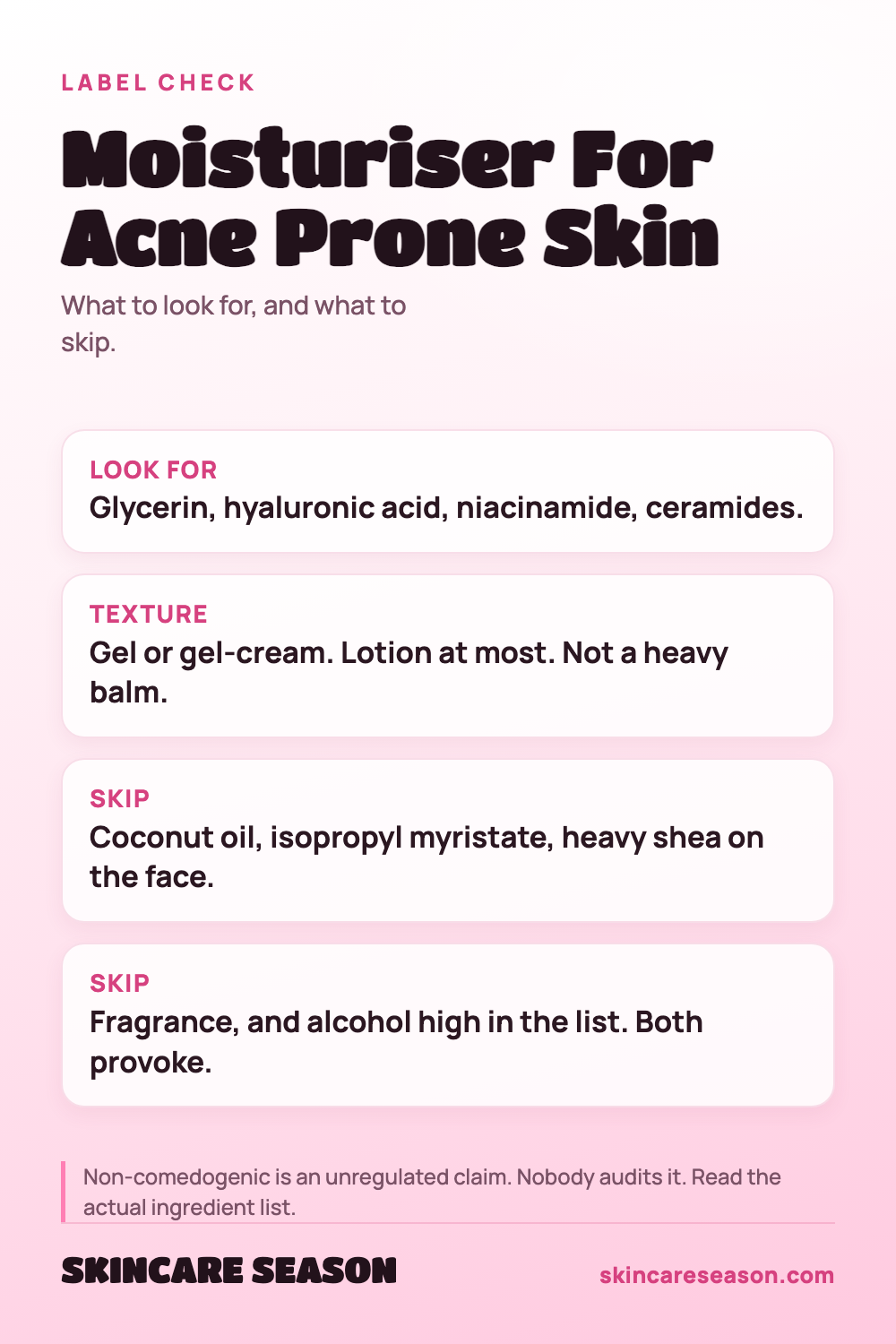
The bottom row matters more than people realise. Fragrance is one of the most common causes of irritation, and irritated skin with acne is worse in every respect than skin with acne alone.
 Save
Non-comedogenic means almost nothing
This deserves stating plainly. Non-comedogenic is not a regulated term. No body defines it, no body tests it, and no body audits the claim.
Where it comes from is a set of old studies that tested individual ingredients on rabbit ears, which is not a great model for human faces, and which tested ingredients rather than finished formulas.
A product can carry the claim and contain ingredients that break plenty of people out. Another can lack the claim and be perfectly fine.
So read the actual ingredient list. It is more work and it is the only thing that tells you anything. FYI this is one of the few places where the label on the front is genuinely worse than useless, because it stops people checking. :/
The ingredients worth having
Glycerin. The workhorse humectant. Cheap, effective, in almost every good moisturiser.
Hyaluronic acid. Holds water in the surface layers. Needs something over it to seal, which the rest of the formula provides.
Niacinamide. The standout for this skin type. Regulates oil, calms redness, supports the barrier. If a moisturiser has 4 to 5% of it, that is a genuine advantage.
Ceramides. Repair the barrier your actives are disrupting. Particularly valuable if you use a retinoid.
Squalane. A light emollient that suits congested skin better than most oils.
Watch this before you start
The ingredients to avoid
Coconut oil, which is highly comedogenic for a large proportion of people and turns up in a lot of natural products.
Isopropyl myristate and isopropyl palmitate, both common texture enhancers with a poor reputation for congestion.
Heavy butters on the face. Shea and cocoa butter are excellent on your body and heavy for a congested face.
Fragrance and essential oils. Irritation makes acne look and feel worse.
Denatured alcohol high in the list. It gives a pleasant quick-dry finish and is drying with repeated use.
 Save
Texture, which matters as much as ingredients
Gel and gel-cream are the two textures that suit this skin type. Light enough not to feel like a layer, substantial enough to actually hydrate.
A lotion is fine if your skin is only mildly oily. A thick cream or a balm is usually too much on the face, though it may suit your neck.
One practical tip: if a moisturiser still feels heavy after five minutes, it is too rich for you, regardless of what the label claims.
Where it goes in the routine
After your actives, not instead of them. Cleanse, active on dry skin, wait a minute, moisturiser, then sunscreen in the morning.
If a retinoid or benzoyl peroxide is too much for you, the sandwich method works here too. Moisturiser, then the active, then moisturiser again. It reduces how much active reaches the skin at once, which is exactly the trade you want in the first month.
And moisturise on both the nights you use actives and the nights you do not. The rest nights are when the barrier rebuilds and it needs the support then most.
 Save
How to test a new one
Acne is slow, so give any new moisturiser a proper trial rather than judging it after three days.
Use it, and only it, for four weeks with nothing else new introduced in that time. Congestion takes two to three weeks to surface, so a product that breaks you out will usually show by week three.
Changing three products at once and then trying to work out which one caused a problem is the most common way people end up convinced everything breaks them out.
What a moisturiser will not do
Worth being clear, since this article is an argument for using one.
A moisturiser does not treat acne. It makes the things that do treat acne tolerable, and it stops your skin overproducing oil in response to being stripped. Those are supporting roles and they are genuinely important, but the moisturiser is not the treatment.
The treatment is a retinoid, or salicylic acid, or benzoyl peroxide, or something a doctor prescribes. If your breakouts are painful, deep, leaving marks, or not responding after three months of a sensible routine, that is a conversation with a professional rather than another moisturiser.
Nothing on this site is a substitute for that conversation.
Common questions
Do I really need moisturiser if my skin is oily?
Yes. Stripped skin produces more oil, and every effective acne active is drying.
Is non-comedogenic a reliable label?
No. It is unregulated and untested by any authority. Read the ingredient list instead.
Gel or cream?
Gel or gel-cream for oily and congested skin. Lotion if only mildly oily.
Can a moisturiser cause breakouts?
Yes, usually from heavy oils, certain esters, or irritation from fragrance. Test one new product at a time.
Should I moisturise before or after acne treatment?
After, on the nights you use it. Or sandwich it if the active is too harsh.
How long before I know it suits me?
Four weeks. Congestion takes two to three weeks to appear on the surface.
The short version
Glycerin, hyaluronic acid, niacinamide and ceramides, in a gel or gel-cream, without fragrance or heavy oils.
Ignore the non-comedogenic badge and read the list. Moisturise on top of your actives, not instead of them, and on rest nights too. 🙂



Leave a Reply