

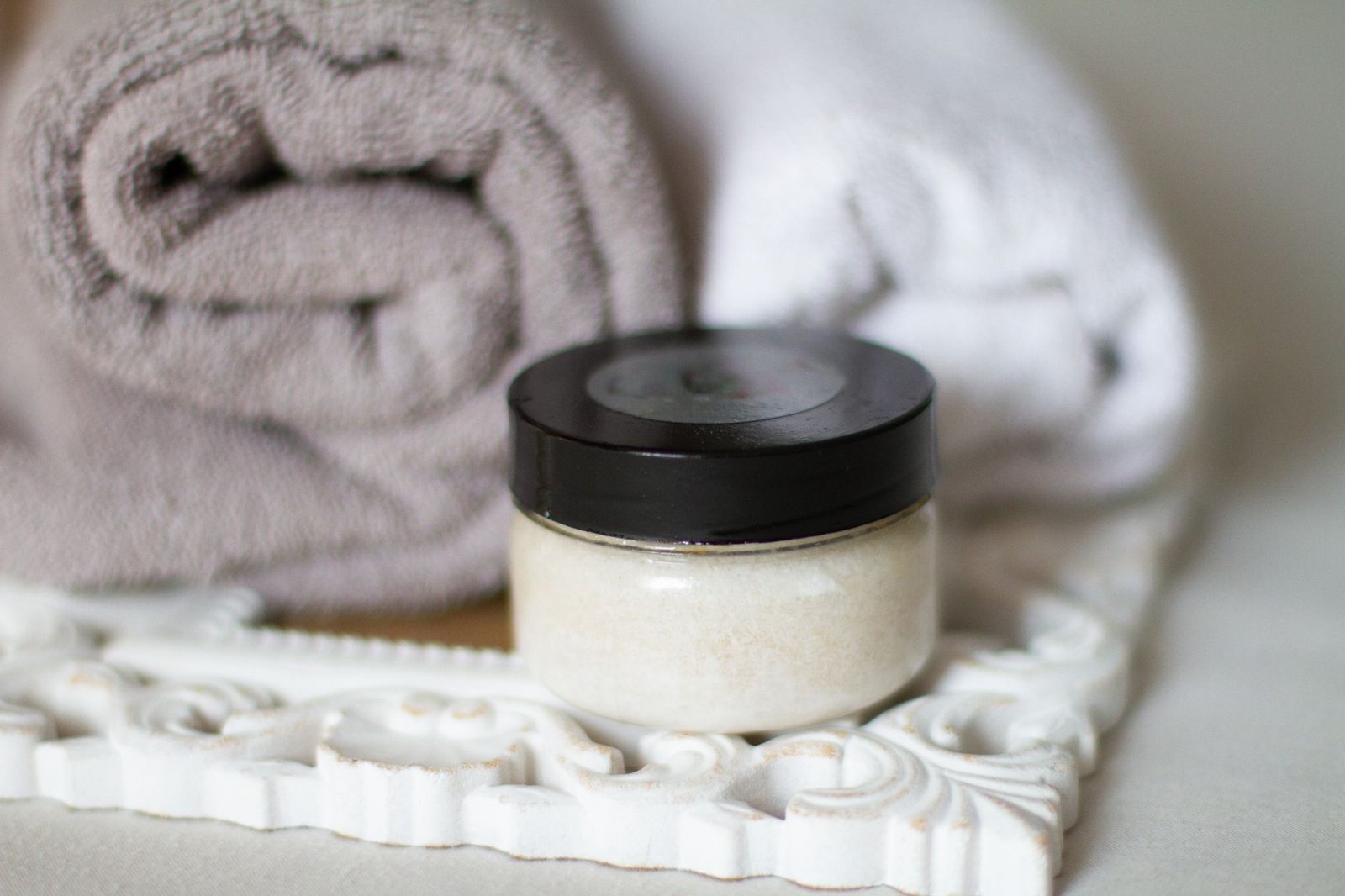
Salt scrubs have a reputation for being the serious option, the one that actually does something, and that reputation is fair. Salt is coarser than sugar, it does not soften as you use it, and it will get through build-up that a sugar scrub politely goes around.
It is also the scrub most likely to make you yelp, and there is one situation where using it is a genuine mistake.
 Save
Salt against sugar
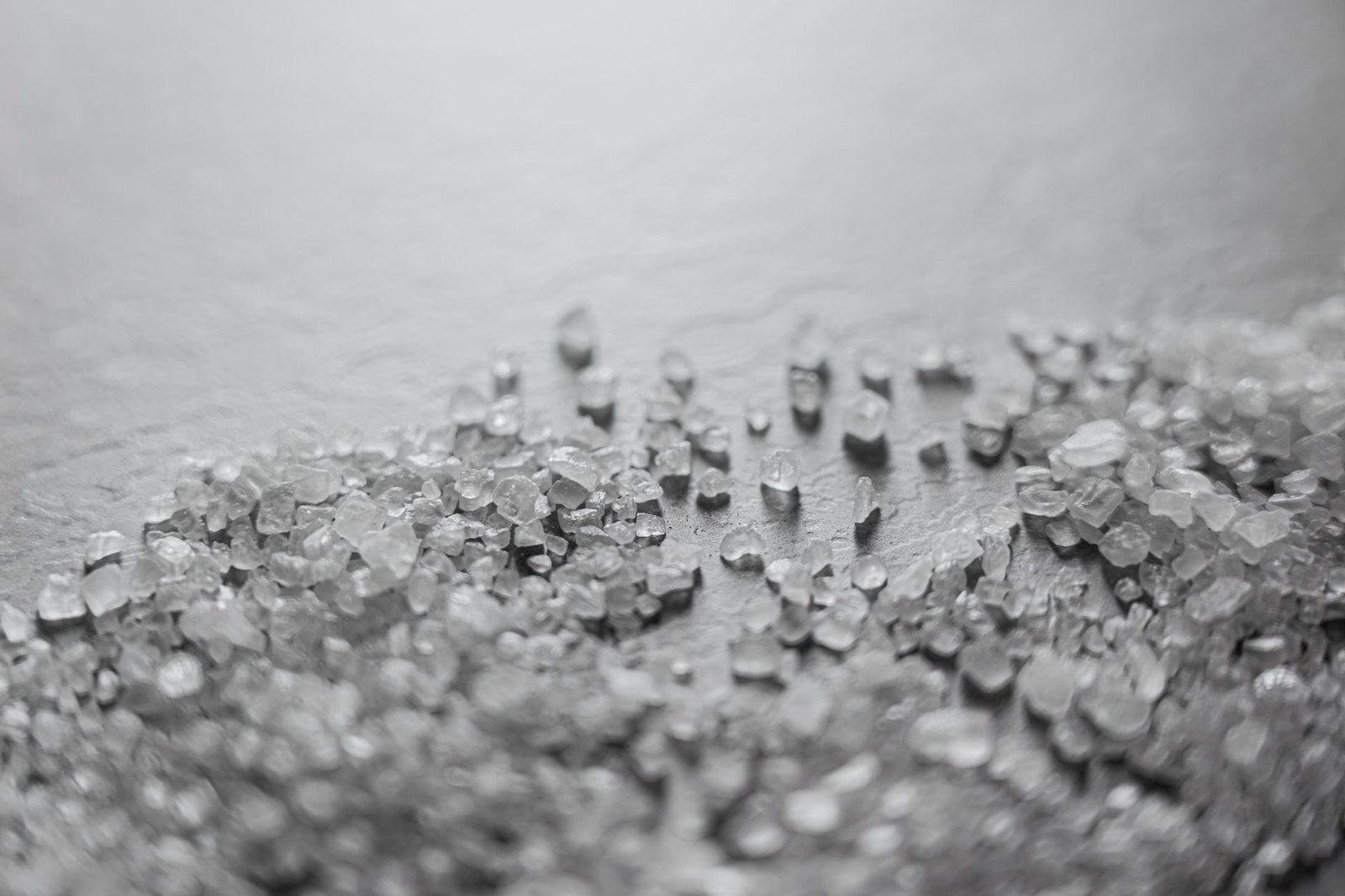
The difference people quote is harshness, and that is only half of it. The real difference is what happens when water hits them.
Sugar dissolves quickly in warm water. A sugar scrub therefore becomes progressively gentler over the thirty seconds you are using it, which is a built-in safety feature.
Salt dissolves far more slowly. It stays abrasive from the first stroke to the last, which is exactly why it clears rough heels properly and exactly why it is too much for your chest.
Salt is also mineral-sharp rather than crystal-rounded. Under a microscope salt grains have harder edges, and your skin notices.
The recipe
 Save
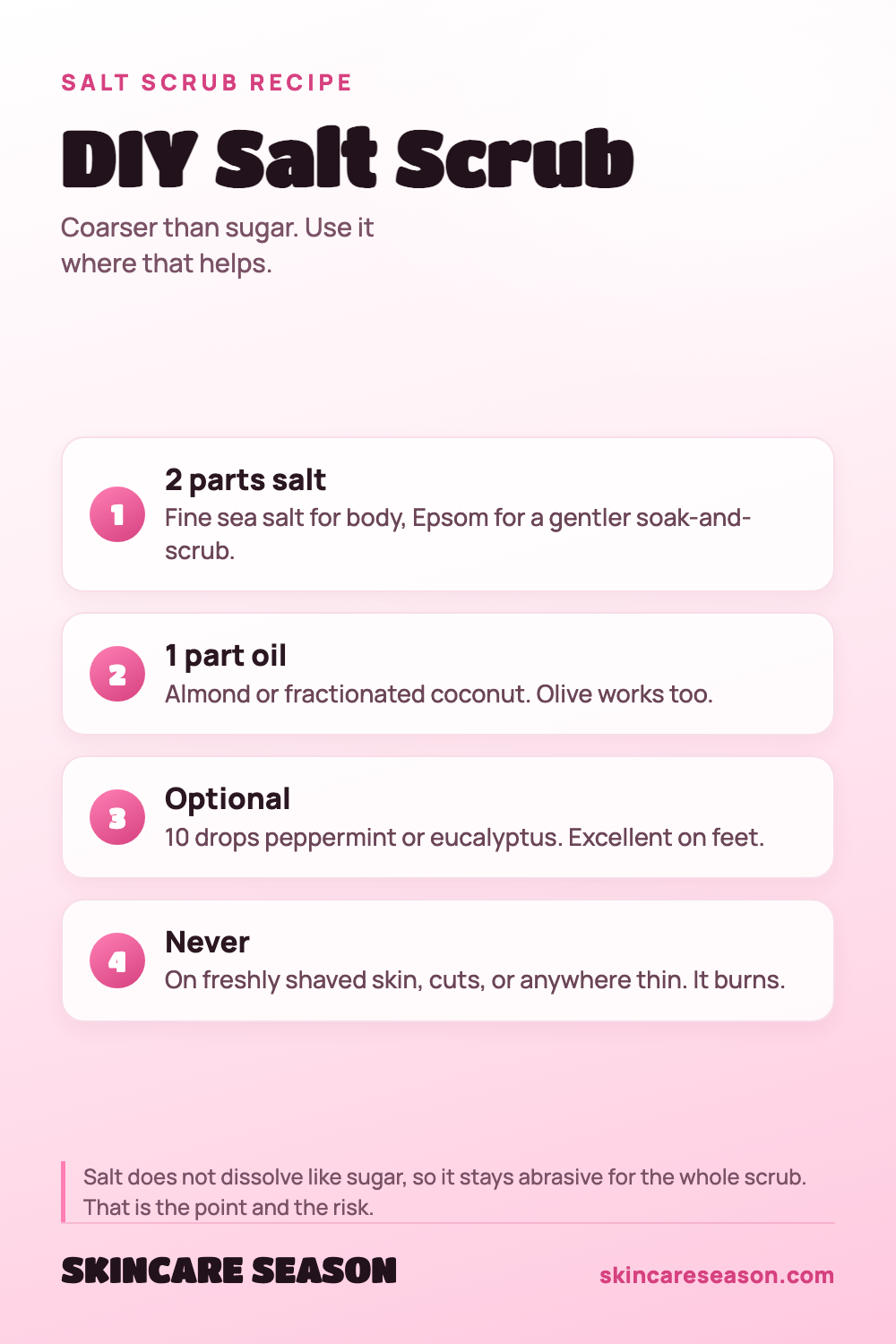
Same two-to-one ratio as a sugar scrub, same folding technique, same rule about keeping water out of it. The only thing that changes is what you put it on.
Which salt
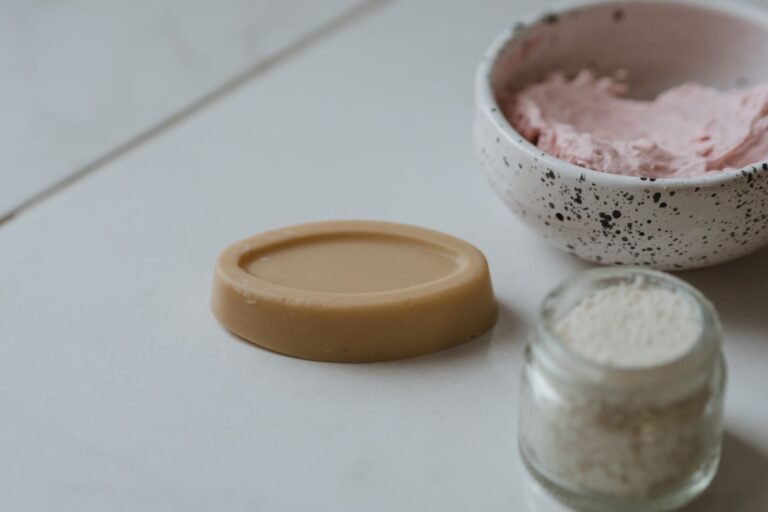
- Fine sea salt. The best all-rounder for a body scrub. Coarse enough to work, fine enough not to scratch.
- Epsom salt. Technically magnesium sulfate rather than salt. Dissolves faster than sea salt, so it is the gentler option and good for a scrub-and-soak.
- Coarse or rock salt. Feet and heels only. Genuinely too much anywhere else.
- Himalayan pink salt. Works fine and looks lovely in a jar. The mineral claims are marketing.
Table salt is the one to avoid. The grains are small but very sharp, and most of it contains anti-caking agents you do not want to rub into damp skin.
 Save
The one place it goes wrong
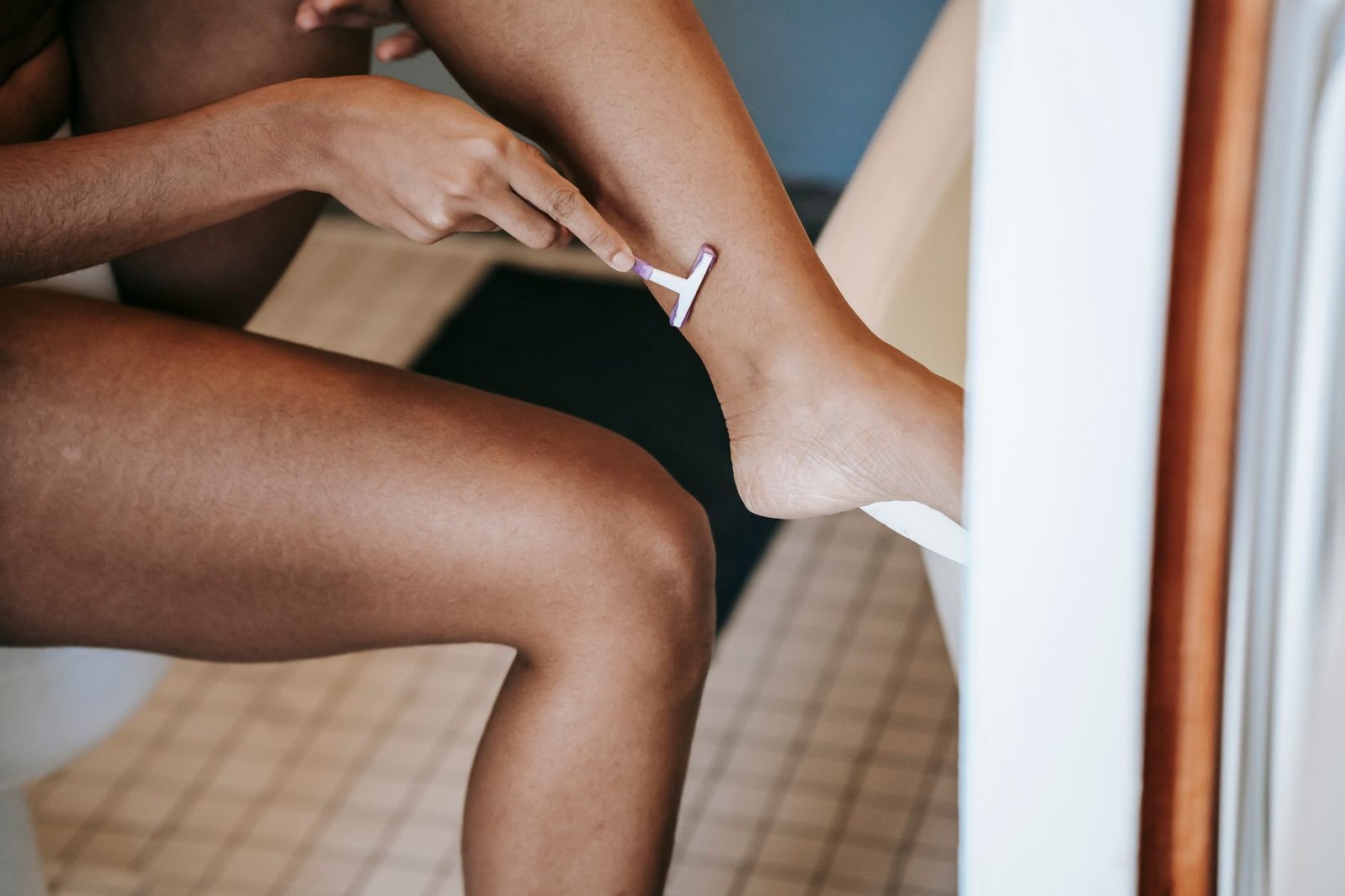
Do not use a salt scrub on freshly shaved skin. This is the mistake nearly everyone makes exactly once.
Shaving is itself a form of exfoliation. It takes off the top layer of skin along with the hair, and it leaves dozens of tiny openings you cannot see. Salt in those is genuinely painful, and it is not a minor sting that passes.
Same applies to cuts, scratches, sunburn, and anywhere currently irritated. Sugar in the same situation is uncomfortable. Salt is memorable.
If you shave your legs and want to scrub them, either scrub on a different day or use sugar. IMO for most people that alone makes sugar the better default. :/
Watch this before you start
Where salt genuinely wins
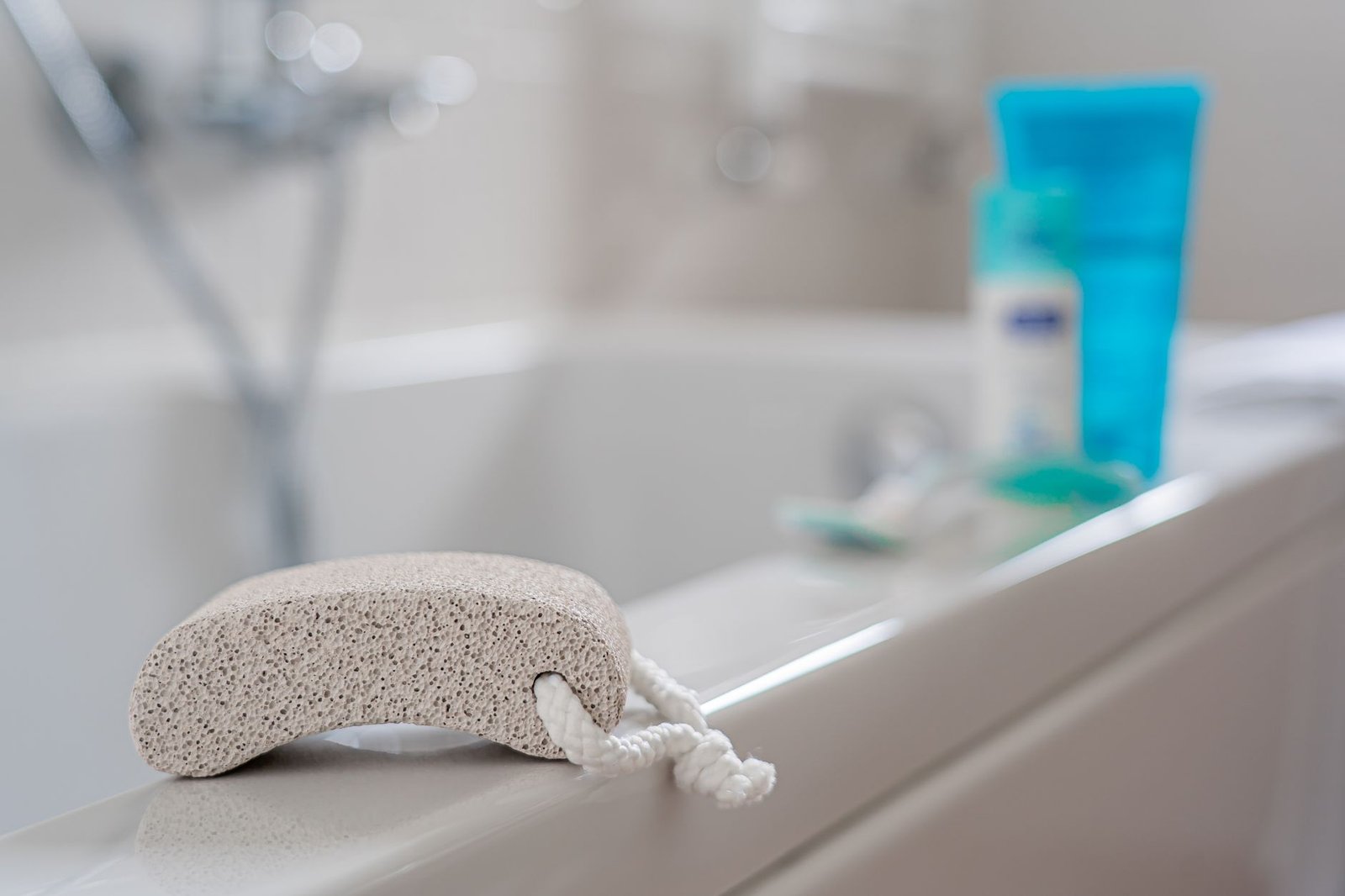
Feet and heels. This is the big one. The skin there is many times thicker than anywhere else and sugar barely registers on it. Coarse salt plus peppermint oil is a genuinely excellent foot scrub.
Elbows and knees. Same reasoning, slightly gentler grain.
Hands after gardening or DIY. A salt scrub gets ground-in dirt out of skin in a way soap does not.
As a pre-soak. Epsom salt scrub on your feet followed by a warm soak is the closest thing to a pedicure you can do at home for the price of a bag of salt.
 Save
Making it
Measure two parts salt into a bowl. Add about three quarters of your oil and fold it through gently with a spoon.
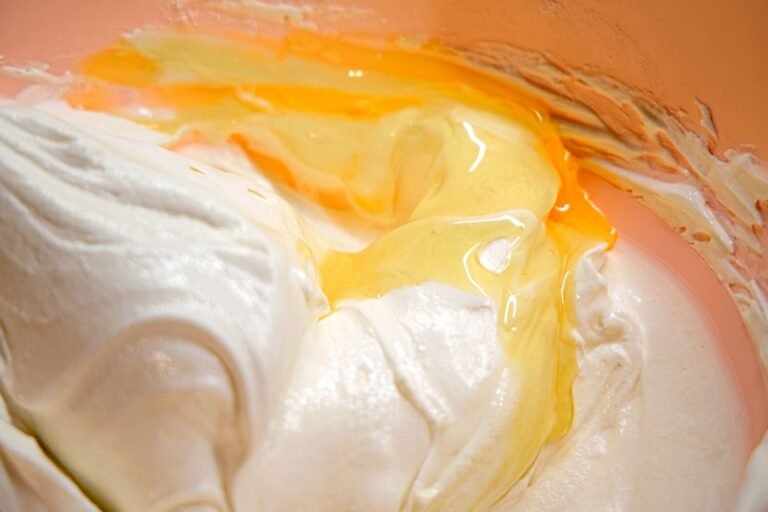
Look at the texture. Wet sand again, holding its shape without a pool of oil underneath. Add the last of the oil a little at a time until it looks right.
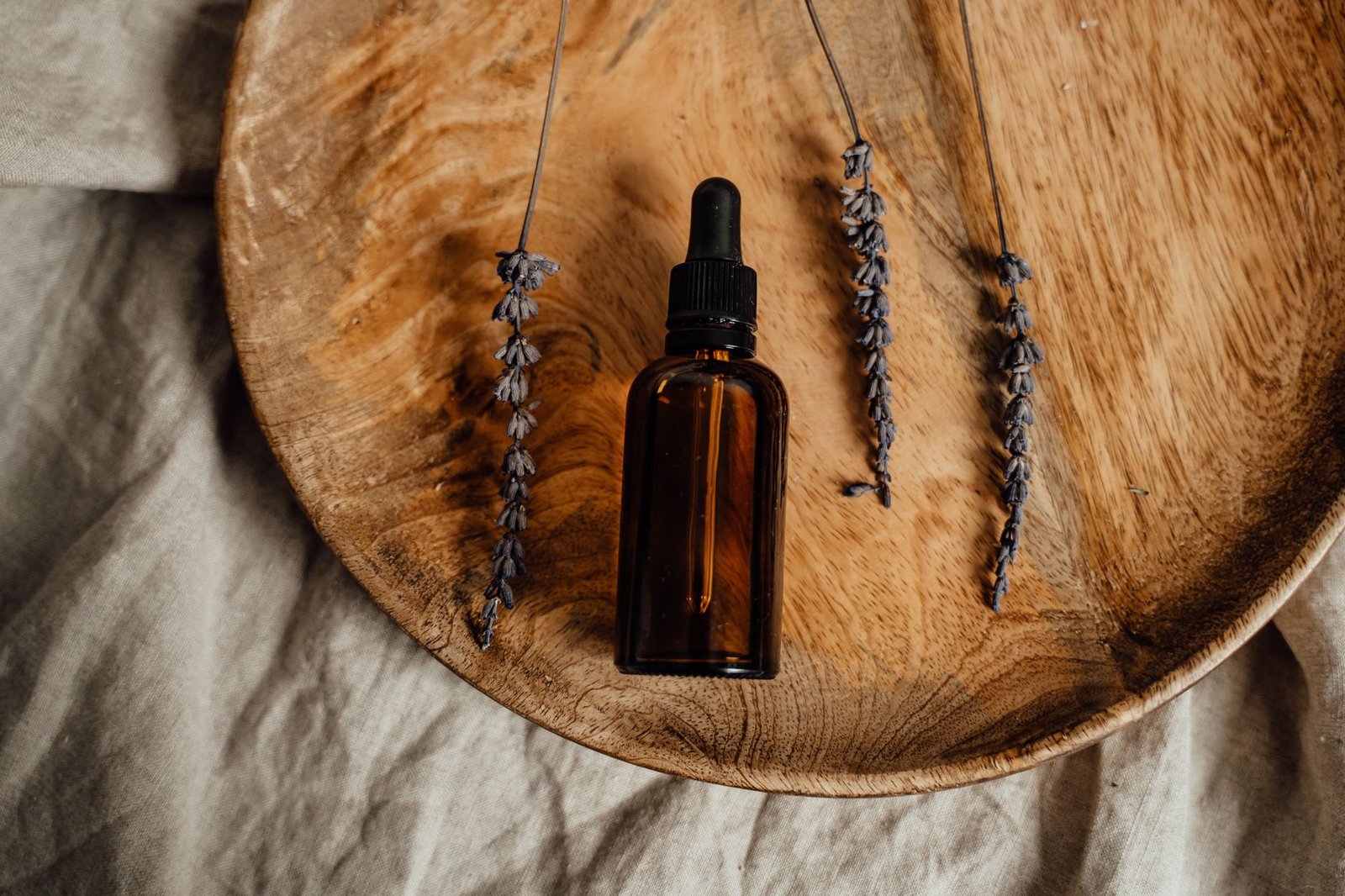
Then the essential oil, if you are using it. Peppermint and eucalyptus are the natural choices for a foot scrub, and both are genuinely pleasant on tired feet. Ten drops for a standard jar.
Fractionated coconut oil is worth mentioning here: it stays liquid at any temperature and does not go solid in a cold bathroom, which makes a salt scrub much easier to scoop in winter.
Using it
In the shower or over a basin, on damp skin, after washing. Light pressure and short circles. The salt is doing the work and pressing harder only presses sharp edges into your skin.
Twenty to thirty seconds on feet, less everywhere else. Rinse in warm water and moisturise straight away while the skin is still damp.
Once or twice a week for feet and elbows. If you are using it anywhere else, once a week is the ceiling.
 Save
Storage
Same rules as any oil-based scrub. An airtight jar, kept outside the shower, used with a dry spoon rather than wet fingers.
Salt scrubs actually keep slightly better than sugar ones, since salt is a preservative in its own right, but the oil still goes rancid eventually. Two to three months, and bin it if it smells sharp.
One extra warning: a salt scrub jar left in a steamy bathroom will absorb moisture and turn into a solid brick. Airtight is not optional here.
Common questions
Can I use a salt scrub after shaving?
No. Wait at least a day, or use sugar instead. Salt on freshly shaved skin genuinely hurts.
Is Epsom salt better than sea salt?
Gentler, because it dissolves faster. Better for a general body scrub, less effective on hard heels.
Can I use it on my face?
No. Salt grains are far too sharp for facial skin.
Why has my scrub gone hard in the jar?
Moisture got in, usually from steam or wet fingers. Keep it out of the bathroom and use a dry spoon.
Does salt detox the skin?
No. It exfoliates. Nothing you rub on your skin detoxifies anything, and your liver and kidneys already have that covered.
Sugar or salt for a first scrub?
Sugar. It is more forgiving, it is safe on shaved skin, and it works fine for most of what people want.
The short version
Two parts fine sea salt to one part oil, for feet, elbows, knees and hands. Peppermint if you want it to feel like a treat.
Keep it off your face, off thin skin, and above all off anything you shaved today. 🙂


Leave a Reply