

Snail mucin is the ingredient people mention with a slightly embarrassed laugh and then keep buying. It has been enormously popular for a decade, and the claims made for it range from reasonable to completely invented.
The reasonable version is that it is a very good hydrator that also helps a stressed barrier. The invented version is that it clears acne and fades scars.
Here is what six weeks actually looks like.
 Save
What it is
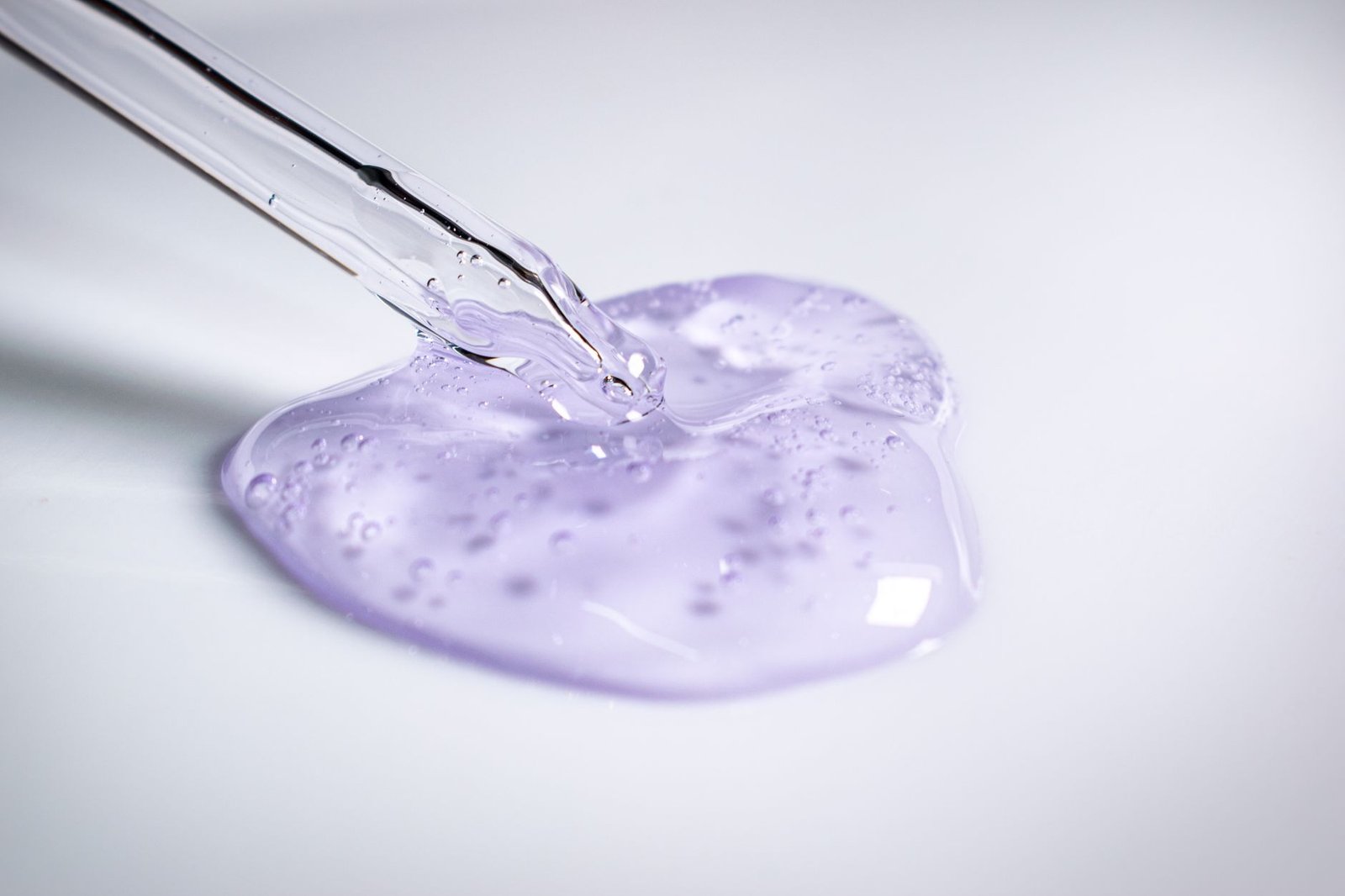
Snail secretion filtrate, to use its proper name on an ingredient list. It is the filtered secretion snails produce, harvested and processed into a clear gel.
The reason it works is that it is a mixture rather than a single active. It contains glycoproteins, hyaluronic acid, glycolic acid in trace amounts, zinc and various peptides. That combination is why it behaves like a hydrator, a mild barrier support and a very gentle exfoliant all at once, without being especially strong at any of them.
On the welfare question, most reputable producers now use methods that do not harm the snails, and brands that do tend to say so on the packaging. If it matters to you, it is worth checking, and a brand that stays silent on it is telling you something.
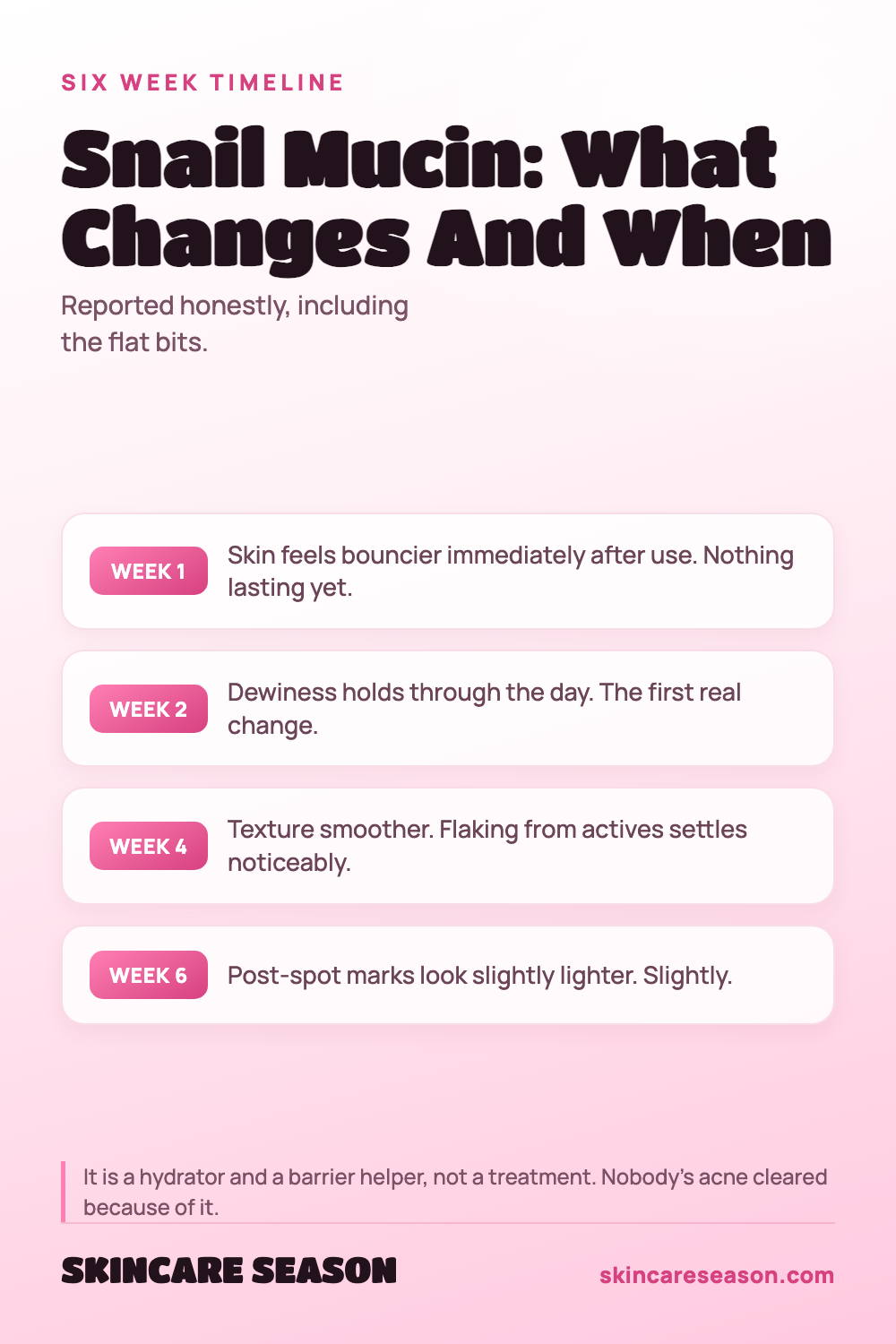
The six week timeline
 Save
Week two is the real one. The immediate bounce after applying is mostly water sitting in the surface, and it is gone by mid-morning. When the dewiness starts holding through a whole day, that is the ingredient rather than the application.
Watch this before you start
What it genuinely does
Hydration, first and foremost. It is an excellent humectant with a texture that lets it hold water on the skin longer than a thin serum manages.
Barrier support. This is the underrated one. If you are using retinoids or acids and getting flaking, snail mucin noticeably settles it, usually within two weeks.
A very mild smoothing effect, from the trace glycolic acid and the general hydration. Enough to make skin look more even, not enough to count as exfoliation.
 Save
What it does not do
It does not clear acne. There is nothing in it at a meaningful concentration that treats breakouts, and the zinc content is far too low to matter. If your acne improved on snail mucin, something else in your routine changed.
It does not fade scars. It may make post-spot marks look very slightly lighter over six weeks, largely through improved hydration and surface turnover, but that is a long way from the claims made for it.
And it is not a treatment for anything. It is a hydrator with a good supporting cast. FYI most of the disappointed reviews are people who bought it expecting the acne claim to be true. :/
The texture problem
This is the honest downside and the reason a lot of people abandon it. Snail mucin is stringy. It stretches between your fingers and it does not feel like a normal serum.
It is also slightly tacky as it dries, which some people find unpleasant under sunscreen or makeup.
Two things help. Use less than you think, because most tackiness is over-application. And apply it to damp skin, which thins it out and speeds absorption considerably.
 Save
How to use it
- Early in the routine, after cleansing and any watery toner, before heavier products.
- On damp skin, which fixes most texture complaints.
- Two or three pumps, pressed in rather than rubbed.
- Moisturiser on top, because it is a humectant and needs sealing like any other.
- Morning and night is fine. It conflicts with nothing.
If you are using it to settle retinoid flaking, apply it before the retinoid as a buffer, or on your off nights. Both work.
Who it suits
Dehydrated skin of any type, which is most people at some point. Skin adjusting to actives, where it is genuinely useful. And anyone whose skin looks tired and flat rather than having a specific complaint.
It suits oily skin better than most hydrators, because it adds water without adding oil.
It suits people with a specific problem to solve least, because it does not solve specific problems. If your concern is pigmentation, texture or breakouts, buy the ingredient that targets that and use snail mucin alongside it if you like the feel.
 Save
How to judge it fairly
Photograph day one in daylight by a window, no makeup, same angle and time of day. Then week three and week six.
What you are looking for is not a dramatic change. It is whether your skin looks plumper and less tired in a side-by-side, and whether flaking from your actives has settled. Both are real wins and neither is dramatic.
Essence, serum or cream
Snail mucin is sold in three formats and the difference is mostly water content and where it sits in your routine.
Essence. The most common and usually the highest percentage. Thin, goes on early, on damp skin. This is the format most people mean.
Serum. Thicker, often combined with other actives like niacinamide or peptides. Fine, though you are paying for a blend rather than the mucin.
Cream. Lowest concentration and the least efficient way to buy it, because it is doing the moisturiser job as well. Convenient if you want one product instead of two.
For value and effect, the essence is the one worth buying.
Common questions
Will it clear my acne?
No. Nothing in it treats acne at a meaningful concentration. It can calm redness around a healing spot, which is a different thing.
Is it cruel to the snails?
Modern collection methods generally do not harm them, and brands using them usually say so. If a brand says nothing, that is worth noting.
Can I use it with retinol?
Yes, and it is one of its best uses. It noticeably settles the flaking phase.
Why is my skin sticky afterwards?
Too much product, or applied to dry skin. Fewer pumps, damp skin, and wait a minute before layering.
Does it work for oily skin?
Yes, arguably better than for dry skin. It hydrates without oil, which is what oily dehydrated skin actually needs.
How long before I judge it?
Six weeks. The first two are mostly the application rather than the ingredient.
The short version
An excellent hydrator and a genuinely useful barrier helper, especially alongside retinoids. Not an acne treatment, not a scar treatment, and stringier than you expect.
Apply it to damp skin, use less than feels right, seal it with a moisturiser, and judge it at six weeks on bounce and comfort rather than on anything dramatic. 🙂

Leave a Reply