

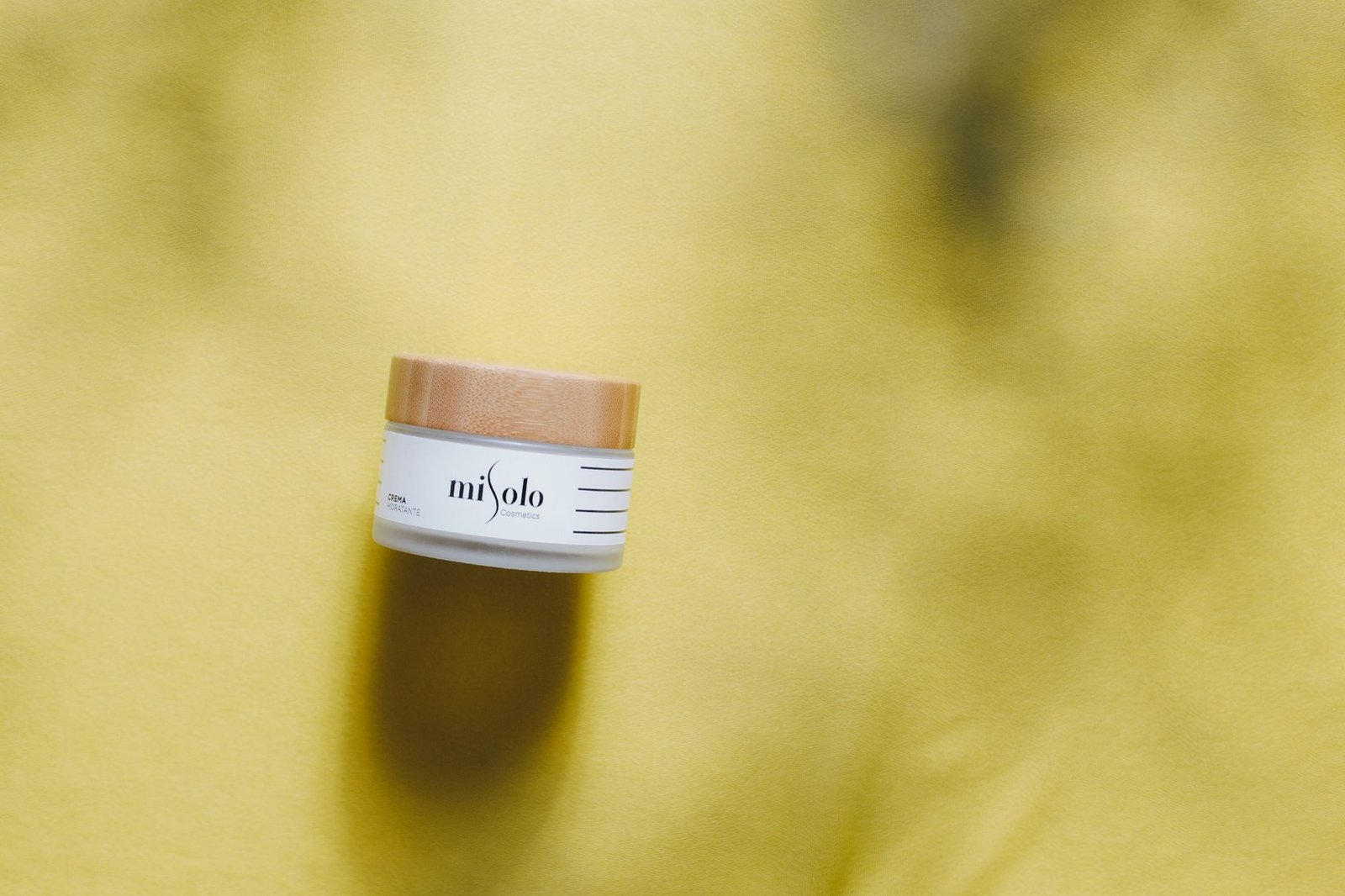
Walk down any skincare aisle and you will find cica creams, centella serums, tiger grass balms and something labelled madecassoside. All four are the same plant, sold under four different names, at four different strengths.
It is one of the genuinely useful ingredients for skin that goes red easily, and the labelling does its best to hide which products actually contain enough of it.
Here is how to read the shelf.
 Save
One plant, several names
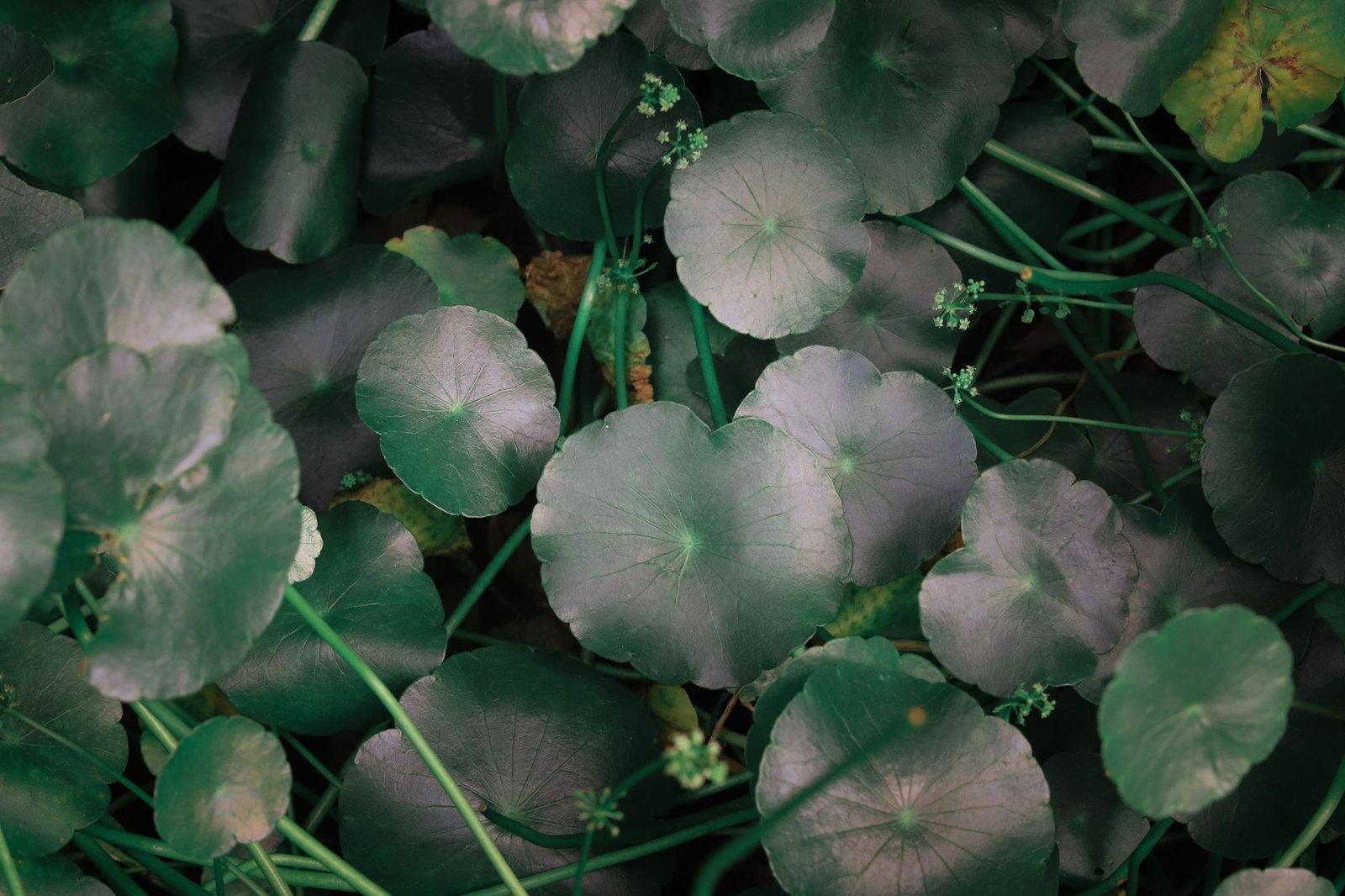
Centella asiatica is a low-growing marsh plant found across Asia. In English it is sometimes called gotu kola or pennywort. The tiger grass name comes from a story about tigers rolling in it to heal their wounds, which is charming and not evidence.
Cica is simply an abbreviation of centella, adopted by Korean brands and then by everyone else. It is a marketing shorthand rather than a specification, which is exactly why it appears in huge type on products containing very little of the plant.
 Save
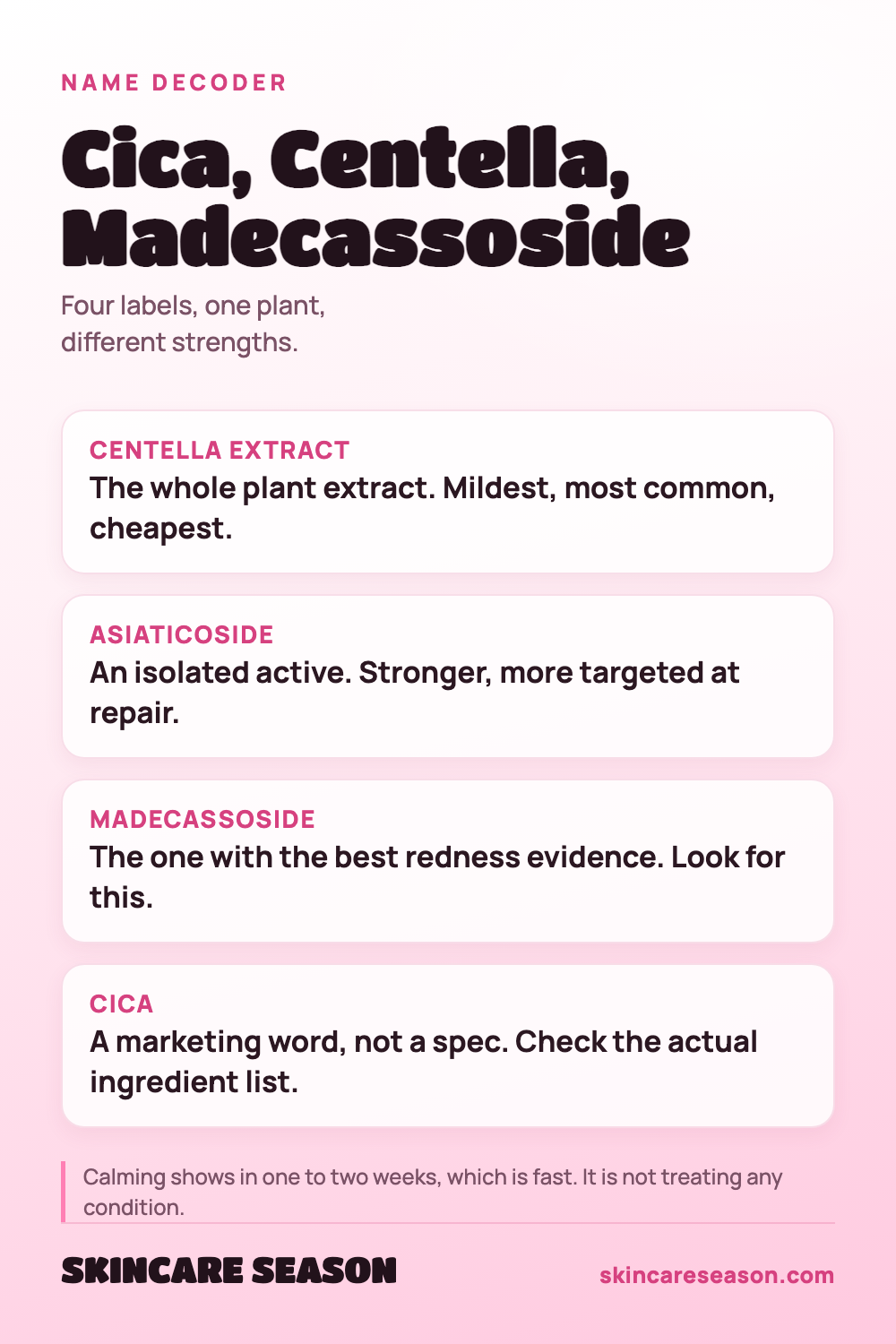
The name decoder
 Save
Madecassoside is the row worth remembering. It is the isolated compound with the most direct evidence behind it for calming redness, and a product listing it specifically is telling you more than one shouting CICA on the front.
Watch this before you start
What it actually does
Three things, all of them in the same general direction: calming things down rather than pushing them forward.
It reduces inflammation, which is where the redness benefit comes from and the effect people notice first. It supports collagen synthesis, which is slower and part of why it turns up in barrier repair products. And it improves hydration in the surface layers, which is a modest but real contribution.
What it does not do is exfoliate, brighten, or treat anything. It is a soother, and it is unusual in being a soother with reasonable evidence behind it rather than just a pleasant story.
How fast it works
Fast, by skincare standards. Most people notice less reactivity within one to two weeks, which is quick compared to the eight to twelve weeks that ingredient guides usually end with.
That speed is part of why it has become so popular. It is one of the few things you add to a routine where you get an answer quickly about whether it suits you.
What takes longer is the barrier side. If your skin is genuinely compromised, centella helps but a proper ceramide moisturiser and a fortnight of doing nothing else will do more.
 Save
Who it suits
Skin that flushes easily, skin that reacts to new products, and skin that is mid-way through adjusting to a retinoid or acids.
That last group is the most practical use. Centella alongside a retinoid is a genuinely good pairing, because it takes the edge off the irritation without doing anything that competes with the retinoid.
It also suits people who want to use something and should probably use nothing. If your skin is upset and you cannot bring yourself to stop applying products for a fortnight, a centella cream is close to the least harmful thing you can reach for. IMO that is an underrated recommendation. 🙂
How to use it
- Any time of day, morning and night both fine.
- After actives, not before. Let the retinoid or acid contact your skin first.
- As your moisturiser if it comes as a cream, rather than as an extra layer.
- Alongside niacinamide, which is a good and easy pairing.
- Every day, because the effect is cumulative even though it starts quickly.
There is essentially nothing it conflicts with. It is one of the few ingredients you can add to any routine without rearranging the rest of it.
What to watch on the label
The word CICA in large type means nothing on its own. Look at the actual ingredient list, and look at where centella appears in it.
Near the top, ideally within the first five or six ingredients, means a meaningful amount. Sitting after the preservatives and fragrance means it is there so the word can go on the front.
Also check for fragrance. A great many cica products marketed for sensitive skin are fragranced, which is a strange decision for a product aimed at reactive skin, and it is worth avoiding.
 Save
What it is not
It is not a treatment for any diagnosed skin condition, regardless of what the packaging implies with words like repair and recovery. Persistent facial redness has several possible causes and some of them need a doctor rather than a cream.
It is not an acne treatment either, though it can reduce the redness around a healing spot. And it will not do anything for pigmentation or texture, which are jobs for other ingredients.
Centella against the other calming ingredients
It is not the only soother on the shelf, and the alternatives suit slightly different situations.
Against niacinamide. Niacinamide also calms redness and additionally handles oil and pigment. If you want one ingredient doing several jobs, niacinamide. If you want the calming specifically and quickly, centella.
Against panthenol. Panthenol is gentler still and more purely hydrating. Often formulated alongside centella rather than instead of it.
Against a ceramide cream. Different jobs. Ceramides rebuild the barrier, centella calms the reaction. On genuinely damaged skin you want both, and the ceramides matter more.
Common questions
Is cica the same as centella?
Yes. Cica is a shortening of centella. The difference is in the concentration, not the plant.
How long before I see less redness?
One to two weeks for most people, which is fast for skincare.
Can I use it with retinol?
Yes, and it is one of the best pairings there is. Retinol first, centella cream on top.
Which name should I look for on the label?
Madecassoside has the most direct evidence for redness. Asiaticoside is next. Plain centella extract is mildest.
Will it help my rosacea?
That is a diagnosed condition and a question for a doctor. Cosmetic soothing products are not a treatment for it.
Is the expensive Korean one better?
Not necessarily. Check where centella sits on the ingredient list and whether the product is fragranced. Those two things predict more than the price does.
The short version
Centella is a genuinely effective, genuinely fast calming ingredient for skin that goes red easily, sold under four names of varying honesty.
Look for madecassoside high in the ingredient list, skip anything fragranced, and use it alongside your retinoid rather than instead of it.

Leave a Reply