

Ceramides are the least exciting thing in skincare and quite possibly the most useful. Nobody posts a before and after of a working skin barrier, because a working skin barrier looks like nothing at all.
Which is exactly the point. Most of the problems people try to solve with more actives are actually a barrier problem, and adding another acid to a damaged barrier is how a small issue becomes a two-month one.
Here is what ceramides are and how to tell whether yours need help.
 Save
What your skin barrier actually is
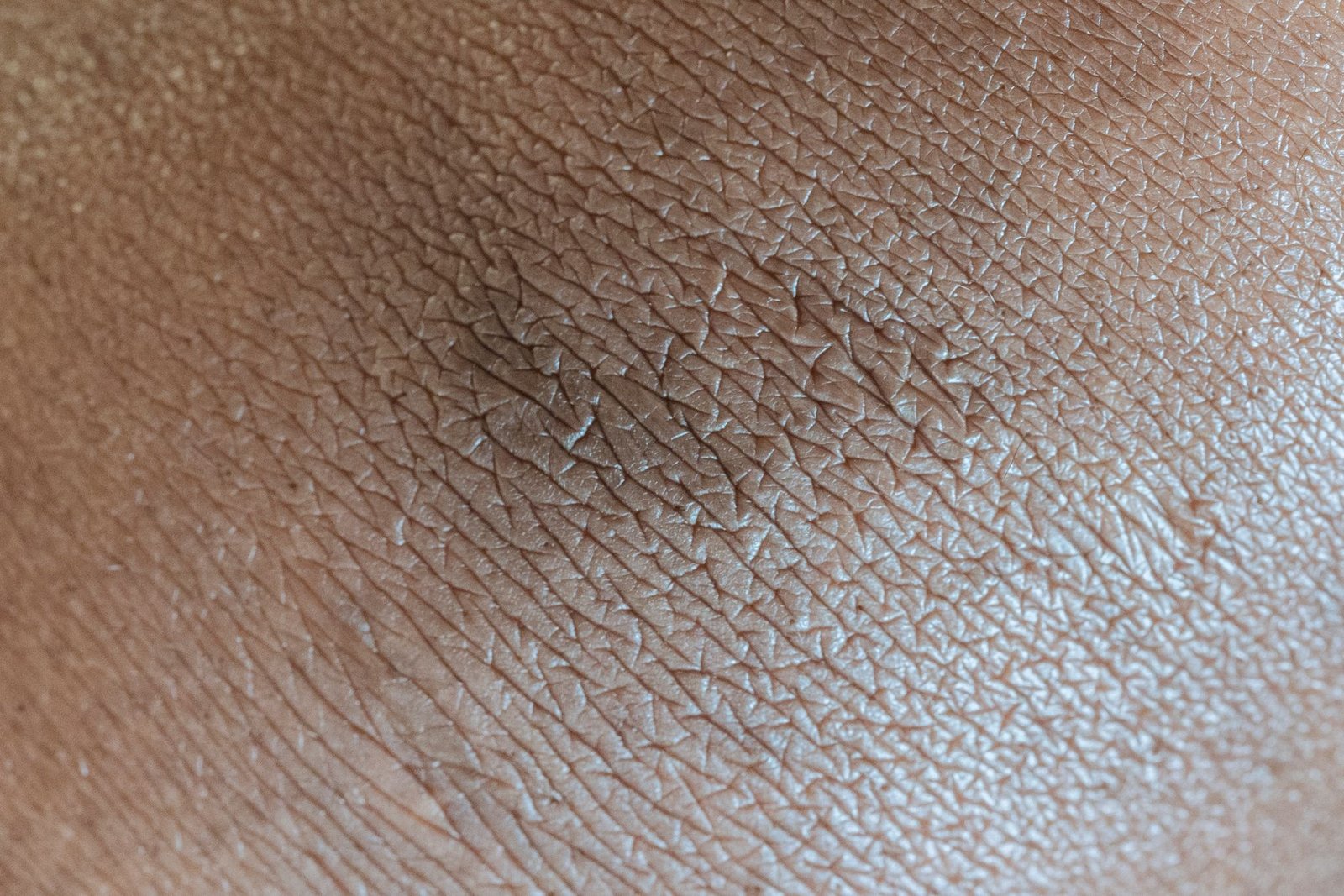
The outermost layer of your skin is made of flattened dead cells stacked in sheets, with a mix of fats filling every gap between them.
The standard picture is a brick wall. The cells are the bricks, the fats are the mortar. Ceramides make up roughly half of that mortar, alongside cholesterol and fatty acids.
When the mortar is intact, water stays in and irritants stay out. When it is depleted, water escapes and everything you apply gets further in than it should, which is why a damaged barrier stings on contact with products that were fine last month.
 Save
What depletes them
Almost everything people do in pursuit of better skin.
- Over-exfoliating. The single biggest cause. Acids, scrubs, or both.
- Hot water, long showers, and harsh foaming cleansers.
- Retinoids, particularly in the first two months.
- Cold, dry air and indoor heating.
- Age. Ceramide production falls steadily from your thirties.
Notice how many of those are things you chose to do. IMO that is the useful insight here: the barrier is usually not damaged by neglect, it is damaged by enthusiasm.
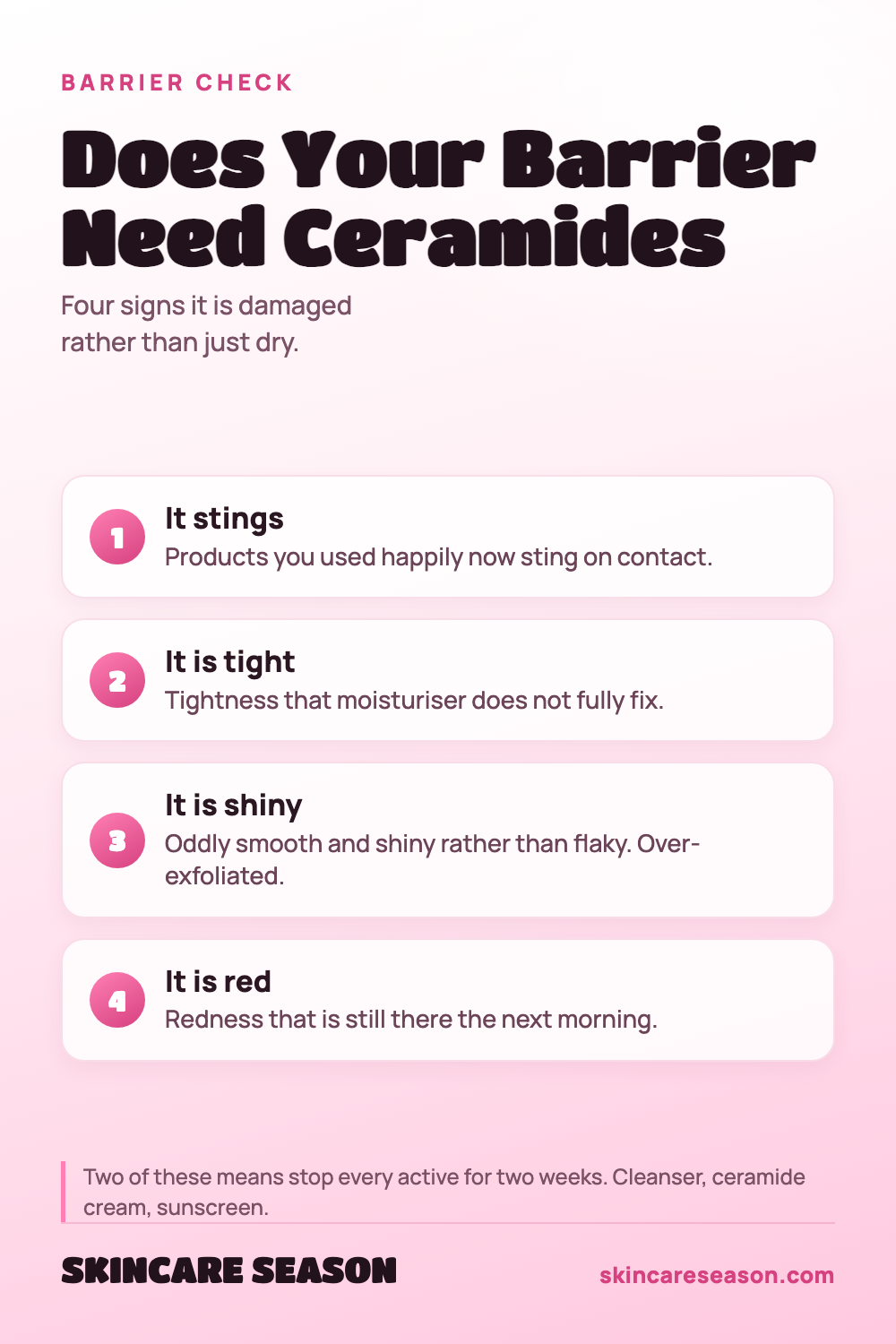
How to tell if yours is damaged
 Save
The third one catches people out. Over-exfoliated skin does not look dry and rough, it looks smooth and slightly shiny, which reads as a win right up until it starts stinging.
Watch this before you start
What a ceramide moisturiser does
It supplies the missing mortar directly. Because ceramides are already part of your skin, applied ones integrate into that layer rather than sitting on top of it the way an occlusive does.
The better formulas include cholesterol and fatty acids alongside, because the barrier is a mixture and topping up one component of three is less effective than topping up all of them. If a label lists all three, that is a good sign and it is not a marketing flourish.
What you feel is unremarkable: skin stops feeling tight, stops stinging, and stops looking red in the morning. It takes one to two weeks.
 Save
How to use it during a repair fortnight
If two or more of the signs above describe you, the routine for the next two weeks is genuinely this short:
Morning. Rinse with lukewarm water or a gentle cream cleanser. Ceramide moisturiser. Sunscreen.
Night. Gentle cleanser. Ceramide moisturiser. That is it.
Nothing else. No acids, no retinol, no vitamin C, no scrubs, no clay masks, no cleansing brushes.
Two weeks feels like a long time to do nothing. It is much shorter than the two months it takes to fix a barrier you kept exfoliating through.
How to buy one
This is one of the few categories where the drugstore option is frequently as good as the expensive one, because the active ingredients are cheap and well understood.
- Ceramides named on the label, usually as ceramide NP, AP or EOP.
- Cholesterol and fatty acids alongside them if possible.
- No fragrance. On a compromised barrier this matters more than usual.
- A cream or balm rather than a thin lotion, at least while repairing.
- A tube or pump rather than an open pot, which is a hygiene point rather than a formula one.
Apply to slightly damp skin. It gives the formula water to hold onto instead of sealing dry skin under a lid.
 Save
Who should use one permanently
Anyone using retinoids or acids regularly, because you are continuously spending barrier and need to keep topping it up.
Anyone over about thirty-five, since production drops with age regardless of what you do. Anyone with naturally dry skin, in winter especially. And anyone whose skin reacts to things easily, which is often a barrier problem wearing a sensitivity costume.
If your skin is oily and perfectly comfortable, you do not need to seek one out. A barrier that is working needs no help.
What ceramides will not fix
A ceramide cream repairs the barrier. It does not treat what damaged it, and if the cause is still in your routine you will be repairing forever.
So if you are exfoliating four times a week, a ceramide moisturiser is not the answer, stopping is. If you are washing with very hot water twice a day, same. The cream supports recovery, it does not outrun ongoing damage.
It also does nothing for pigmentation, texture, congestion or lines. Those are separate jobs for separate ingredients, and they all work better on a barrier that is intact, which is the argument for fixing this part first.
Common questions
How long until my barrier recovers?
Two weeks of doing very little for most people. Badly over-exfoliated skin can take six to eight.
Can I use ceramides with retinol?
Yes, and you should. Ceramide moisturiser over retinol is the standard way to make retinol tolerable.
Are expensive ceramide creams better?
Rarely. The ingredients are inexpensive. You are usually paying for texture and packaging, which is a fair thing to want but is not more effective.
Do I still need a separate moisturiser?
No. A ceramide cream is your moisturiser, not an extra step.
My skin is oily. Do I need ceramides?
Only if it is also reactive or you use actives. Oily skin can absolutely have a damaged barrier, and stripped skin often produces more oil to compensate.
Can I use them while pregnant?
Ceramides are among the least controversial ingredients there are, but any routine change during pregnancy is a question for your doctor.
The short version
Ceramides are the fats your skin uses to hold itself together, and most modern skincare damage is a shortage of them caused by doing too much.
Buy a fragrance-free ceramide cream, apply it to damp skin, and if two of the four warning signs apply to you, stop every active for a fortnight. It is the least interesting advice on this site and it fixes more problems than anything else here. 🙂

Leave a Reply