
Salicylic acid is the most misunderstood of the common acids, because it looks like the others and does something quite different.
Glycolic and lactic are water-soluble, so they work on the surface. Salicylic is oil-soluble, which means it can get down inside a pore that is full of oil and clear it out from within.
That single property decides everything about who should use it.
 Save
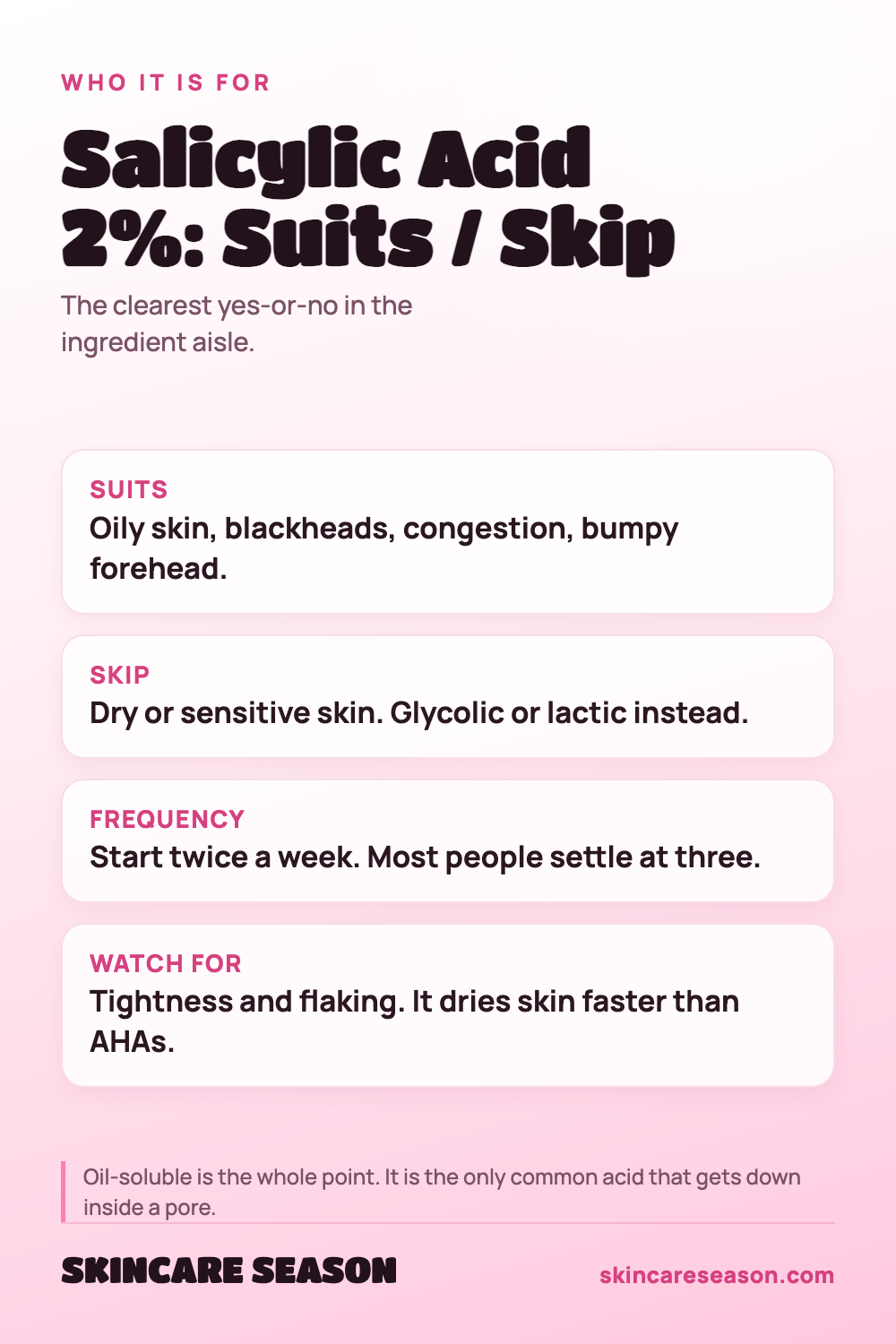
Suits or skip
 Save
This is one of the few ingredients with a genuinely clean answer. If your skin is oily and congested, it is excellent. If your skin is dry, it is the wrong tool and there are better ones.
What it actually does
Three things, in order of how quickly you notice them.
It dissolves the mix of oil and dead cells clogging a pore, which is what a blackhead is. It exfoliates the lining of the pore itself, so it stays clearer for longer. And it is anti-inflammatory, which takes some of the redness out of a spot.
The blackhead effect is the fast one and shows up within two to three weeks. Everything else is slower.
Watch this before you start
Why 2%
2% is the standard concentration for a leave-on cosmetic salicylic product, and there is a good reason it is not higher.
Salicylic is drying. It is more drying than glycolic at comparable strengths, and it accumulates. A higher percentage does not clear pores faster, it just dries your face out sooner and pushes your skin into producing more oil to compensate, which is the opposite of the plan.
Anything markedly above 2% in a leave-on product is either a professional peel or a bad idea. :/
 Save
How to use it without drying yourself out
- Start twice a week, at night, on dry skin after cleansing.
- Build to three nights over a month if nothing is tight or flaking.
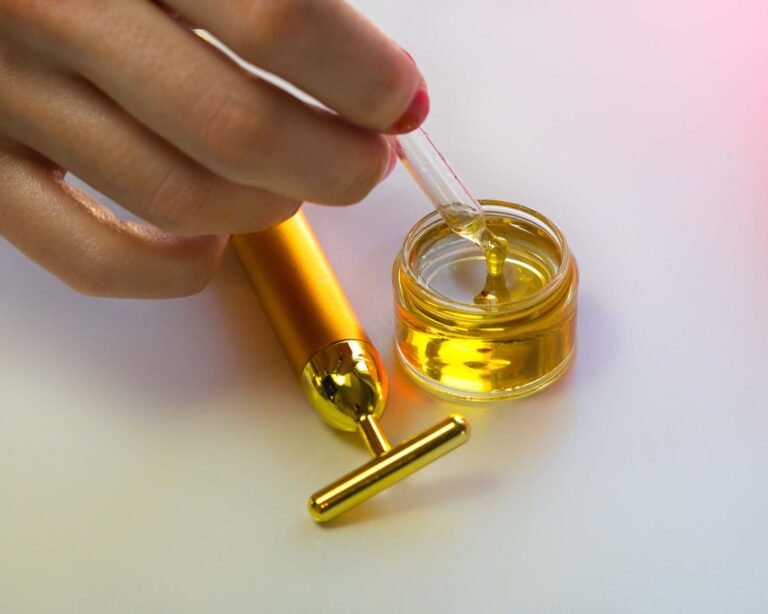
- A few drops, and specifically on the areas that are congested rather than the whole face.
- Moisturiser afterwards, always, even if your skin is oily.
- Sunscreen every morning. Less critical than with glycolic, still not optional.
Targeting matters more with this one. If only your nose and forehead are congested, only your nose and forehead need it. Treating dry cheeks with an oil-dissolving acid gives you dry cheeks and no benefit.
The mistake almost everyone makes
Using a salicylic cleanser and a salicylic serum. Or a salicylic cleanser plus a glycolic toner.
A cleanser containing acid counts as an exfoliating step, even though it rinses off. Stacking it with a leave-on product is how people with oily skin end up with skin that is oily AND flaky at the same time, which feels like a contradiction and is just over-exfoliation.
One acid, one step, a few nights a week. FYI that is the whole rule and it covers most skincare problems people write in about.
 Save
Salicylic or glycolic
The clearest way to choose is by what you are looking at in the mirror.
Blackheads, clogged pores, bumpy forehead, oily nose. Salicylic. It gets inside the pore, which glycolic cannot do.
Dullness, rough surface texture, flat tone, fine lines. Glycolic. It works across the surface, which is where those problems live.
Both, and dry or sensitive skin. Lactic acid, which is gentler than either and hydrates as it exfoliates.
You do not need more than one. Choosing the right single acid beats rotating three.
What it will not do
It will not stop breakouts that are hormonal in origin, because those are not primarily a clogged-pore problem. It will not shrink pores permanently, since pore size is mostly genetic, though clearer pores look smaller.
And it is not a treatment for a diagnosed skin condition. If what you are dealing with is painful, cystic, or has not responded to three months of a sensible routine, that is a conversation with a professional rather than another bottle.
 Save
What to pair it with
Niacinamide. The best partner it has. Regulates oil, calms the redness salicylic can leave behind, and does not compete with it.
A proper moisturiser. Not optional. Oily skin still needs it, and skipping it is why people conclude salicylic dried them out.
Retinol, on other nights. Not the same night. Alternate, and expect to build slowly.
Keep it away from other exfoliants entirely, including scrubs and any cleanser with acid in it.
How long before it works
Blackheads are the fast win. Two to three weeks of consistent twice-weekly use and the nose and chin look visibly clearer.
General congestion, the bumpy texture across a forehead, takes six to eight weeks because you are clearing pores that took months to fill.
The redness and marks left behind by old spots are the slowest, at twelve weeks or more, and salicylic is not the best tool for that part anyway. Niacinamide or azelaic acid does more of that work.
The trap is the same as with every other active on this site. People stop at week three because the deeper congestion has not shifted, which is three weeks before it was ever going to.
A routine built around it
For oily, congested skin, the whole thing fits in five products:
Morning. Gentle cleanser. Niacinamide. Light moisturiser. Sunscreen.
Tuesday and Friday nights. Cleanser, salicylic acid on the congested areas only, moisturiser.
Every other night. Cleanser, moisturiser. That is genuinely it.
Notice there is no second acid, no scrub, and no exfoliating cleanser. Oily skin tends to attract the most aggressive routines and it responds best to one of the calmest.
Common questions
How often can I use it?
Two nights a week to start, three once settled. Daily is too much for almost everyone.
Can I spot treat with it?
Yes, and it is one of the few acids where spot treating makes sense, because congestion is localised.
Will it dry my skin out?
It can, and more readily than glycolic. Moisturise after every use and cut back at the first sign of tightness.
Is it safe during pregnancy?
Low-strength topical use is often considered acceptable, but that is a question for your doctor rather than a website. Ask them.
Can I use it with benzoyl peroxide?
Not at the same time of day. Both are drying and together they are more than most skin tolerates.
Why is my skin oilier since I started?
Usually over-drying. Stripped skin compensates by producing more oil. Use it less often and moisturise more.
The short version
2% salicylic acid suits oily, congested, blackhead-prone skin and almost nobody else. Twice a week at night, targeted at the areas that need it, moisturiser after, one acid only.
If your skin is dry or sensitive, this is not your ingredient, and picking the right one instead is more useful than making this one work. 🙂

Leave a Reply