
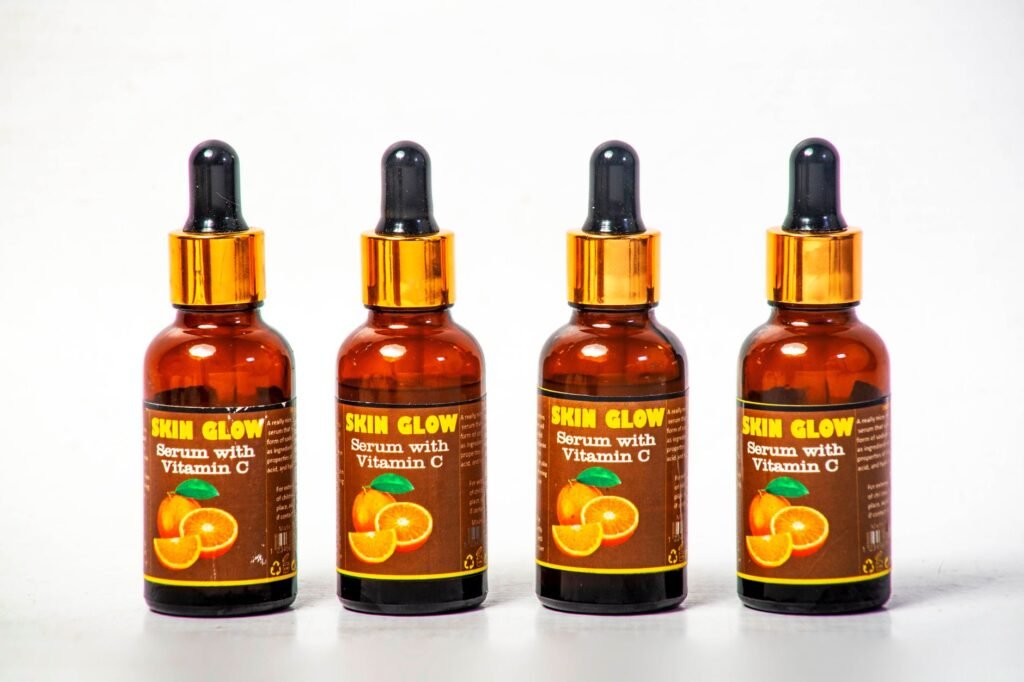
Vitamin C is the most oversold ingredient in skincare, which is a shame, because underneath the marketing it is genuinely one of the good ones.
The problem is that it is sold as a glow in a bottle, and what it actually is is a slow antioxidant that quietly makes your sunscreen work harder. Less exciting, more useful.
Here is what it does, minus the advertising.

The four things it actually does
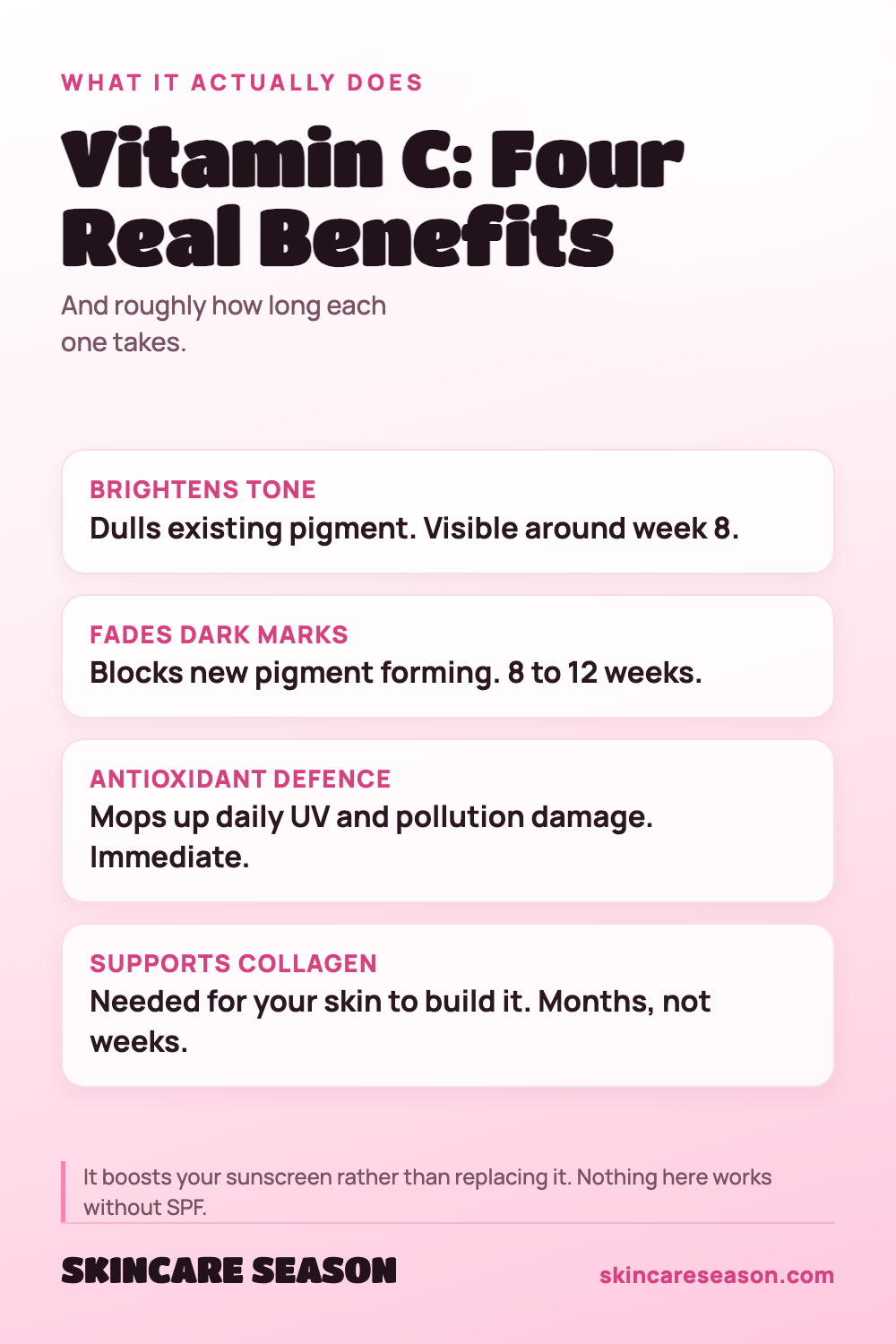
Notice the third one. The antioxidant effect is the benefit almost nobody buys it for and the one with the best evidence behind it.
Your skin takes low-level damage from UV and pollution every single day. Vitamin C neutralises some of that as it happens. It is not glamorous and you will never see it in the mirror, but it is the reason dermatologists keep recommending it.
Which form to buy
This is where it gets annoying, because “vitamin C” on the front of a box could be any of about six different molecules.
- L-ascorbic acid. The pure form, best evidence, and the least stable. Look for 10% to 20%. Below 8% does very little, above 20% mostly adds irritation.
- Sodium ascorbyl phosphate. More stable, gentler, slower. A decent choice for sensitive skin.
- Magnesium ascorbyl phosphate. Similar, gentle, and better tolerated by dry skin.
- Ascorbyl glucoside. Very stable, very gentle, and correspondingly slow.
- Tetrahexyldecyl ascorbate. Oil-soluble, stable, pleasant to use. Often in pricier formulas.
If your skin is robust, L-ascorbic acid at 15% is the one to try first. If it is not, one of the derivatives will suit you better and disappoint you more slowly. 🙂
Watch this before you start
Why your bottle turns orange
L-ascorbic acid oxidises. On contact with light, air and heat it degrades, and as it does the liquid goes from clear or pale straw to yellow, then orange, then brown.
An orange serum is a dead serum. It is not dangerous, it is just no longer doing what you bought it for, and no amount of using it faster will bring it back.
This is why packaging matters more here than with any other active. You want opaque or dark glass, an airtight pump rather than a dropper that pulls air in every time, and a cool dark cupboard rather than a sunny windowsill.

Morning or night
Morning, and for once there is a good reason rather than a habit.
The antioxidant benefit only helps if the antioxidant is present when the damage happens, and the damage happens in daylight. Using it at night is not useless, but you are skipping its best trick.
Cleanse, vitamin C, wait a minute, moisturiser, sunscreen. That is the whole routine.
What to pair it with
Sunscreen. Non-negotiable, and genuinely synergistic. Vitamin C handles some of what gets past the SPF.
Vitamin E and ferulic acid. Frequently formulated together because they stabilise the vitamin C and extend how long it lasts in the bottle.
Niacinamide. Fine, despite the old internet warning. That came from lab conditions rather than finished products.
Keep it away from retinol in the same routine, not because they cancel out but because two potential irritants at once leaves you with no idea which one caused a problem. Vitamin C in the morning, retinol at night.
What it will not do
It will not replace sunscreen. It will not lighten your natural skin tone, and it is not meant to. It will not remove deep pigmentation on its own, and it will not do anything visible in a fortnight.
FYI if a product promises visible brightening in seven days, what you are getting is a hydration and light-reflection effect from the rest of the formula, not the vitamin C.
How to tell it is working
The honest markers are dullness lifting and your skin looking more even in daylight, both around week eight.
Dark marks are the slowest and take twelve weeks or more. As with everything on this site, take a photo on day one in daylight with no makeup, because you cannot judge this on your own face from memory.

How to introduce it without a reaction
L-ascorbic acid needs a low pH to be absorbed, and low pH is what makes it sting. So the introduction matters more than people expect from something marketed as a glow serum.
Start every other morning for two weeks. If nothing happens, go daily. If you get flushing or tightness, move to a derivative rather than pushing on, because there is no version of this where irritation gets you a better result.
Apply to properly dry skin. On damp skin the acid spreads further and penetrates faster, which is the opposite of what you want in week one.
- Week 1 to 2: every other morning, three drops, dry skin.
- Week 3 onward: daily, if the first fortnight was uneventful.
Is the expensive one worth it
Sometimes, and not for the reason people assume.
What you get at a higher price is usually better packaging and better stabilisation, both of which matter enormously for an ingredient that dies in the bottle. A twenty pound serum in an airtight opaque pump can easily outlast a forty pound one in a clear dropper bottle.
What you are not paying for is a more effective molecule. L-ascorbic acid is L-ascorbic acid. IMO the packaging is the spec worth paying attention to, and it is the one almost no review mentions.
Common questions
What percentage should I buy?
10% to 20% for L-ascorbic acid, with 15% a good default. Derivatives use different scales, so compare within a form rather than across them.
Does it need to sting?
No. A brief tingle with a strong L-ascorbic formula is common, but stinging that lasts means the pH or the strength is wrong for you.
Can I keep it in the fridge?
It does slow oxidation and it does no harm. Just do not treat it as a way to rescue a bottle that has already gone orange.
How long does a bottle last?
Around three months once opened for L-ascorbic acid, longer for the derivatives. Buy small bottles rather than value sizes.
Can I use it with exfoliating acids?
Not in the same routine when you are starting. Alternate days, or acids at night and vitamin C in the morning.
The short version
Buy 15% L-ascorbic acid in opaque airtight packaging, or a derivative if your skin is reactive. Use it in the morning, under sunscreen. Store it in the dark. Replace it when it turns orange.
Then wait eight weeks before deciding whether it did anything, because that is how long it takes.